


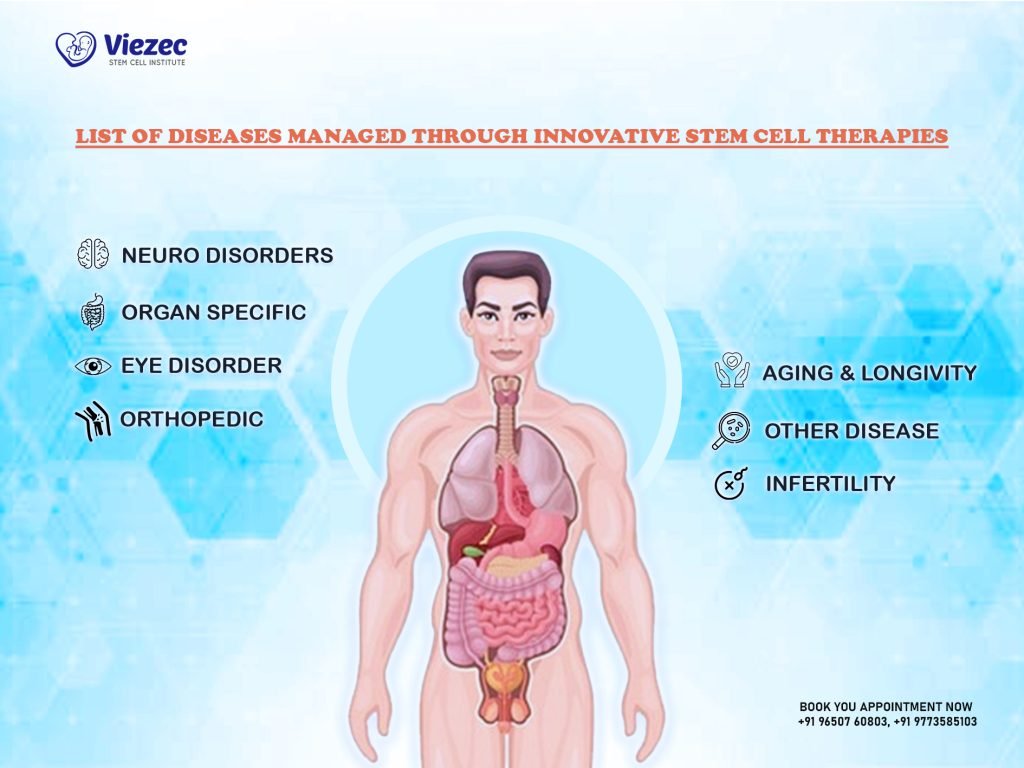
Stem cell therapy has emerged as one of the most promising areas in regenerative medicine. With the ability to regenerate, repair, and replace damaged cells, stem cells are being studied for dozens of medical conditions ranging from orthopedic disorders to autoimmune diseases. While not all treatments are FDA-approved, and clinical evidence varies by condition, research continues to grow worldwide.
This guide provides a comprehensive list of diseases treated with stem cell therapy, current evidence, applications, and emerging possibilities.
What Makes Stem Cell Therapy Important?
Stem cells are unique because they can:
-
Transform into different types of cells
-
Promote tissue regeneration
-
Reduce inflammation
-
Support healing and immune regulation
This makes them relevant in treating musculoskeletal injuries, degenerative diseases, neurological disorders, autoimmune problems, and certain metabolic conditions.
Major Categories of Diseases Treated by Stem Cell Therapy
Below is a categorized and easy-to-understand overview of conditions where stem cell therapy is used or researched.
Musculoskeletal & Orthopedic Diseases
Stem cell therapy is widely explored for orthopedic and musculoskeletal problems because stem cells help repair cartilage, bone, tendons, and ligaments.
Common Musculoskeletal Conditions Treated
Osteoarthritis (Knee, Hip, Shoulder)
Stem cells are used to support cartilage repair, reduce inflammation, and slow degeneration. Many clinics use MSCs (mesenchymal stem cells) derived from bone marrow or adipose tissue.
Tendon Injuries
Examples:
-
Achilles tendonitis
-
Tennis elbow
-
Patellar tendon injuries
MSCs may support tendon regeneration and reduce chronic pain.
Ligament Injuries
Such as:
-
ACL injuries
-
MCL sprains
-
Ankle ligament damage
Stem cells may help by improving ligament strength and healing capacity.
Bone Disorders
Including:
-
Non-healing fractures
-
Bone defects after trauma
Research shows that stem cells contribute to bone mineralization and structural restoration.
Muscle Tears or Degeneration
Useful in:
-
Myofascial pain
-
Age-related muscle loss
Other Orthopedic Uses
-
Sciatica-related inflammation
-
Post-surgical tissue recovery
Discover if Stem Cell Therapy Can Help You!
Book a Free Consultation with Our Experts at Viezec !
Neurological Diseases
Stem cells show potential to repair or replace damaged neurons and improve neuroinflammation. While research is ongoing, several neurological diseases are being studied.
Neurological Conditions Treated
-
Multiple sclerosis (MS)
-
Spinal cord injuries
How Stem Cells Help in Neurology?
Stem cells support neurological healing by promoting cellular repair, reducing inflammation, and enhancing communication between nerve cells. Their regenerative potential makes them valuable in managing complex neurological disorders.
They may help by:
-
Regenerating damaged or lost neural tissue
-
Improving synaptic signaling and nerve communication
-
Modulating abnormal immune responses in neuroinflammatory conditions
-
Supporting recovery of motor function and mobility
Autoimmune Diseases
Autoimmune diseases occur when the immune system attacks the body. Stem cell therapy—especially hematopoietic stem cells (HSCT) and mesenchymal stem cells (MSCs)—is being explored to “reset” or regulate immune responses.
Autoimmune Conditions Treated
-
Ulcerative colitis (IBD)
-
Psoriasis and psoriatic arthritis
-
Ankylosing spondylitis
-
Multiple sclerosis (MS)
Mechanisms of Action
Stem cells work through multiple biological pathways that help the body repair damage and restore normal immune balance. Their therapeutic effects come from regeneration, immune regulation, and inflammation control.
-
Reduce chronic autoimmune-related inflammation
-
Promote regeneration of damaged or weakened tissues
-
Enhance immune tolerance by regulating overactive immune cells
-
Support better long-term function, mobility, and overall quality of life
Heart & Cardiovascular Diseases
Cardiovascular stem cell therapy focuses on regenerating damaged heart tissue and improving blood flow.
Cardiac Conditions with Stem Cell Applications
-
Heart failure
-
Ischemic heart disease
-
Post-heart attack myocardial damage
-
Peripheral artery disease (PAD)
-
Cardiomyopathy
How Stem Cells Support the Heart?
They may:
-
Regenerate cardiac muscle
-
Improve vascular repair
-
Reduce scar formation
-
Enhance oxygen supply to tissues
Clinical trials continue to investigate the long-term outcomes.
Blood & Hematologic Disorders
Hematopoietic stem cell transplantation (HSCT) is the oldest and most established form of stem cell therapy.
Blood Diseases Treated with Stem Cells
-
Thalassemia
-
Bone marrow failure syndromes
Why HSCT Is Effective?
It replaces the patient’s unhealthy bone marrow with new, healthy blood-forming stem cells. This therapy is well-established and widely used.
Eye Diseases
Regenerative cell therapy is increasingly being researched for vision restoration.
Eye Conditions Treated or Investigated
-
Macular degeneration (AMD)
-
Corneal damage
Potential Benefits
Stem cells may:
-
Regenerate retinal cells
-
Improve corneal clarity
-
Restore partial vision
-
Slow disease progression
Start Your Regenerative Journey Today!
Contact Viezec for Personalized Stem Cell Therapy Plan
Skin & Wound Healing Conditions
Skin has strong regenerative potential. Stem cell therapy enhances repair in burns, scars, and chronic wounds.
Skin-Related Conditions Treated
-
Chronic non-healing wounds
-
Pressure ulcers
-
Cosmetic skin rejuvenation
Regenerative Effects
Stem cells:
-
Promote collagen formation
-
Accelerate wound closure
-
Reduce inflammation
-
Improve skin elasticity
Liver & Kidney Diseases
Although still under study, stem cells are being tested for their ability to regenerate damaged organ tissue.
Liver Conditions
-
Cirrhosis
-
Fatty liver disease (NAFLD/NASH)
-
Hepatitis-related damage
Kidney Conditions
-
Chronic kidney disease (CKD)
-
Acute kidney injury (AKI)
Stem cells may enhance tissue repair and reduce fibrosis in both organs.
Lung & Respiratory Diseases
Stem cell therapy shows potential for improving lung function and reducing severe inflammation.
Pulmonary Conditions
-
Chronic obstructive pulmonary disease (COPD)
-
Pulmonary fibrosis
-
Asthma
-
Acute respiratory distress syndrome (ARDS)
-
Bronchopulmonary dysplasia (in infants)
How Stem Cells Support Lung Healing?
-
Reduce scarring
-
Improve oxygen exchange
-
Control inflammation
-
Promote tissue regeneration
Metabolic & Endocrine Diseases
Metabolic disorders affect millions worldwide, making stem cell research in this field extremely important.
Conditions Treated by Stem Cells
-
Type 1 diabetes (pancreatic beta cell regeneration)
-
Type 2 diabetes (insulin regulation)
-
Obesity-related metabolic disorders
Mechanism
Stem cells may help by:
-
Restoring insulin production
-
Reducing inflammation
-
Improving metabolic pathways
Different Types of Stem Cells Used in Treatment
Understanding the major types of stem cells helps patients and researchers identify which therapies are available and how each cell type supports healing. Each category has unique characteristics, sources, and clinical applications.
Mesenchymal Stem Cells (MSCs)
MSCs are among the most widely used stem cells in regenerative medicine. They can develop into bone, cartilage, muscle, and other tissues, making them valuable for repair and recovery.
-
Sources include: bone marrow, adipose tissue, and umbilical cord
-
Commonly used for: musculoskeletal injuries, autoimmune conditions, lung disorders, neurological issues
-
Reduce inflammation and support natural tissue repair
-
Play a key role in slowing degeneration and improving mobility
Hematopoietic Stem Cells (HSCs)
HSCs are responsible for forming new blood cells and are the foundation of many bone marrow and blood-related treatments. They are one of the oldest and most established forms of stem cell therapy.
-
Sources include: bone marrow, peripheral blood, and umbilical cord blood
-
Used for treating: leukemia, lymphoma, multiple myeloma, immune deficiencies
-
Replace damaged or diseased blood-forming cells
-
Support immune system rebuilding and long-term recovery
Induced Pluripotent Stem Cells (iPSCs)
iPSCs are created in the laboratory by reprogramming adult cells back into a stem-cell-like state. They are highly flexible and can become almost any cell type in the body.
-
Primarily used in research, disease modeling, and drug development
-
Help study genetic disorders and test new therapies
-
Offer potential for future personalized medicine
-
Reduce ethical concerns since no embryos are involved
Is Your Condition Eligible for Stem Cell Therapy?
Speak directly with our specialist.
Benefits of Stem Cell Therapy
Stem cell therapy offers several regenerative and functional advantages by supporting the body’s natural healing processes. Although results differ for each individual, many patients experience meaningful improvements in pain, mobility, and tissue repair.
Key benefits include:
-
Reduction in chronic or acute inflammation
-
Enhanced tissue regeneration and structural repair
-
Improved mobility and overall joint or muscle function
-
Potential to delay or avoid invasive surgical procedures
Frequently Asked Questions
Stem cell therapy is used for musculoskeletal injuries, autoimmune disorders, neurological conditions, and certain heart and lung diseases. The exact applications depend on the type of stem cells and current clinical research.
Most stem cell procedures are considered safe when performed by qualified specialists using regulated methods. However, risks can include infection, immune reactions, or lack of response, so patients should always consult an experienced medical provider.
Healing timelines vary, but many patients notice improvements in pain or mobility within a few weeks to a few months. Tissue regeneration is gradual and may continue for several months after therapy.
Mesenchymal stem cells (MSCs), hematopoietic stem cells (HSCs), and umbilical cord–derived stem cells are the most widely used. Each type has specific benefits depending on the condition being treated.
Stem cell therapy can support healing and reduce symptoms, but it is not guaranteed to be a permanent cure. Some conditions may require additional treatments, lifestyle changes, or complementary therapies for long-term results.
Conclusion
Stem cell therapy is reshaping modern medicine by offering new hope for conditions once considered untreatable. While some diseases already have well-established stem cell treatments—such as blood cancers—others are still under scientific investigation.
The list of diseases treated by stem cells continues to grow as research expands, making regenerative medicine one of the most important medical revolutions of the 21st century.
List of References
Advances in mesenchymal stem cell and exosome-based therapies for aging and age-related diseases
https://link.springer.com/article/10.1186/s13287-025-04318-1
Role of Mesenchymal Stem Cells in Skin Aging and Damage: Insights from Recent Preclinical and Clinical Studies
https://link.springer.com/article/10.1007/s40778-025-00244-3
Safety and efficacy of umbilical cord tissue-derived mesenchymal stem cells in the treatment of patients with aging frailty: a phase I/II randomized, double-blind, placebo-controlled study
https://stemcellres.biomedcentral.com/articles/10.1186/s13287-024-03707-2
Clinical-grade human umbilical cord–derived mesenchymal stem cells improved skeletal muscle dysfunction in age-associated sarcopenia mice
https://www.nature.com/articles/s41419-023-05843-8
Application of mesenchymal stem cell therapy for aging frailty: from mechanisms to therapeutics
https://www.thno.org/v11p5675.htm