


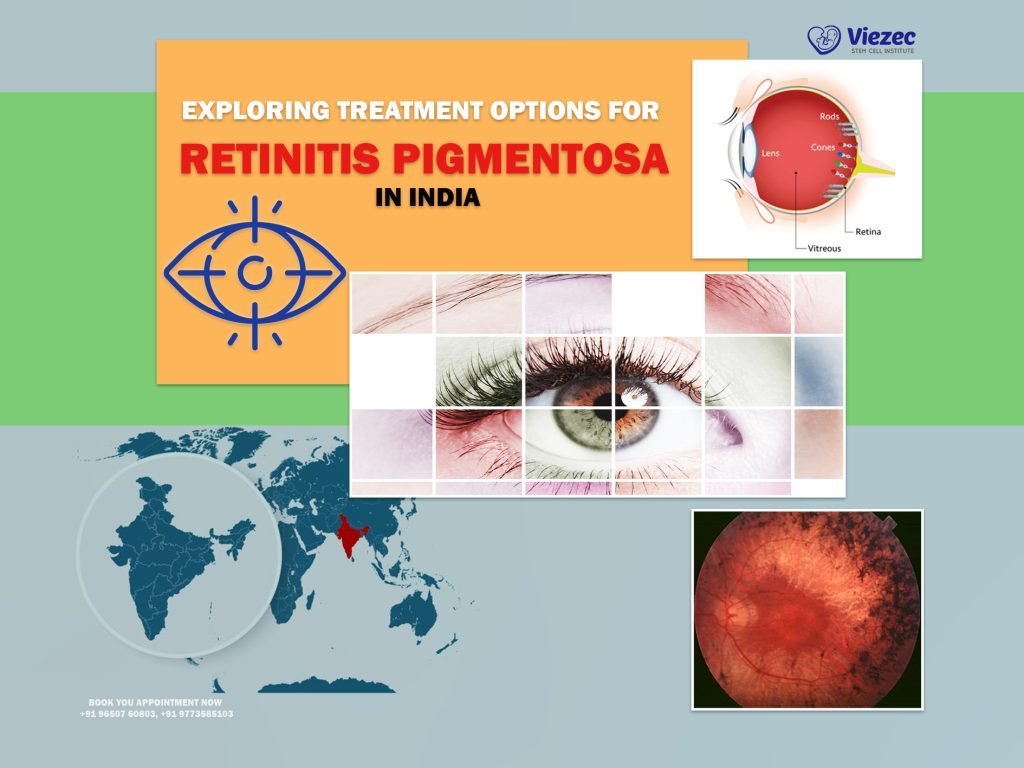
Retinitis Pigmentosa (RP) is a progressive inherited retinal disease that affects thousands of individuals across India. It leads to gradual vision loss, beginning with night blindness and peripheral vision narrowing, and in many cases progressing to significant visual impairment over time. For patients and families, an RP diagnosis can feel overwhelming. However, advances in medical science, regenerative medicine, and vision rehabilitation are expanding the range of treatment and management options available in India.
This comprehensive guide explores current, emerging, and experimental treatment options for Retinitis Pigmentosa in India, including medical management, advanced therapies, and stem cell-based approaches. It is designed to help patients make informed decisions, understand realistic expectations, and explore evolving care pathways with confidence.
Understanding Retinitis Pigmentosa
Retinitis Pigmentosa is a group of inherited retinal disorders that affect the light-sensitive cells of the retina, particularly rod and cone photoreceptors. These cells are essential for vision in low light and for peripheral and central vision.
Common Symptoms of RP
-
Night blindness (nyctalopia)
-
Gradual loss of peripheral vision
-
Tunnel vision
-
Difficulty adjusting to low-light environments
-
Reduced contrast sensitivity
-
Central vision loss in later stages
The progression and severity of RP vary widely depending on the genetic mutation involved. Some individuals experience slow changes over decades, while others may see faster progression.
Causes and Genetic Factors
RP is primarily a genetic retinal disorder. It can be inherited in several ways:
-
Autosomal dominant
-
Autosomal recessive
-
X-linked inheritance
-
Sporadic genetic mutations
Over 60 different genes have been linked to RP. This genetic diversity explains why symptoms, progression, and response to treatment differ from patient to patient. Genetic testing and counseling are becoming increasingly important in India to guide treatment planning and eligibility for emerging therapies.
How Retinitis Pigmentosa Is Diagnosed in India
Accurate diagnosis is essential for effective management. Retina specialists in India commonly use:
-
Electroretinogram (ERG) to measure retinal electrical activity
-
Optical Coherence Tomography (OCT) to visualize retinal layers
-
Fundus examination to detect characteristic pigment changes
-
Visual field testing to assess peripheral vision loss
-
Genetic testing for RP to identify specific mutations
These tools help confirm the diagnosis, track disease progression, and evaluate eligibility for advanced or experimental treatments.
Discover if Stem Cell Therapy Can Help You!
Book a Free Consultation with Our Experts at Viezec !
Is There a Cure for Retinitis Pigmentosa?
At present, there is no definitive cure for Retinitis Pigmentosa. However, several treatment strategies aim to:
-
Slow disease progression
-
Preserve remaining vision
-
Improve quality of life
-
Restore partial visual function in select cases
The focus of modern RP management is shifting from passive monitoring to proactive, personalized care.
Conventional Medical Management Options
Vitamin A and Nutritional Support
Some studies suggest that vitamin A palmitate may slow retinal degeneration in certain RP patients. However, this must be used cautiously under medical supervision due to potential liver toxicity and individual variability.
Other nutritional approaches include:
-
Omega-3 fatty acids
-
Antioxidants
-
Lutein and zeaxanthin
While these do not cure RP, they may support overall retinal health in select individuals.
Low Vision Rehabilitation
Low vision rehabilitation is a cornerstone of RP management in India. It focuses on maximizing usable vision through:
-
Optical and electronic magnifiers
-
Screen readers and assistive technology
-
Orientation and mobility training
-
Contrast-enhancing tools
-
Adaptive lighting strategies
These services help patients maintain independence and daily function even as vision changes.
Advanced and Emerging Treatment Options
Gene Therapy for Retinitis Pigmentosa
Gene therapy targets specific genetic mutations responsible for RP. It involves delivering a functional copy of a gene to retinal cells to restore or preserve function.
Gene therapy has shown promising results for certain rare RP subtypes. However:
-
It is mutation-specific
-
It is not suitable for all RP patients
-
Access in India is still limited
As genetic screening expands, more Indian patients may become eligible for gene-based therapies in the future.
Retinal Implants and Bionic Eye Systems
Retinal prosthesis systems, often referred to as “bionic eyes,” aim to restore basic visual perception by electrically stimulating the retina or optic nerve.
These devices can help some patients detect light, shapes, or movement. However:
-
Visual resolution is limited
-
Surgical complexity is high
-
Cost and availability remain barriers in India
They are typically considered for advanced-stage RP.
Optogenetic Therapy
Optogenetics is an emerging experimental approach that makes retinal cells light-sensitive through genetic modification. This technique is still in research and clinical trial stages but represents an exciting future pathway for retinal degeneration treatment.
Start Your Regenerative Journey Today!
Contact Viezec for Personalized Stem Cell Therapy Plan
Stem Cell Treatment for Retinitis Pigmentosa in India
Stem cell therapy is one of the most actively discussed regenerative treatment options for RP in India. It focuses on using stem cells to support, repair, or regenerate damaged retinal tissue.
How Stem Cell Therapy Works for RP
Stem cells have the potential to:
-
Support retinal cell survival
-
Modulate inflammation
-
Promote regenerative signaling
-
Improve retinal microenvironment
The goal is not always to replace lost photoreceptors directly, but to create conditions that may slow degeneration and enhance remaining function.
Types of Stem Cells Used
In regenerative ophthalmology, commonly studied stem cells include:
-
Mesenchymal stem cells (MSCs)
-
Bone marrow-derived stem cells
-
Adipose-derived stem cells
-
Umbilical cord-derived stem cells
Each type has different properties and potential applications in retinal diseases.
Stem Cell Therapy for RP in India: Current Status
India has become a recognized destination for regenerative medicine due to:
-
Advanced medical infrastructure
-
Experienced specialists
-
Cost-effective treatment options
-
Ongoing clinical research
Stem cell treatment for Retinitis Pigmentosa in India is offered at select centers under regulated clinical protocols. It is important for patients to understand that:
-
Stem cell therapy is still considered investigational for RP
-
Results vary between individuals
-
It is not a guaranteed cure
-
Careful patient selection is critical
Patients should always seek evaluation from qualified retina and regenerative medicine specialists before pursuing stem cell-based treatment.
Who May Be a Candidate for Stem Cell Therapy?
Not all RP patients are suitable for stem cell treatment. Candidacy may depend on:
-
Stage of disease
-
Remaining retinal structure
-
Overall eye health
-
Genetic subtype
-
Medical history
A detailed retinal assessment is essential before considering this option.
Psychological and Emotional Support
Living with progressive vision loss can have a significant emotional impact. Anxiety, stress, and adjustment challenges are common among RP patients and their families.
Support strategies include:
-
Counseling and mental health support
-
Peer support groups
-
Vision rehabilitation counseling
-
Family education
Addressing emotional well-being is an essential part of comprehensive RP care.
Lifestyle and Daily Management Strategies
While medical treatments are important, lifestyle strategies also play a role in managing RP:
-
Wearing UV-protective sunglasses
-
Maintaining regular eye checkups
-
Using adaptive technology
-
Optimizing home lighting
-
Planning for future vision changes
These steps help patients maintain independence and safety.
Cost of Retinitis Pigmentosa Treatment in India
Treatment costs vary widely based on:
-
Type of treatment
-
Hospital or clinic
-
Use of advanced or experimental therapies
-
Need for rehabilitation services
-
Diagnostic testing
Stem cell therapy and advanced treatments may involve higher costs, while low vision rehabilitation and conventional management are more affordable and widely accessible.
Choosing the Right Care Provider in India
Selecting the right provider is critical for RP management. Patients should look for:
-
Experienced retina specialists
-
Access to advanced diagnostics
-
Ethical and transparent treatment practices
-
Multidisciplinary care teams
-
Clear discussion of risks, benefits, and expectations
Trusted healthcare platforms and medical facilitators can help patients navigate available options.
How Viezec Supports Patients Exploring RP Treatment
Viezec, based in India, works with leading hospitals and specialists to help patients explore advanced treatment pathways, including regenerative and emerging therapies for retinal diseases.
By connecting patients with qualified medical teams, Viezec helps streamline access to expert evaluations, personalized treatment planning, and reliable medical guidance. This support can be especially valuable for patients considering complex options such as stem cell therapy or participation in clinical research.
Patients seeking information and treatment pathways for Retinitis Pigmentosa in India can benefit from coordinated care and expert-led consultation through platforms like Viezec.
Realistic Expectations for RP Treatment
It is important for patients to maintain realistic expectations:
-
Most treatments aim to slow progression, not reverse all vision loss
-
Results vary significantly between individuals
-
Early intervention often offers better outcomes
-
Ongoing follow-up is essential
RP is a long-term condition that requires a proactive, adaptive approach.
Is Your Condition Eligible for Stem Cell Therapy?
Speak directly with our specialist.
Future Outlook for Retinitis Pigmentosa Treatment
Research into RP is advancing rapidly. Areas of active development include:
-
Next-generation gene therapies
-
Improved stem cell-based retinal repair
-
Neuroprotective drugs
-
Artificial retina technology
-
Personalized medicine based on genetic profiles
As these innovations mature, patients in India are likely to see broader access to advanced RP treatment options in the coming years.
Key Takeaways for Patients and Families
-
Retinitis Pigmentosa is a genetic, progressive retinal disease
-
There is no single cure, but multiple management and treatment options exist
-
Stem cell therapy is an emerging and investigational option in India
-
Gene therapy and retinal implants offer promise for select patients
-
Low vision rehabilitation remains essential for daily function
-
Early diagnosis and personalized care improve long-term outcomes
Frequently Asked Questions
Currently, there is no definitive cure for Retinitis Pigmentosa. Treatment in India focuses on slowing disease progression, preserving remaining vision, and improving quality of life through medical management, vision rehabilitation, and emerging therapies.
Stem cell therapy for Retinitis Pigmentosa is considered an emerging and investigational treatment. Some patients may experience functional improvements or stabilization, but results vary. It is not a guaranteed cure and should only be considered after evaluation by qualified specialists.
Eligibility depends on factors such as genetic subtype, stage of disease, retinal structure, and overall eye health. Genetic testing and detailed retinal imaging help determine suitability for gene therapy, stem cell therapy, or clinical trial participation.
Costs vary based on treatment type, hospital, diagnostic requirements, and whether advanced or experimental therapies are involved. Low vision rehabilitation is generally affordable, while regenerative and advanced therapies may involve higher costs.
Viezec helps patients connect with experienced specialists and hospitals in India, guiding them through evaluations, treatment options, and care coordination. This support helps patients explore appropriate and safe treatment pathways with clarity.
Final Thoughts
Exploring treatment options for Retinitis Pigmentosa in India requires a balanced understanding of current medical standards, emerging regenerative therapies, and realistic expectations. From conventional management and vision rehabilitation to advanced approaches like gene therapy and stem cell treatment, patients now have more options than ever before.
With the support of experienced specialists and trusted healthcare platforms such as Viezec, patients can take informed steps toward preserving vision, maintaining quality of life, and participating in the evolving future of retinal care in India.