


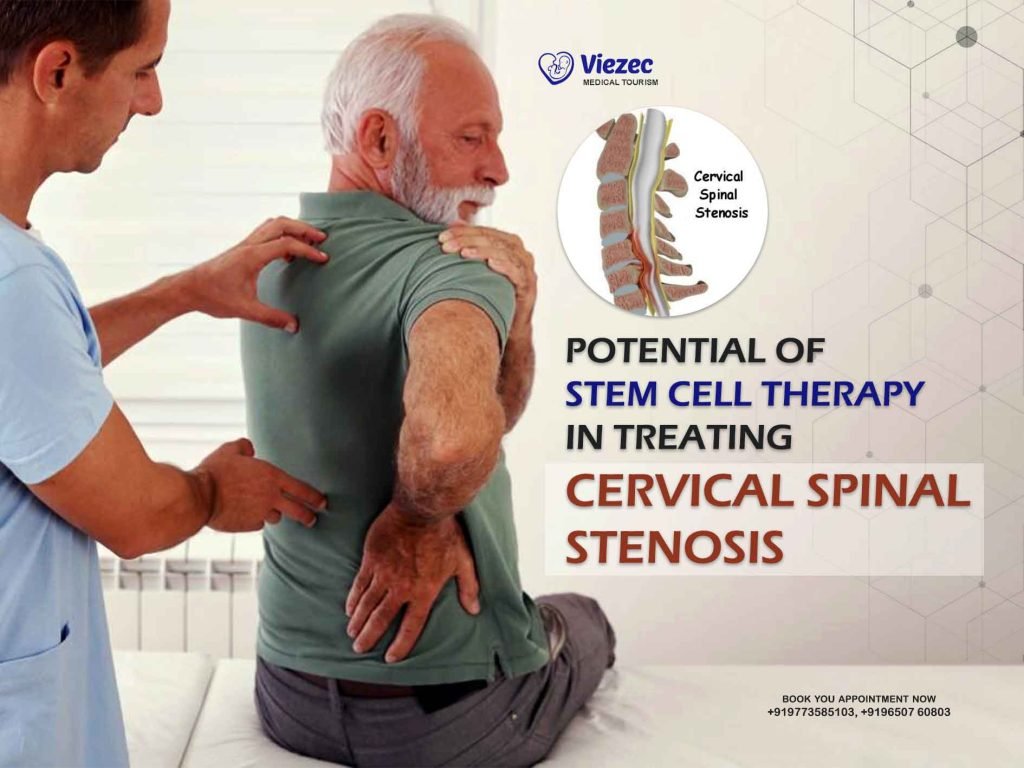
Cervical spinal stenosis is a condition characterized by the narrowing of the spinal canal in the neck region, which can compress the spinal cord and nerve roots, leading to pain, numbness, and other neurological symptoms. Traditional treatment options, such as physical therapy, medication, and surgery, aim to alleviate symptoms but often fail to provide a lasting solution. Recently, stem cell therapy has emerged as a promising alternative approach to treat cervical spinal stenosis. We will delve into the potential of stem cell therapy in treating this condition, exploring how it works, its benefits, challenges, and future prospects.
Understanding Cervical Spinal Stenosis
Cervical spinal stenosis is a condition affecting the cervical region (neck) of the spinal column. It involves the narrowing of the spinal canal, which houses the spinal cord and nerves, due to various factors:
Causes of Cervical Spinal Stenosis
- Degenerative Changes: As individuals age, the intervertebral discs can lose water content, becoming thinner and less flexible. This can cause the discs to bulge or herniate, potentially narrowing the spinal canal.
- Osteoarthritis: The wear and tear on the spinal joints can lead to the formation of bone spurs (osteophytes), which can impinge on the spinal cord and nerves.
- Thickening of Ligaments: Over time, the ligaments supporting the spine may thicken and calcify, encroaching on the spinal canal.
- Congenital Factors: Some individuals may have a naturally narrow spinal canal, which can increase the risk of developing stenosis.
- Injuries: Trauma or injuries to the neck can lead to spinal stenosis.
Symptoms of Cervical Spinal Stenosis
The symptoms of cervical spinal stenosis can vary depending on the severity and location of the compression:
- Neck pain and stiffness
- Numbness or tingling in the arms and hands
- Weakness in the arms and legs
- Coordination problems and difficulty with fine motor skills
- Bowel or bladder dysfunction in severe cases
Traditional Treatment Options for Cervical Spinal Stenosis
Traditional treatments aim to manage symptoms and prevent further progression of the condition:
Non-Surgical Interventions
- Physical Therapy: Exercises to improve posture, strengthen neck muscles, and alleviate pressure on the spinal cord and nerves.
- Medication: Nonsteroidal anti-inflammatory drugs (NSAIDs) for pain relief, along with muscle relaxants and corticosteroid injections to reduce inflammation.
- Assistive Devices: Braces or collars may be used to provide support and reduce strain on the neck.
Surgical Interventions
- Decompression Surgery: Procedures such as laminectomy, foraminotomy, or discectomy involve removing bone spurs, disc material, or ligaments to create more space in the spinal canal.
- Spinal Fusion: In some cases, spinal fusion may be performed to stabilize the cervical spine.
While traditional treatments can provide relief, they often come with limitations such as incomplete recovery, recurrence of symptoms, or potential complications from surgery. This has led to interest in alternative therapies, including stem cell therapy.
Overview of Stem Cell Therapy
Stem cell therapy is an innovative medical approach that utilizes stem cells to repair or regenerate damaged tissues and organs. Stem cells have unique properties that make them promising for treating various conditions, including cervical spinal stenosis:
Types of Stem Cells
- Embryonic Stem Cells: Derived from early-stage embryos, these cells have the potential to differentiate into any cell type in the body. However, their use is controversial and subject to ethical considerations.
- Adult Stem Cells: Found in various tissues such as bone marrow, adipose tissue, and peripheral blood, adult stem cells have a more limited differentiation potential compared to embryonic stem cells but are more accepted for clinical use.
- Induced Pluripotent Stem Cells (iPSCs): These are adult cells that have been genetically reprogrammed to an embryonic stem cell-like state. They can differentiate into various cell types and have significant potential for personalized medicine.
Stem Cell Sources for Cervical Spinal Stenosis Treatment
- Bone Marrow-Derived Stem Cells: Harvested from the patient’s own bone marrow, these cells are rich in mesenchymal stem cells (MSCs) that can differentiate into cartilage, bone, and neural cells.
- Adipose-Derived Stem Cells: Obtained from fat tissue through liposuction, these MSCs are easy to harvest and can differentiate into various cell types.
- Peripheral Blood Stem Cells: Stem cells can be collected from peripheral blood using a process called apheresis. These cells can differentiate into different cell types, including neural cells.
How Stem Cell Therapy Works for Cervical Spinal Stenosis
Stem cell therapy aims to promote healing and regeneration in the cervical spine by introducing stem cells into the affected area. The therapy works in several ways:
Differentiation and Regeneration
Stem cells have the ability to differentiate into various cell types, including neural cells, cartilage, and bone. By introducing these cells into the cervical spine, the goal is to promote the regeneration of damaged tissues, including intervertebral discs and spinal ligaments.
Anti-Inflammatory Effects
Stem cells can secrete anti-inflammatory cytokines and growth factors that help reduce inflammation and modulate the immune response. This can alleviate pain and other symptoms associated with cervical spinal stenosis.
Neuroprotective Properties
Stem cells can provide support and protection to existing nerve cells, promoting neural repair and function. This can improve neurological symptoms and overall quality of life.
Benefits of Stem Cell Therapy in Treating Cervical Spinal Stenosis
Stem cell therapy offers several potential benefits for patients with cervical spinal stenosis:
Non-Invasive or Minimally Invasive
Most stem cell therapies involve minimally invasive procedures, such as injections into the affected area. This reduces the risks and recovery time associated with surgery.
Reduced Inflammation and Pain
The anti-inflammatory and regenerative properties of stem cells can help alleviate pain and reduce inflammation in the cervical spine.
Potential for Tissue Regeneration
Stem cells can promote the regeneration of damaged tissues, including intervertebral discs and spinal ligaments, potentially leading to long-term improvement.
Neuroprotection and Neural Repair
Stem cells can provide support to existing nerve cells, promoting neural repair and improving neurological symptoms.
Personalized Treatment
Stem cell therapy can be personalized based on the patient’s specific condition and needs, including the choice of stem cell source and delivery method.
Considerations in Stem Cell Therapy
While stem cell therapy holds promise, there are challenges and considerations to address:
Safety and Efficacy
Ensuring the safety and efficacy of stem cell therapy is crucial. Potential risks include immune rejection, uncontrolled cell growth, and the possibility of forming tumors.
Standardization and Quality Control
There is a need for standardized protocols and quality control measures in stem cell therapy to ensure consistent and reliable results.
Prospects and Research Directions
Stem cell therapy for cervical spinal stenosis is an evolving field with promising research directions:
Advances in Stem Cell Sources and Delivery
- Researchers are exploring new sources of stem cells, such as iPSCs, which offer potential for personalized therapy.
- Innovations in delivery methods, such as biomaterial scaffolds and hydrogels, may improve stem cell transplantation outcomes.
Combination Therapies
Combining stem cell therapy with other treatments, such as gene therapy or growth factors, may enhance therapeutic effects and improve outcomes.
Clinical Trials and Research
Ongoing and future clinical trials will provide valuable data on the safety, efficacy, and long-term outcomes of stem cell therapy for cervical spinal stenosis.
Personalized Medicine
As research progresses, personalized medicine approaches may allow for tailored stem cell therapies based on individual patient profiles, improving outcomes and reducing risks.
Stem Cell Therapy in India
India is rapidly emerging as a hub for stem cell research and therapy. With its growing healthcare sector and skilled medical professionals, the country is well-positioned to make significant contributions to the field.
Research and Development
India boasts several research institutions and universities dedicated to advancing stem cell research. Collaborative efforts between academic institutions and industry players have resulted in progress in developing stem cell-based treatments for various conditions, including cervical spinal stenosis.
Regulatory Environment
The Indian government has established regulations to oversee the use of stem cell therapies, focusing on safety, efficacy, and ethical considerations. This regulatory framework aims to ensure that stem cell treatments are conducted responsibly and in the best interests of patients.
Clinical Applications
Indian medical professionals and researchers are actively involved in clinical trials and studies exploring the potential of stem cell therapy for cervical spinal stenosis. The country’s large population and diverse patient pool provide valuable data for evaluating the safety and efficacy of stem cell treatments.
New Hope for Good Outcomes
Stem cell therapy has significant potential in treating cervical spinal stenosis by promoting tissue regeneration, reducing inflammation, and providing neuroprotection. While there are challenges and considerations to address, ongoing research and advances in stem cell technology offer hope for improved treatments and outcomes. As clinical trials continue to explore the safety and efficacy of stem cell therapy, this innovative approach may become a viable option for patients with cervical spinal stenosis in the future.