Quick answer
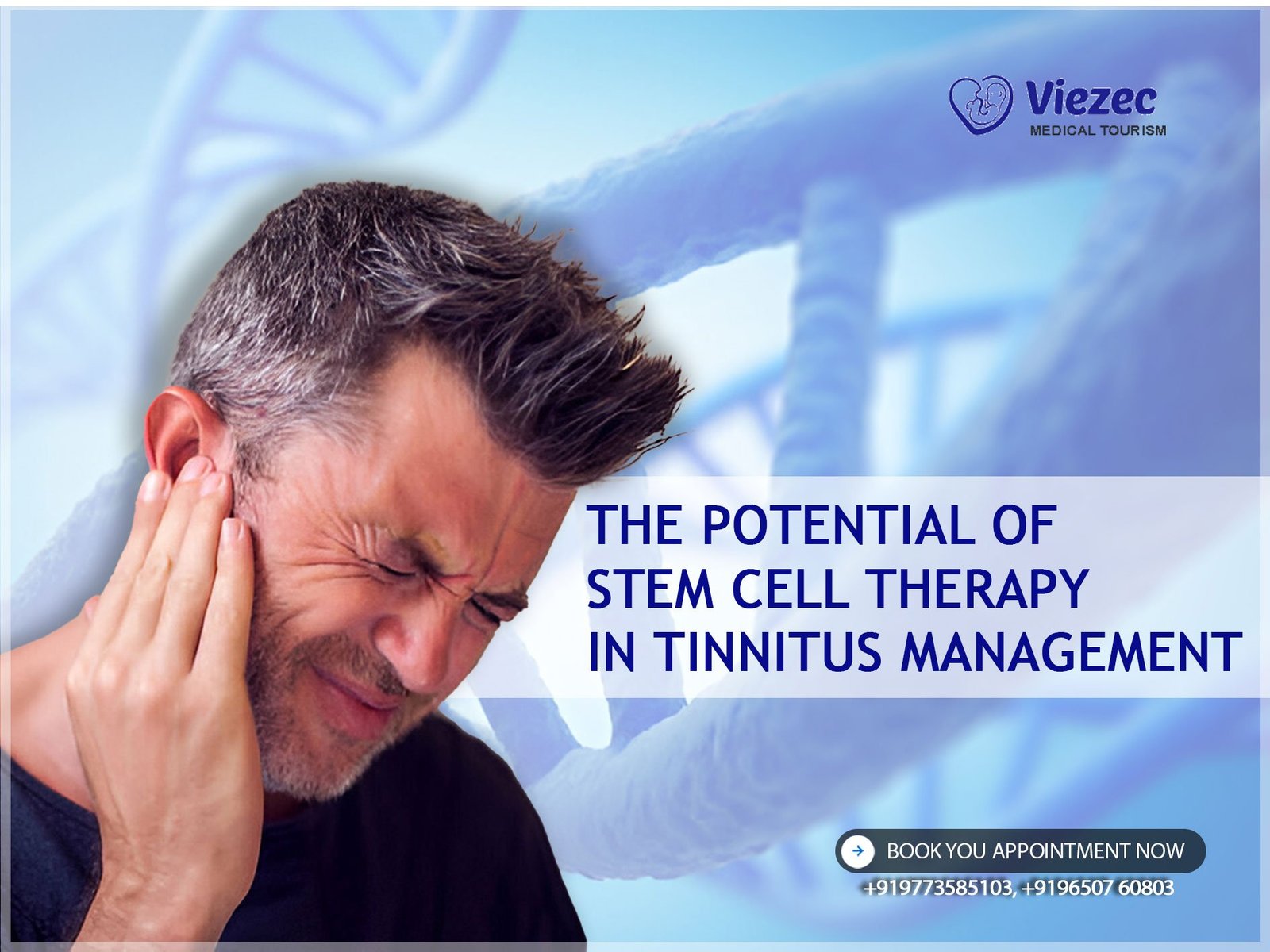
Tinnitus — the perception of ringing, buzzing, or other sound without an external source — affects an estimated 740 million adults worldwide, with standard treatments like hearing aids, sound therapy, and tinnitus retraining therapy providing symptom management but not restoring the underlying hearing damage in most cases. Stem cell research for tinnitus centers on regenerating damaged inner ear hair cells, the root cause of most sensorineural tinnitus, and includes active laboratory research as well as a small number of early-phase human trials. This remains an investigational approach. At Viezec, we offer it as a supportive, evidence-informed option alongside standard management, with an honest expectation that individual response varies from patient to patient and is not guaranteed.
Understanding tinnitus
Tinnitus is a symptom, not a disease itself, most commonly linked to damage or degeneration of the tiny sensory hair cells in the inner ear (cochlea), which are responsible for converting sound into the electrical signals your brain interprets as hearing. Once damaged, these hair cells generally don’t regenerate on their own, which is part of why tinnitus can be persistent. A 2022 review in JAMA Neurology found tinnitus affects roughly 14.4% of adults worldwide, with severe, quality-of-life-impacting tinnitus affecting about 2.3% of the population.
Common contributing factors include:
- Age-related hearing loss
- Noise exposure (occupational or recreational)
- Certain medications
- Ear infections or blockages
- Conditions like Meniere’s disease, where tinnitus is one of several symptoms
Standard treatment approaches
- Hearing aids — can reduce the perceived prominence of tinnitus, particularly when hearing loss is also present
- Sound therapy / white noise — helps mask tinnitus and reduce its perceived intensity
- Tinnitus retraining therapy (TRT) — a structured therapy combining sound therapy with counseling to help the brain habituate to the tinnitus signal
- Cognitive behavioral therapy (CBT) — has evidence for reducing the distress associated with tinnitus, even when the sound itself doesn’t change
- Addressing underlying causes — such as treating an ear infection, adjusting medication, or managing an underlying condition like Meniere’s disease
These approaches manage the impact of tinnitus effectively for many people, but generally don’t reverse the underlying hair cell damage in cases where that’s the root cause.
Where does stem cell and regenerative research stand?
This is a genuinely active area of hearing research, and it’s worth understanding both what’s promising and what’s still early.
Hair cell regeneration is the central research goal. Researchers at Harvard Medical School’s Mass Eye and Ear, among other institutions worldwide, are actively working on regenerating cochlear hair cells — the cells whose damage underlies most sensorineural tinnitus and hearing loss.<sup>[2]</sup> Some of this research uses drug-based approaches to stimulate regeneration, tested successfully in mouse models, with researchers describing hair cell regeneration as an achievable long-term goal for the field, though not yet available as a clinical treatment.
Mesenchymal stem cell (MSC) approaches are studied for their proposed ability to support the inner ear’s own repair environment — delivering growth factors, modulating local immune response, and improving microcirculation around damaged tissue. This is a plausible, biologically reasonable mechanism, but it should be understood as a proposed mechanism under active investigation, not a proven pathway with established efficacy data in adult tinnitus patients.
Early clinical trial activity exists, though narrow in scope. A Phase I clinical trial has examined using a child’s own banked umbilical cord blood stem cells to treat acquired sensorineural hearing loss in very young children — a safety-focused study in a specific pediatric population, not a general tinnitus treatment trial for adults. This illustrates that human research in this space is underway, while also showing how early-stage and narrowly scoped it currently is.
Our approach at Viezec
Given this evidence landscape, we present stem cell therapy for tinnitus as what it currently is: an investigational, supportive option, grounded in genuine and active research, rather than an established cure. What we tell every patient considering this:
- Response varies significantly from patient to patient — some patients report a meaningful reduction in tinnitus perception, while others notice little to no change, and this variability reflects the current state of the science, not an inconsistency in how the therapy is delivered
- This is offered alongside, not instead of, standard tinnitus management (hearing aids, sound therapy, addressing underlying causes)
- We share the specific research behind the approach during your case review, so you can weigh it with realistic expectations rather than a promise of a specific outcome
- A thorough audiological and ENT evaluation comes first, to identify any underlying cause that has its own established treatment before considering an investigational option
Frequently asked questions
No large-scale trial has established that stem cell therapy cures tinnitus. It’s offered as an investigational, supportive option grounded in active hair cell regeneration research, with individual response varying from patient to patient.
Research centers on regenerating damaged cochlear hair cells, the underlying cause of most sensorineural tinnitus. This includes laboratory research (including successful hair cell regeneration in mouse models) and early, narrowly-scoped human trials, alongside a proposed mechanism where mesenchymal stem cells support the inner ear’s repair environment.
Hearing aids and sound therapy manage the perceived impact of tinnitus without addressing the underlying hair cell damage. Stem cell research aims at the underlying cause itself, but remains investigational, without established, consistent efficacy data in adults.
No treatment can currently guarantee this. Response varies patient to patient, and this should be approached as an investigational option with realistic expectations rather than a guaranteed result.
Related reading
- Vertigo treatment: what actually works
- Peripheral artery disease: symptoms, causes, diagnosis, treatment
- Safety & Guarantees FAQ
Considering this option? Book a free case review and our medical team will walk you through the current research, whether you’re a reasonable candidate, and what a realistic, honest expectation looks like for your specific case.