


Quick answer
Stem cell therapy for varicose veins is an emerging, investigational approach still being studied in early-stage and preclinical research — it is not yet an approved or standard treatment. If you have varicose veins today, proven options like sclerotherapy, endovenous laser ablation (EVLA), radiofrequency ablation (RFA), and compression therapy remain the evidence-backed first choices. This page explains what varicose veins are, how stem cell research fits into the bigger picture, what current studies show, and what questions to ask before considering any regenerative treatment.
What Are Varicose Veins?
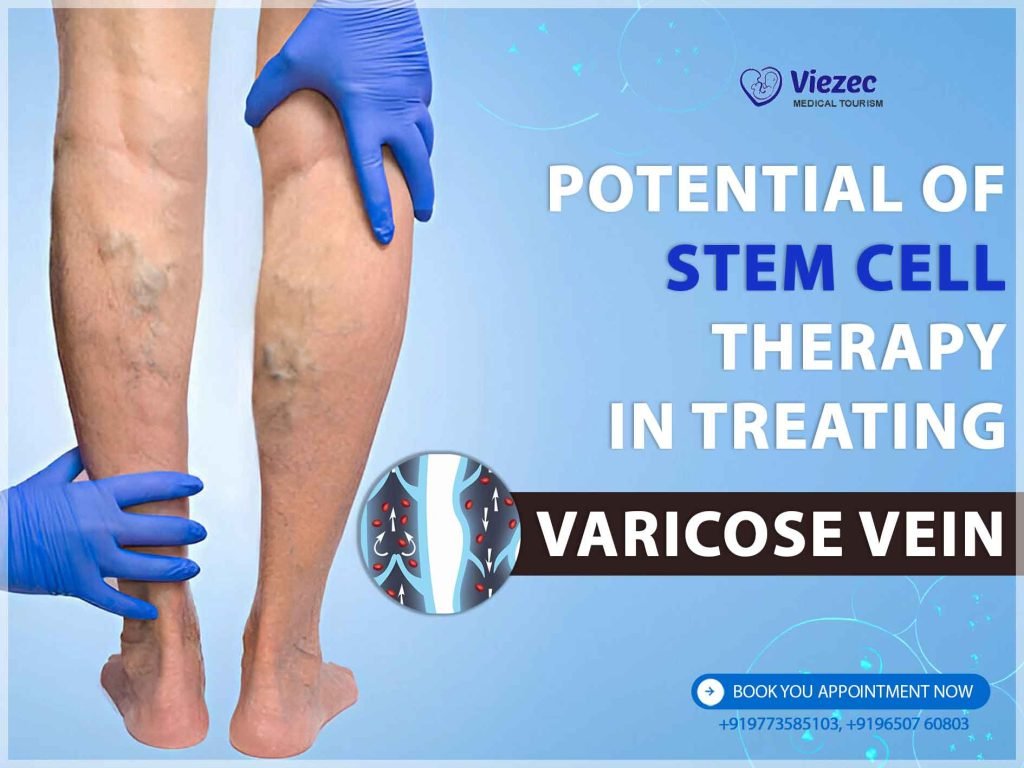
Varicose veins are swollen, twisted veins — usually in the legs — that occur when the one-way valves inside veins weaken or fail. When these valves don’t close properly, blood pools instead of flowing back toward the heart, causing veins to enlarge, bulge, and become visible under the skin.
Common symptoms include:
- Bulging, rope-like veins, often blue or dark purple
- Aching, heaviness, or throbbing in the legs, especially after standing
- Swelling in the lower legs and ankles
- Itching or skin discoloration around the vein
- In advanced cases, skin ulcers near the ankle (venous ulcers)
Underlying causes:
- Genetic predisposition and family history
- Prolonged standing or sitting
- Pregnancy and hormonal changes
- Age-related loss of vein elasticity
- Obesity and reduced mobility
Varicose veins fall under the broader category of chronic venous insufficiency (CVI) — a progressive condition, which is part of why early evaluation matters.
Established, Evidence-Based Treatments
Before looking at emerging research, it’s worth being clear about what already works. Vascular specialists currently rely on:
| Treatment | What It Does | Typical Use Case |
|---|---|---|
| Compression therapy | Compression stockings improve circulation and reduce swelling | Mild cases, first-line management |
| Sclerotherapy | A solution is injected into the vein, causing it to collapse and fade | Smaller varicose and spider veins |
| Endovenous Laser Ablation (EVLA) | Laser energy seals off the diseased vein from the inside | Larger varicose veins |
| Radiofrequency Ablation (RFA) | Similar to EVLA but uses radiofrequency energy | Larger varicose veins |
| Vein stripping/ligation | Surgical removal of the affected vein | Severe or recurrent cases |
These are minimally invasive, well-studied, and — in many countries — covered by insurance when medically indicated. Any conversation about newer approaches should start from this baseline, not replace it.
Where Stem Cell Research Fits In
Stem cells are cells capable of developing into different cell types and, in some cases, supporting tissue repair. Researchers have been exploring whether this regenerative capacity could help with vein-related conditions — but it’s important to be precise about what has actually been studied.
What current research covers
- Most clinical research involving stem cells and venous disease has focused on venous leg ulcers (open wounds caused by long-term venous insufficiency), not on treating varicose veins themselves. A 2026 systematic review identified only a handful of small controlled studies (a few dozen patients total) using approaches like autologous bone-marrow-derived mesenchymal stem cells applied to venous ulcers, with some showing faster wound healing in early trials.
- Separately, laboratory research (including work using induced pluripotent stem cells) is being used to model varicose vein disease at the cellular level — helping scientists understand why veins fail, which could inform future drug or cell-based therapies. This is foundational science, not a patient-ready treatment.
- Some early research groups have investigated whether stem cells could help restore blood flow in veins affected by clots, but this work remains experimental and has not progressed to large-scale, controlled human trials specifically for varicose veins.
What this means in practice
- There is currently no large-scale clinical trial evidence establishing stem cell therapy as a safe or effective treatment specifically for varicose veins.
- Reputable vascular surgery bodies have noted that treatments offered by some stem cell clinics have not been through the rigorous, large-scale testing that FDA-approved procedures require.
- The science is genuinely promising as a research direction — particularly around vein wall regeneration and ulcer healing — but it is not yet a substitute for established varicose vein treatments.
Questions to Ask Before Considering Any Regenerative Treatment
If you’re researching stem cell therapy or any newer regenerative option for a venous condition, it’s worth asking a prospective provider:
- Is this treatment part of a registered clinical trial, and can I see the trial registration (e.g., on ClinicalTrials.gov)?
- What regulatory approval, if any, does this specific procedure have in the country where it’s performed?
- What does the peer-reviewed evidence actually show for this condition — varicose veins specifically, not a related condition?
- What are the realistic risks (infection, embolism, immune reaction, no improvement)?
- What monitoring and follow-up is included, and who is responsible if complications occur?
- Is there independent, published outcome data — not just patient testimonials?
A credible clinic or specialist should be willing to answer all of these clearly and provide documentation, not just reassurance.
Frequently Asked Questions
No. As of current research, stem cell therapy is not an approved, standard treatment for varicose veins in major regulatory frameworks (such as the FDA or EMA). It remains an area of active, early-stage research.
There’s no clinical evidence yet showing stem cells can cure varicose veins. Current research has mostly examined stem cells for healing venous ulcers (a complication of venous disease) and for understanding vein biology at the lab level — not for reversing varicose veins directly.
Endovenous laser ablation (EVLA) and radiofrequency ablation (RFA) are currently among the most effective, well-studied minimally invasive treatments for larger varicose veins, alongside sclerotherapy for smaller veins and compression therapy for symptom management.
Varicose veins and venous insufficiency tend to progress over time. Speaking with a vascular specialist about proven options now — rather than waiting for a treatment that isn’t yet clinically established — is generally the safer approach.
Following registered clinical trials (ClinicalTrials.gov), peer-reviewed vascular surgery journals, and systematic reviews is the most reliable way to track genuine progress, rather than relying on individual clinic marketing claims.