


Quick answer
Marfan syndrome is a genetic connective tissue disorder caused by mutations in the FBN1 gene, most seriously affecting the aorta, where it can cause life-threatening aneurysm or dissection if untreated. There is currently no stem cell treatment available for Marfan syndrome patients. Stem cell research in this area uses lab-grown cells (induced pluripotent stem cells) to study disease mechanisms and search for new drug targets — a valuable research tool, but not a therapy offered to patients today. The treatments that actually save lives in Marfan syndrome are well-established: medications that slow aortic growth, regular cardiac imaging, and prophylactic aortic surgery timed correctly.
Understanding Marfan syndrome
Marfan syndrome is caused by mutations in the FBN1 gene, which encodes fibrillin-1, a protein essential to the structure of connective tissue throughout the body. It affects multiple organ systems:
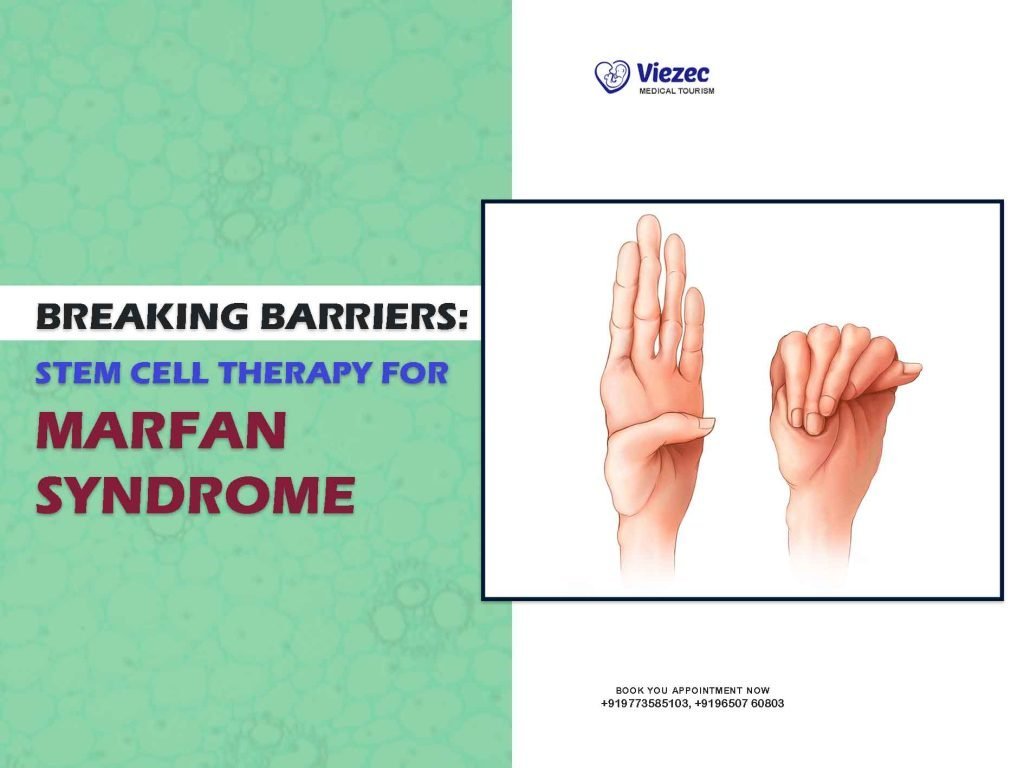
- Skeletal system — tall stature, long limbs, long fingers (arachnodactyly), scoliosis, and chest wall abnormalities (pectus excavatum or carinatum)
- Cardiovascular system — the most serious concern, including aortic root dilation, which can progress to aneurysm or life-threatening dissection, and mitral valve prolapse
- Ocular system — lens dislocation and increased risk of retinal detachment
The cardiovascular manifestations are what drive both monitoring and treatment decisions, since aortic dissection is the leading cause of reduced life expectancy in Marfan syndrome when the condition isn’t properly managed.
What actually works: established standard care
This is genuinely one of the clearer success stories in genetic connective tissue disease management, and it deserves to be front and center:
- Beta-blockers and angiotensin receptor blockers (ARBs), particularly losartan, have been shown in clinical trials to slow the rate of aortic root growth, and are standard first-line medical therapy<sup>[1]</sup>
- Regular cardiac imaging (echocardiography, sometimes MRI or CT) to track aortic diameter over time is essential for timing intervention correctly
- Activity modification — avoiding contact sports, competitive/isometric exercise, and activities with sudden intense exertion, which can raise the risk of aortic complications
- Prophylactic aortic root replacement surgery, performed proactively once the aorta reaches a size threshold associated with elevated dissection risk, has transformed Marfan syndrome from a condition with significantly shortened life expectancy into one where near-normal lifespan is achievable with appropriate care<sup>[2]</sup>
This combination of medication, monitoring, and correctly timed surgery is the actual reason life expectancy in Marfan syndrome has improved substantially over recent decades — not an experimental therapy, but disciplined, evidence-based cardiovascular management.
Where does stem cell research actually stand?
Here’s the honest picture. Researchers have used induced pluripotent stem cells (iPSCs) — created from a patient’s own skin or blood cells — to grow aortic smooth muscle cells in the lab that carry the same FBN1 mutation as the patient. This allows scientists to study, in a controlled lab setting, exactly how the mutation causes cells to weaken and die, and to test potential drug targets. Recent work using this approach has identified signaling pathways (such as TGF-β and GSK3β) that may be promising targets for future drug development.
This is valuable, legitimate science — but it is disease modeling, not treatment. No stem cells are given to patients in this research; the cells are studied in laboratory dishes to better understand the disease and search for new medications. It’s an important distinction: this research may eventually inform new drug development, but it is not itself a therapy, and there is no realistic timeline for that to change in the near term.
What this means if you or your child has Marfan syndrome
- The most important thing you can do is stay engaged with regular cardiology follow-up and imaging — this is what actually prevents the most serious complications
- Ask your cardiologist specifically about beta-blocker or ARB therapy if you’re not already on one
- Understand your own aortic diameter and what threshold your surgical team uses for considering prophylactic surgery
- Be appropriately skeptical of any treatment marketed as a stem cell therapy for Marfan syndrome, given that no such patient treatment currently exists in legitimate clinical use
Frequently asked questions
No. Current stem cell research for Marfan syndrome uses lab-grown cells to study the disease and search for new drug targets. This is valuable research, but it is not a treatment currently available to patients.
The most effective, evidence-based approach combines beta-blocker or ARB medication (particularly losartan) to slow aortic growth, regular cardiac imaging to monitor aortic size, and correctly timed prophylactic aortic surgery when needed.
No. It’s a genetic condition with no cure. However, with proper cardiovascular monitoring and treatment, life expectancy has improved substantially and can approach that of the general population.
Induced pluripotent stem cells (iPSCs) are lab-grown cells created from a patient’s own tissue, used by researchers to study disease mechanisms in a controlled setting. This differs fundamentally from stem cell therapy, which would involve administering cells to a patient as treatment — something that doesn’t currently exist for Marfan syndrome.
Related reading
- Common types of autoimmune diseases
- Peripheral artery disease: symptoms, causes, diagnosis, treatment
- Safety & Guarantees FAQ
Have a question about your specific case? Book a free case review and our medical team can give you an honest picture of current evidence and connect you with the right kind of specialist care.