


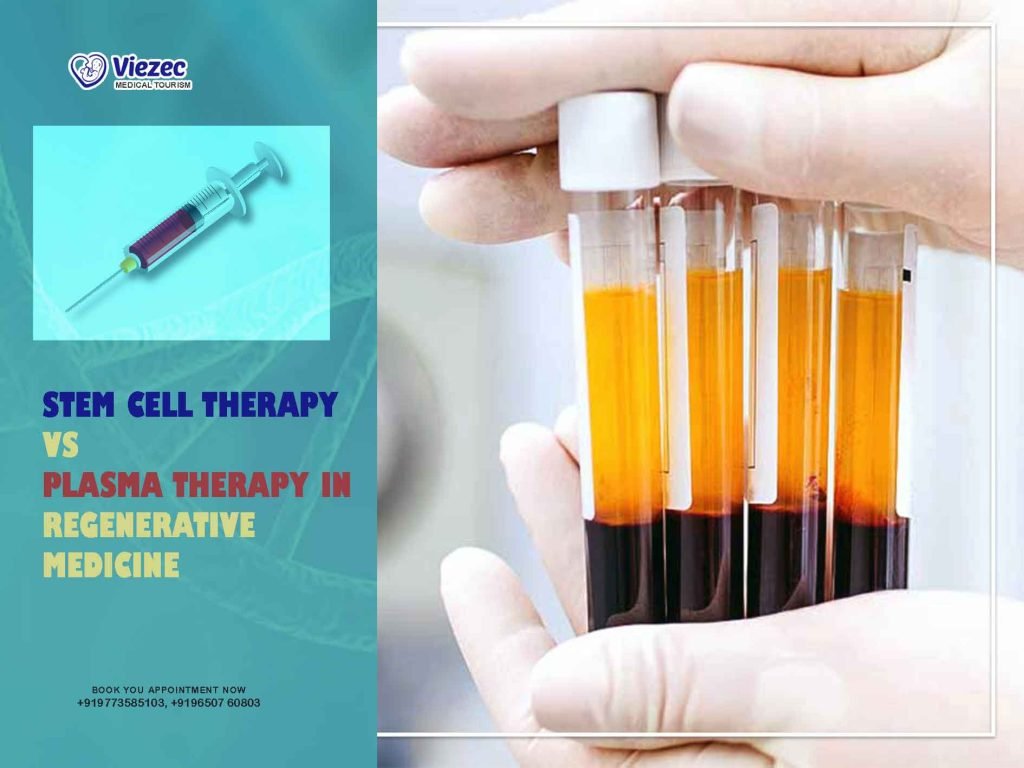
Regenerative medicine has emerged as a promising field offering innovative solutions for various medical conditions, ranging from orthopedic injuries to chronic diseases. Stem cell therapy and plasma therapy are two prominent approaches within this domain, each harnessing the body’s natural processes for healing and regeneration. In this article, we will delve into the mechanisms, applications, and comparative aspects of stem cell therapy and plasma therapy in regenerative medicine.
Understanding Stem Cell Therapy
What are Stem Cells?
Stem cells are undifferentiated cells with the unique ability to develop into specialized cell types in the body. They can self-renew through cell division and differentiate into various cell lineages, including muscle cells, nerve cells, and bone cells.
Mechanisms of Stem Cell Therapy
Stem cell therapy involves the transplantation or administration of stem cells to promote tissue repair, regeneration, or replacement in diseased or damaged tissues. These cells can be sourced from various locations in the body, including bone marrow, adipose tissue, and umbilical cord blood.
Types of Stem Cells
- Embryonic Stem Cells (ESCs): Derived from the inner cell mass of early-stage embryos, ESCs have the potential to differentiate into any cell type in the body.
- Adult Stem Cells: Also known as somatic or tissue-specific stem cells, these are found in specific tissues throughout the body and contribute to the repair and maintenance of those tissues.
- Induced Pluripotent Stem Cells (iPSCs): Generated from adult cells through reprogramming techniques, iPSCs exhibit pluripotency similar to ESCs.
Applications of Stem Cell Therapy
Stem cell therapy holds promise for treating a wide range of conditions, including:
- Orthopedic injuries such as cartilage defects and tendon tears
- Neurological disorders like Parkinson’s disease and spinal cord injuries
- Cardiovascular diseases including heart failure and myocardial infarction
- Autoimmune disorders such as multiple sclerosis and rheumatoid arthritis
Challenges and Considerations
Despite its potential, stem cell therapy faces several challenges, including ethical concerns surrounding the use of embryonic stem cells, risk of immune rejection, and the need for precise control over differentiation to prevent tumor formation.
Understanding Plasma Therapy
What is Plasma Therapy?
Plasma therapy, also known as platelet-rich plasma (PRP) therapy, involves the extraction and concentration of platelets from the patient’s blood and their re-injection into the affected area to stimulate tissue repair and regeneration. Platelets contain various growth factors and cytokines that play crucial roles in the healing process.
Mechanisms of Plasma Therapy
The concentrated platelet-rich plasma is obtained through a process of centrifugation, where blood is spun at high speeds to separate its components. The resulting plasma, rich in platelets, is then injected into the target tissue or joint, where it releases growth factors and promotes tissue repair mechanisms.
Types of Plasma Therapy
- Pure Platelet-Rich Plasma (P-PRP): Contains a concentration of platelets above baseline levels.
- Leukocyte-Platelet-Rich Plasma (L-PRP): Includes leukocytes along with platelets, which may enhance the inflammatory response and aid in tissue healing.
- Platelet-Rich Fibrin Matrix (PRFM): A more advanced form of PRP where platelets are suspended in a fibrin matrix, providing a sustained release of growth factors.
Applications of Plasma Therapy
Plasma therapy has found applications in various medical fields, including:
- Orthopedics for the treatment of tendon injuries, osteoarthritis, and ligament tears
- Dermatology for skin rejuvenation, wound healing, and hair restoration
- Dentistry to promote tissue regeneration after dental surgeries and implant placements
Challenges and Considerations
While plasma therapy is generally considered safe and minimally invasive, its efficacy varies depending on factors such as the patient’s condition, the specific protocol used for preparation, and the site of injection. Additionally, more research is needed to establish standardized protocols and determine its long-term effects.
A Comparative Analysis
Efficacy
- Stem Cell Therapy: Offers the potential for tissue regeneration through the differentiation of stem cells into specialized cell types. However, the efficacy may vary depending on factors such as the source of stem cells and their ability to integrate into the host tissue.
- Plasma Therapy: Relies on the release of growth factors from platelets to stimulate tissue repair mechanisms. While it may provide symptomatic relief and promote healing, its regenerative capabilities are limited compared to stem cell therapy.
Safety
- Stem Cell Therapy: Faces concerns regarding immune rejection, tumorigenicity, and ethical considerations, particularly in the case of embryonic stem cells.
- Plasma Therapy: Generally considered safe with minimal risk of adverse reactions since it utilizes the patient’s own blood components. However, there may be a slight risk of infection or allergic reactions at the injection site.
Cost and Accessibility
- Stem Cell Therapy: Often involves complex procedures for stem cell isolation, expansion, and administration, which can be costly and may not be readily available in all medical settings.
- Plasma Therapy: Relatively simpler and more affordable compared to stem cell therapy, as it involves the extraction and concentration of platelets from the patient’s blood, which can be performed in outpatient settings.
Regulatory Considerations
- Stem Cell Therapy: Subject to stringent regulations and ethical guidelines, particularly concerning the use of embryonic stem cells and the need for informed consent.
- Plasma Therapy: Regulated by health authorities, but with less stringent requirements compared to stem cell therapy, as it involves autologous blood components.
Long-term Effects
- Stem Cell Therapy: Long-term effects are still being studied, particularly regarding the potential for tumor formation and unintended consequences of stem cell integration into host tissues.
- Plasma Therapy: Long-term effects are generally considered minimal, but further research is needed to assess its durability and efficacy over extended periods.
Make an informed Decision
Stem cell therapy and plasma therapy represent two distinct yet complementary approaches in the field of regenerative medicine. While stem cell therapy offers the potential for tissue regeneration through the differentiation of stem cells, plasma therapy harnesses the regenerative properties of platelets to promote healing and tissue repair. Both therapies have shown promise in various medical conditions, but their efficacy, safety, and long-term effects warrant further research and clinical evaluation. Ultimately, the choice between stem cell therapy and plasma therapy depends on the specific medical condition, patient factors, and the desired outcomes of treatment.