


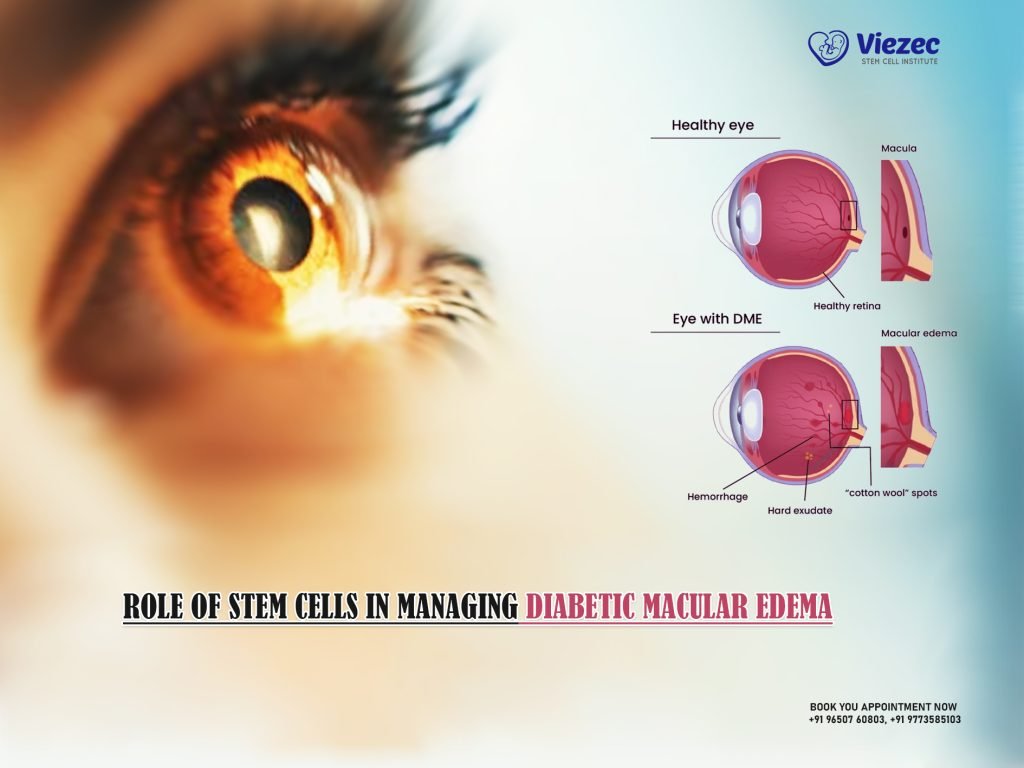
Diabetic macular edema (DME) develops when damaged blood vessels in the eye leak fluid into the macula — the small central part of the retina responsible for sharp, detailed vision. It’s one of the most common causes of vision loss in people with diabetes, and unlike general diabetic retinopathy, it specifically threatens the vision needed for reading, recognizing faces, and driving. Stem cell therapy is being explored as a regenerative option to work alongside standard treatments, aiming to address the underlying vessel damage rather than only managing the fluid buildup.
At Viezec, we offer stem cell treatment for diabetic macular edema in India, combining regenerative medicine with retina specialist oversight to give patients a broader range of options when conventional treatment has plateaued.
Quick Answer
Stem cell therapy for diabetic macular edema uses mesenchymal stem cells (MSCs) — usually sourced from bone marrow, adipose tissue, or umbilical cord blood — to reduce inflammation, stabilize leaking blood vessels, and support repair of retinal tissue in the macula. It is typically used as a complement to anti-VEGF injections and laser therapy, not a replacement, and is best suited to patients whose swelling and vision have not fully responded to conventional treatment. It is not currently considered a cure, and outcomes vary by patient.
What Is Diabetic Macular Edema?
DME is a complication of diabetic retinopathy. High blood sugar over time damages the small blood vessels in the retina; in DME specifically, that damage causes:
- Fluid leakage into the macula, the retina’s central, high-detail zone
- Macular swelling and thickening, which distorts and blurs central vision
- Progressive vision decline if the swelling isn’t controlled, even while peripheral vision remains intact
Because it targets central vision specifically, DME can significantly affect day-to-day tasks — reading, recognizing faces, driving — well before overall vision “feels” badly damaged.
For the full picture of diabetic retinopathy stages and treatment, see: Stem Cell Treatment for Diabetic Retinopathy in India
Why Conventional Treatment Alone Doesn't Always Hold
| Treatment | What it does | Where it falls short |
|---|---|---|
| Anti-VEGF injections | Reduces abnormal vessel growth and fluid leakage | Needs repeat injections, often every 4-8 weeks; some patients plateau or respond poorly |
| Laser therapy (focal/grid) | Seals specific leaking vessels | Doesn’t reverse existing macular damage; can leave residual blind spots |
| Corticosteroid implants | Reduces inflammation and swelling | Can raise eye pressure and increase cataract risk with repeated use |
This is the gap regenerative approaches like stem cell therapy are being explored to address — supporting tissue repair, not just fluid or vessel management.
How Stem Cell Therapy Works for DME
Stem cell therapy for diabetic macular edema centers on mesenchymal stem cells (MSCs), chosen for three key properties:
- Anti-inflammatory action — MSCs release factors that calm the chronic inflammation driving vessel leakage in the macula
- Vascular stabilization — supporting the repair and stabilization of damaged retinal blood vessels, addressing leakage at its source rather than only after fluid accumulates
- Tissue-repair support — trophic factors released by MSCs help protect and support surrounding retinal cells
Other cell types studied in research settings include induced pluripotent stem cells (iPSCs) and retinal progenitor cells (RPCs), though MSCs remain the most widely used in clinical regenerative treatment today due to their established safety profile and accessibility.
This is the gap regenerative approaches like stem cell therapy are being explored to address — supporting tissue repair, not just fluid or vessel management.
Who Is a Candidate for This Treatment?
You may be a candidate for stem cell therapy for diabetic macular edema if you:
- Have confirmed DME on OCT (optical coherence tomography) imaging
- Have had limited or diminishing response to anti-VEGF injections or laser therapy
- Have reasonably controlled blood sugar levels (uncontrolled diabetes is typically stabilized first)
- Do not have active intraocular infection or a condition requiring emergency surgical intervention
A retina specialist reviews your OCT scans, treatment history, and diabetes control before confirming eligibility — this is assessed individually, not on a standard protocol.
What to Expect: The Treatment Process
- Consultation & diagnostics — OCT imaging, fundus examination, and diabetes control review
- Treatment planning — determining stem cell source and delivery approach based on your specific findings
- Procedure day — performed on an outpatient or short-stay basis
- Recovery & monitoring — follow-up OCT scans to objectively track macular thickness and fluid levels
- Ongoing management — continued diabetes control and periodic retina check-ups remain essential afterward
Safety, Realistic Expectations, and Evidence
- Stem cell therapy for DME is not yet considered a definitive cure — it’s a regenerative approach still being refined through ongoing research and clinical use.
- Reported outcomes include improved visual acuity and reduced macular thickness in treated patients in early studies, but larger, controlled long-term studies are still needed to fully establish effectiveness.
- It’s generally positioned to complement anti-VEGF injections and laser therapy, not replace them outright — many patients continue a combined approach.
- As with any regenerative procedure, proper patient selection and an experienced clinical team materially affect outcomes — this is not a treatment to pursue without a full diagnostic work-up.
Why Patients Choose Viezec in India
- Dedicated regenerative medicine team working alongside experienced retina specialists
- Individualized treatment planning based on OCT findings and treatment history, not a fixed protocol
- Significantly lower treatment cost compared to similar regenerative programs in the US, UK, or Gulf countries
- End-to-end support for international patients — consultation, treatment coordination, and follow-up care
Frequently Asked Questions
No. Stem cell therapy shows promise in managing DME and supporting retinal repair, but it is not currently considered a definitive cure. More long-term research is needed to fully establish its effectiveness.
Stem cells used in DME treatment are most commonly sourced from bone marrow, adipose (fat) tissue, or umbilical cord blood, depending on the treatment plan.
As with any medical procedure, there are risks, which is why treatment should only be pursued through an experienced clinical team after a full diagnostic evaluation. Risks and suitability are discussed individually during consultation.
Yes. Stem cell therapy is generally used as a complement to conventional treatments like anti-VEGF injections and laser therapy, rather than a replacement, as part of a broader DME management plan.
Diabetic retinopathy refers to overall damage to the retina’s blood vessels from diabetes. DME is a specific complication of it — fluid leakage and swelling in the macula, the retina’s central vision zone — and can affect central, detailed vision even when the rest of the retina is relatively less affected.
Response times vary by patient. Treatment plans typically include follow-up OCT imaging at set intervals to objectively track macular thickness and fluid levels, rather than relying on subjective vision reports alone.
Current research is focused on optimizing treatment protocols, confirming long-term safety, comparing different stem cell sources (MSCs, iPSCs, retinal progenitor cells), and establishing durable, long-term outcome data.
Take the Next Step
If anti-VEGF injections or laser therapy haven’t fully controlled your diabetic macular edema, or you want to explore regenerative options as part of your care plan, our team can review your case and let you know if you’re a suitable candidate.