


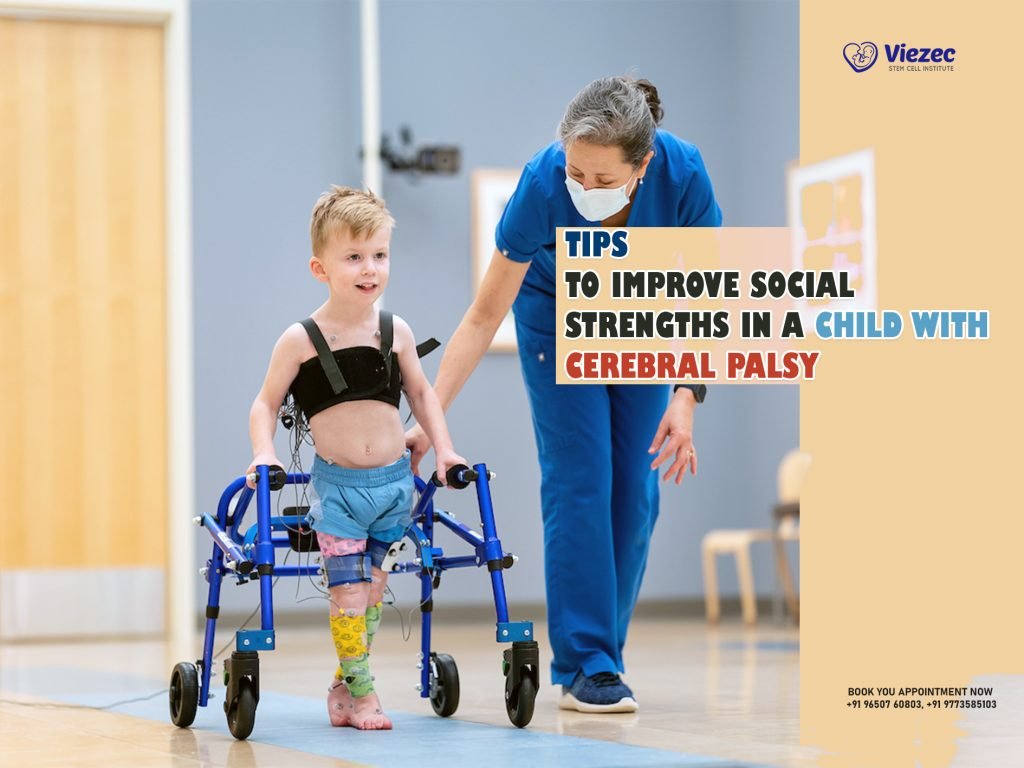
Cerebral palsy affects movement and posture, but for many children, the harder daily challenge is social: making friends, being understood, and feeling included. The good news is that social skills are learnable and improvable at any age — with the right support at home, at school, and in therapy. This guide covers practical, evidence-informed strategies parents, caregivers, and teachers can use.
Quick Answer
Children with cerebral palsy can meaningfully strengthen their social skills through a combination of a strengths-based approach at home, structured social-skills practice (often guided by a speech-language pathologist or occupational therapist), inclusive peer activities, and supportive communication tools like AAC (augmentative and alternative communication) devices. Progress is usually gradual and individual, and works best as a team effort between family, therapists, and school.
Why Social Skills Can Be Harder for Children with Cerebral Palsy
Cerebral palsy itself doesn’t affect intelligence or the desire to connect with others — but several related factors can make social interaction harder to access:
- Communication differences — speech, articulation, or the pace of verbal communication can differ from peers
- Motor limitations — difficulty joining fast-paced games, sports, or physical play
- Fatigue — social settings can be physically tiring, shortening the window for interaction
- Reduced opportunities — mobility or scheduling barriers can mean fewer casual, unstructured chances to socialize compared to peers
- Self-perception — repeated experiences of being left out or misunderstood can affect confidence over time
Understanding why social interaction is harder — rather than assuming a child isn’t interested — is the starting point for effective support.
1. Start with a Strengths-Based Approach
Rather than focusing only on what’s difficult, identify what the child already enjoys and is good at — humor, storytelling, art, music, a specific game, or a particular subject. Shared interests are the easiest entry point into friendship for any child. Build social opportunities around these strengths instead of forcing generic “socializing” activities that don’t play to them.
2. Support Communication However It Happens
Not all communication needs to be verbal. If a child uses limited speech, an AAC device or communication board can be a powerful bridge to peer interaction — but it only works if the people around the child (family, classmates, teachers) also learn to use and respond to it. Some practical steps:
- Involve a speech-language pathologist (SLP) to identify the right communication tools and pace
- Teach classmates simple ways to interact using the child’s communication method
- Give the child extra processing time in conversations — resist the urge to speak for them
3. Use Structured Social Skills Practice
Unstructured play doesn’t come naturally to every child, and that’s fine — it can be taught. Group social skills interventions (GSSIs) — small, guided groups that practice specific skills like turn-taking, reading facial expressions, or starting a conversation — are used for children with brain-based conditions including cerebral palsy, usually led by an occupational therapist, psychologist, or SLP. Ask your child’s care team whether a structured group program is available locally or online.
4. Create Inclusive Play Opportunities
Adapt activities so a child with motor differences can genuinely participate, not just observe:
- Choose games with flexible rules or pacing (board games, sensory play, art-based group activities)
- Look into adaptive sports programs, which are increasingly available and specifically designed around a range of physical abilities
- Encourage a “buddy system” at school where a peer helps bridge physical or communication gaps during group activities
5. Use Social Stories and Visual Supports
Social stories — short, simple narratives that walk through a specific social situation (like joining a game, or handling teasing) — help many children rehearse and understand expected social scripts before they’re in the moment. Visual schedules and emotion cards can also help children who find it hard to read or express feelings in real time.
6. Work Closely with the School
A child’s teacher and classmates spend more daily hours with them than almost anyone outside the home, which makes the classroom one of the highest-leverage environments for social growth:
- Share the child’s communication style, strengths, and support needs directly with teachers each year
- Ask about classroom-based peer-awareness activities that build understanding among classmates
- Coordinate with the school’s occupational therapist or inclusion coordinator, if available, so strategies are consistent between home and school
7. Build Confidence Through Small, Repeated Wins
Confidence grows from accumulated small successes, not big breakthroughs. Celebrate genuine social moments — a new greeting, a completed group activity, a first playdate — without over-praising in a way that feels patronizing. Let the child see that their effort, not just the outcome, is noticed.
8. Involve Siblings and Extended Family
Siblings and cousins are often a child’s first and most consistent peer group. Simple inclusion — involving a child with CP in family games, chores, and decisions in age-appropriate ways — reinforces the social skills being built elsewhere and helps prevent the isolation that can come from being treated differently at home.
9. Watch for Fatigue and Overstimulation
Because social settings can be physically and cognitively tiring for a child with CP, plan for shorter, well-timed social activities rather than long, unstructured ones, especially early on. A shorter successful interaction builds more confidence than a longer one that ends in exhaustion or frustration
10. Loop In the Full Care Team
Social skills don’t develop in isolation from a child’s overall care. Physiotherapists, occupational therapists, speech-language pathologists, and psychologists can each contribute a piece — from communication tools to motor confidence to emotional regulation strategies. If your child is also managing other aspects of cerebral palsy care, it’s worth understanding the full picture of cerebral palsy and how physical, communication, and social development connect, and reviewing available treatment approaches for cerebral palsy with your child’s specialist as part of an overall care plan.
Frequently Asked Questions
Social skill-building can start early, often alongside other developmental therapies in the toddler and preschool years, but it’s never too late to start — older children and teens can also benefit meaningfully from structured social skills support.
Yes. Social connection doesn’t require verbal speech. AAC devices, communication boards, gestures, and eye-gaze systems can all support genuine peer interaction when the people around the child learn to use them consistently.
Gentle, well-paced exposure usually works better than pushing. Start with lower-pressure, shorter interactions built around something the child already enjoys, and let confidence build gradually rather than forcing longer or harder situations too soon.
Yes — team-based adaptive sports and activities give children a shared goal and built-in structure for interacting with peers, which many children find easier than open-ended social settings.
Age-appropriate, simple, and honest explanations work best, usually with the child’s input on how much they want shared. Many schools have peer-awareness resources or can help facilitate this conversation with the classroom.
Ideally a team: family at home, teachers and peers at school, and relevant therapists (speech-language pathologist, occupational therapist, and/or psychologist) who can tailor strategies to the child’s specific communication style and needs.
Related Reading
- Characteristics of Cerebral Palsy — understand the full picture of how CP presents
- Stem Cell Treatment for Cerebral Palsy in India — explore current treatment approaches with your child’s specialist
- Diet Tips for Cerebral Palsy — nutrition considerations that support overall development
Disclaimer: This content is for general informational purposes and is not a substitute for individualized guidance from your child’s pediatrician, therapist, or care team. Every child with cerebral palsy has a different profile of strengths and needs — strategies here should be adapted with input from professionals who know your child.