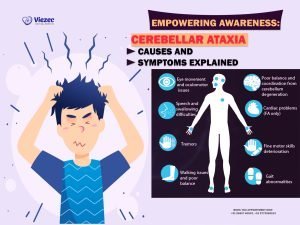
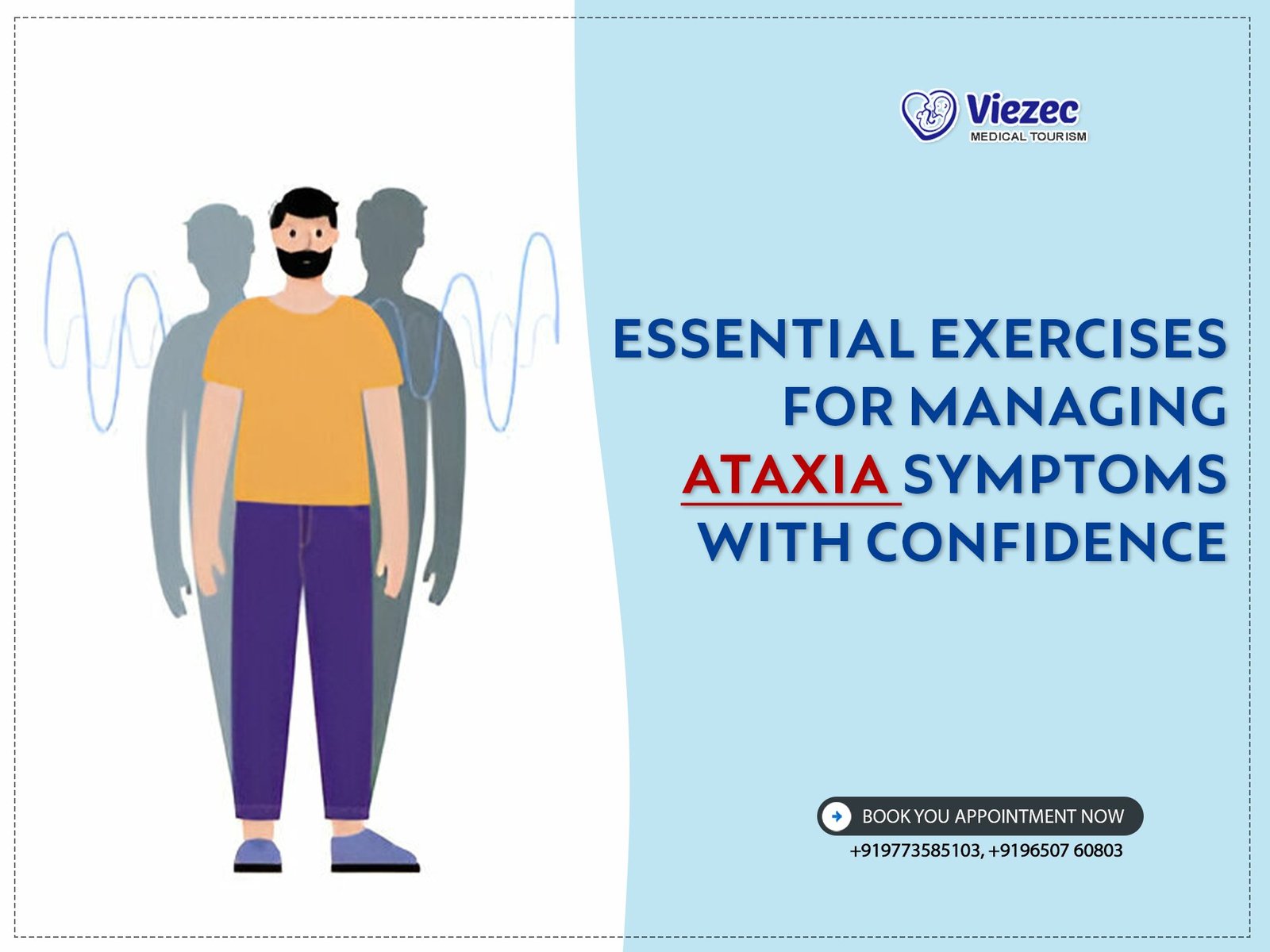
Ataxia affects balance, coordination, and the smoothness of voluntary movement — which means the right exercise program can meaningfully support daily function, even though it doesn’t reverse the underlying condition. This page walks through what the research actually shows about exercise-based rehabilitation for ataxia, which types of training tend to help most, and practical precautions to keep in mind.
If you’re looking for background on what causes ataxia and how it’s diagnosed, see our overview of cerebellar ataxia.
Why exercise helps in ataxia
Ataxia isn’t caused by muscle weakness — it’s caused by the cerebellum and its connecting pathways struggling to coordinate movement, balance, and timing. Because of that, exercise for ataxia looks different from general strength training. The goal is to retrain balance reactions, coordination, and gait patterns, and — where possible — build compensatory strategies the nervous system can rely on.
This isn’t a fringe idea. A 2024–2025 systematic review and meta-analysis pooling 18 randomized controlled trials (398 participants) found that physiotherapy produced a statistically significant reduction in ataxia severity scores (measured using the Scale for the Assessment and Rating of Ataxia, or SARA). The largest, most consistent benefits came from three approaches in particular: multi-aspect training programs, balance training, and aerobic training. Two other techniques studied — whole-body vibration and dual-task training — did not show a significant effect.
It’s worth being direct about the limits of this evidence, too: the review authors noted a serious risk of bias across many of the included trials and rated the overall certainty of evidence as low. Multiple earlier systematic reviews have reached similar conclusions — real, measurable improvement is possible, particularly for degenerative and genetic forms of ataxia, but protocols vary widely and results are individual, not guaranteed.
Types of exercise with the strongest evidence
1. Balance and postural control training
Balance training is one of the most consistently studied interventions for ataxia. It typically progresses from static balance (standing with a narrowing base of support, weight shifting) to dynamic balance (walking on uneven or shifting surfaces, standing on foam pads, reaching outside the base of support). Several trials have used biofeedback or simple visual/verbal cueing to help patients recognize and correct instability in real time.
2. Coordination training
Often called Frenkel’s exercises after the physician who first described them, coordination training uses slow, deliberate, repetitive movements — heel-to-shin slides, finger-to-nose reaching, alternating hand-tapping patterns — to help the nervous system relearn smooth, accurate motor control. These are usually practiced in a fixed sequence and gradually made harder as control improves.
3. Gait training
Because ataxia commonly produces a wide-based, unsteady walk, gait-specific training — practicing walking with visual targets, changing pace and direction, treadmill-based training, or walking over obstacles — is a core part of most rehabilitation programs, often paired with balance work.
4. Aerobic exercise
Along with balance training, aerobic exercise (stationary cycling, treadmill walking, or similar sustained activity) was one of the interventions with the strongest evidence in the 2024–2025 meta-analysis referenced above. It’s generally introduced at a level appropriate to the person’s current mobility and cardiovascular fitness.
5. Multi-aspect / multidisciplinary rehabilitation
Programs that combine several of the above — balance, coordination, gait, and sometimes occupational therapy for daily activities — showed the largest pooled effect in the same analysis. This reflects real-world clinical practice: ataxia rarely affects only one system, so rehabilitation tends to work best when it doesn’t either.
6. Vestibular rehabilitation (for patients with oculomotor involvement)
Some people with cerebellar ataxia also have abnormal eye movements or vestibular (inner ear balance) involvement. For this group, a retrospective cohort study found that adding gaze-stabilization and habituation exercises to standard balance and gait training led to measurable improvement across several standard mobility and balance-confidence scales. This is typically assessed and prescribed individually — it isn’t part of every ataxia rehab program.
A note on intensity and duration
Some of the clinical literature on degenerative cerebellar ataxia has looked at fairly intensive protocols — more than an hour of therapy per day, several days a week, for a month or more — and found meaningful short-term gains. Because that pace isn’t sustainable indefinitely, several reviews suggest that intensive blocks delivered periodically (rather than continuously) may be a more realistic long-term approach for many patients. This is exactly the kind of decision that should be made with a physiotherapist familiar with your specific type and stage of ataxia, not from a generic online routine.
Precautions before starting
- Get an individualized assessment first. Ataxia has many causes (genetic, degenerative, acquired from stroke or injury, and others), and the safest and most effective exercise approach depends on which type you have and how it’s currently affecting you.
- Fall risk is real. Balance and gait exercises should generally be introduced under supervision, at least initially, with appropriate support (parallel bars, a wall, a second person) nearby.
- Progress gradually. Increasing difficulty too quickly is a common way well-intentioned home exercise programs backfire.
- Track a standard measure over time, such as SARA or a balance confidence scale, so you and your care team can see whether a program is actually working rather than guessing.
How this fits with care at Viezec
Structured rehabilitation therapy — including physiotherapy and, where appropriate, speech therapy for associated coordination of speech and swallowing — is offered as part of the supportive care plan for patients we see for ataxia, alongside a full diagnostic work-up. For patients exploring regenerative approaches, our ataxia treatment overview explains how stem cell therapy is positioned as an investigational, supportive option — never a replacement for individualized rehabilitation, and never guaranteed to produce a specific outcome.
Frequently asked questions
No. Ataxia has many underlying causes, and exercise doesn’t reverse the neurological damage behind it. What the evidence supports is functional improvement — better balance, coordination, and mobility scores — not a cure.
This varies significantly by ataxia type, severity, and overall health, which is why an individualized plan from a physiotherapist experienced with ataxia is recommended rather than a fixed general routine.
Not initially, for most people. Because ataxia increases fall risk, it’s safer to learn the specific exercises and appropriate support setup from a professional before continuing them independently at home.
Most of the higher-quality research has focused on degenerative and genetic cerebellar ataxia in adults. Evidence in children, and in some rarer forms of ataxia, is more limited, which is another reason an individual assessment matters.