
Written By:Nishat Arfin|Reviewed By:Viezec Medical Team|
Published: June 20, 2025 | Updated: July 28, 2026
Published: June 20, 2025 | Updated: July 28, 2026
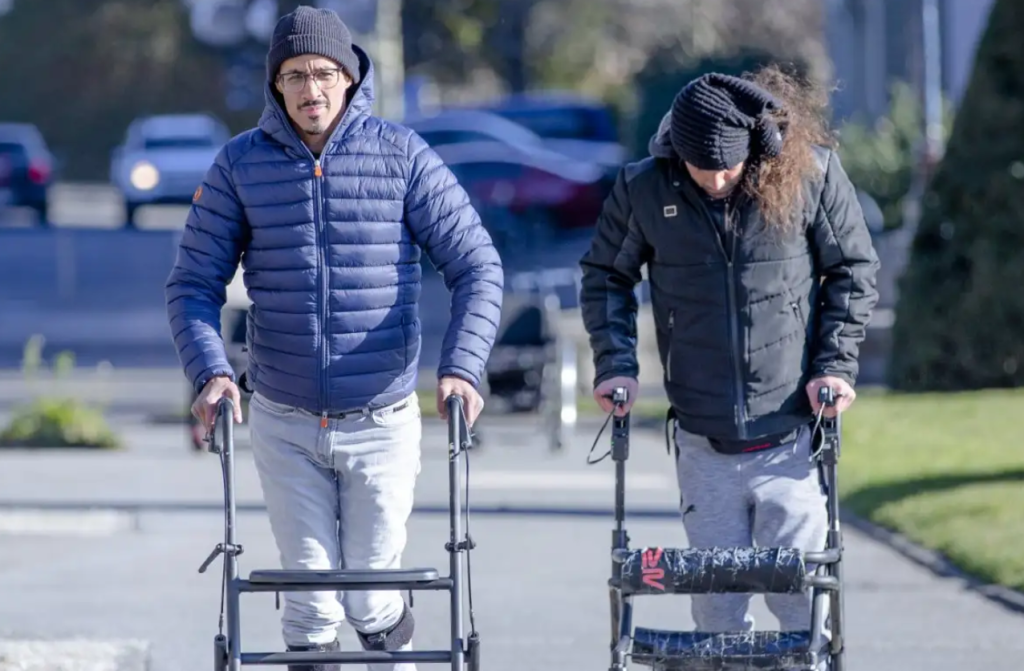
A spinal cord injury (SCI) can change a person’s life within seconds — a road accident, a fall, a sports injury — and suddenly walking, something most people never think twice about, becomes an uncertain goal. For patients and families navigating this reality, one question comes up more than almost any other: will I ever walk again?
There is no single, universal answer. Recovery after spinal cord injury depends on the severity and level of the injury, how much of the spinal cord is damaged versus intact, and how quickly and consistently rehabilitation begins. In recent years, regenerative medicine — particularly stem cell therapy — has become part of this conversation, offering a biological approach aimed at supporting the body’s own repair processes rather than replacing conventional rehabilitation.
This article walks through what actually happens to the spinal cord after injury, how “walking recovery tracks” are structured clinically, what stem cell therapy is proposed to do, what current research does and doesn’t support, and what a realistic recovery timeline looks like. The intention is to give patients and caregivers a clear, medically grounded picture — not a promise of a cure.
Medical disclaimer: This article is for general educational purposes only and does not constitute medical advice. Spinal cord injury recovery is highly individual. Stem cell therapy for SCI remains an area of active clinical research, and outcomes vary significantly between patients. Always consult a qualified neurologist, spine specialist, or rehabilitation physician for a personal evaluation.
The spinal cord is the main communication highway between the brain and the rest of the body. Motor signals travel down from the brain to the muscles that control walking, while sensory signals travel back up, informing the brain about balance, position, and touch.
When the spinal cord is injured, this communication is disrupted at and below the level of injury. Two structural concepts matter most for walking recovery:
Incomplete injuries generally carry a higher chance of regaining some walking function, because there is existing neural architecture that rehabilitation — and potentially regenerative therapy — can work with. This distinction is central to how realistic any “walking track” or recovery plan can be.
SCI causes damage in two phases:
Key takeaway: Much of the ongoing damage after spinal cord injury doesn’t happen at the moment of impact — it unfolds over the following days to weeks, which is part of why timing and intervention during this window matter to long-term outcomes.
A walking recovery track refers to the structured, multi-stage rehabilitation and treatment pathway a spinal cord injury patient follows in pursuit of regaining mobility. It typically combines:
No single therapy — regenerative or otherwise — replaces the role of structured rehabilitation in a walking recovery track. Rather, regenerative treatments are generally positioned as a potential complement, aimed at improving the biological environment in which rehabilitation-driven gains can occur.
Find out whether stem cell therapy may support your spinal cord injury recovery. Speak with our specialists and receive a personalized treatment assessment.
Stem cell therapy for SCI has been studied using several cell types, including:
Definition: Mesenchymal stem cells (MSCs) are adult stem cells capable of differentiating into multiple tissue types and are known for their ability to secrete growth factors and anti-inflammatory signaling molecules — properties relevant to their proposed role in spinal cord repair.
Proposed mechanisms by which stem cell therapy may support spinal cord injury recovery include:
It is important to be precise here: current stem cell approaches are not designed to physically reconnect a completely severed spinal cord. Most research to date focuses on supporting the survival and function of spinal cord tissue that is damaged but not entirely destroyed, particularly in incomplete injuries.
This is an area of active, evolving research, and it’s important to separate encouraging early data from proven, standardized treatment.
Systematic reviews and meta-analyses: A 2022 meta-analysis pooling data from 62 clinical trials and more than 2,400 patients found that stem cell therapy was associated with at least a one-grade improvement on the ASIA Impairment Scale (a standard measure of neurological function after SCI) in roughly 49% of treated patients. The same analysis noted that most included studies were single-arm (without a control group), underscoring that translation into standardized clinical practice is still considered premature by the reviewing authors.
Human trials in subacute injury: A first-in-human study by researchers at Keio University in Japan used induced pluripotent stem cell (iPSC)-derived neural stem/progenitor cells in four patients with subacute spinal cord injury. One-year follow-up results reported no serious treatment-related adverse events, with neurological improvement in two of the four participants — including one patient who regained the ability to stand independently and begin gait training.
Ongoing trials for chronic injury: Building on that early work, researchers have presented preclinical data supporting a planned clinical trial specifically for chronic, incomplete spinal cord injury, targeting patients with demyelinated but still-surviving nerve fibers. This trial is expected to begin patient recruitment in the coming years, reflecting how recent this area of research remains.
Other ongoing research: Academic medical centers, including programs studying adipose-derived and bone marrow-derived mesenchymal stem cells administered via intrathecal injection, continue to investigate safety and functional outcomes in traumatic SCI, generally without requiring surgery or an implantable device.
Current limitations: Across the field, researchers consistently point to small sample sizes, variability in cell types and delivery methods, lack of standardized dosing, and the need for larger controlled trials before stem cell therapy can be considered a standardized, universally proven treatment for walking recovery after SCI.
Key takeaway: Current evidence suggests stem cell therapy can produce measurable neurological improvement in a meaningful subset of patients, particularly with incomplete injuries, but it is not yet an established, guaranteed pathway to walking recovery, and research continues to evolve.
Myth: Stem cell therapy can reverse any spinal cord injury, including complete injuries. Fact: Current approaches are generally more relevant to incomplete injuries with some preserved neural pathways; a fully severed spinal cord cannot currently be reconnected by available stem cell therapies.
Myth: One stem cell treatment guarantees the ability to walk again. Fact: Outcomes vary widely. Published data show meaningful improvement in some patients, not universal recovery, and results typically depend on combining therapy with intensive rehabilitation.
Myth: Stem cell therapy replaces physical rehabilitation. Fact: Rehabilitation — including locomotor and gait training — remains the foundation of any walking recovery track, with regenerative therapy considered a potential complement, not a replacement.
Myth: All stem cell treatments for SCI are the same. Fact: Cell type (mesenchymal, neural progenitor, iPSC-derived), delivery method (intrathecal, intravenous, direct injection), and timing after injury all vary between studies and significantly affect outcomes and evidence quality.
| Injury Stage | Typical Timeframe | Clinical Relevance |
|---|---|---|
| Acute | First 48 hours | Focus on medical stabilization, decompression surgery if indicated, preventing secondary injury |
| Subacute | Days to a few months | A period of interest for some regenerative interventions, as secondary injury processes are still active and some studies have targeted this window |
| Chronic | Beyond 6–12 months | Spinal cord tissue changes are more established; glial scarring is more mature, which is part of why chronic-injury research (including remyelination-focused approaches) is a distinct and newer area of study |
This is a general research framework, not a strict treatment rule — individual evaluation determines what is appropriate at any stage.
At every stage, treatment should be guided by a multidisciplinary team, including neurologists, rehabilitation specialists, and regenerative medicine physicians.
Because spinal cord injury recovery is highly individual, timelines vary considerably. General patterns reported in clinical literature and rehabilitation practice include:
These timelines are illustrative, not guaranteed. Injury completeness, level, time since injury, age, overall health, and consistency of rehabilitation all influence outcomes far more than any single treatment alone.
Potentially appropriate candidates may include:
Who may not be appropriate candidates:
A thorough neurological and imaging-based evaluation is essential before any treatment decision, since injury pattern is the single biggest factor in determining potential candidacy.
Reported considerations associated with stem cell therapy for spinal cord injury include:
Reassuringly, published safety data — including the first-in-human iPSC-derived cell study noted above — have generally reported no serious treatment-related adverse events in treated patients, though sample sizes in these studies remain small. Patients should ask any treatment provider directly about cell sourcing, laboratory processing standards, and relevant regulatory approvals or trial registrations before proceeding.
Our experienced medical team evaluates every spinal cord injury case individually to recommend the most appropriate regenerative treatment plan.
Regardless of whether regenerative therapy is part of the plan, structured rehabilitation remains central to any walking recovery track. Components often include:
Key takeaway: Even in patients receiving regenerative treatment, consistent, intensive rehabilitation is what translates biological changes into functional walking gains — it is not an optional add-on.
Current approaches are generally more applicable to incomplete injuries with some preserved neural pathways; a completely severed spinal cord cannot currently be reconnected with available therapies.
Some research has focused on the subacute period, while newer research is also exploring chronic incomplete injuries; timing depends on the specific clinical protocol and should be assessed individually.
As of 2026, stem cell therapy for spinal cord injury has not received full regulatory approval as a standardized treatment in most major markets, including the United States; it remains an area of active clinical trial research.
Discomfort depends on the delivery method; intrathecal injection is similar to a lumbar puncture and may cause temporary discomfort or headache.
This varies by protocol and clinical program; some approaches use a single administration, while others involve staged treatments — determined by the treating medical team.
Yes. Rehabilitation remains essential to functional recovery and is generally recommended before, during, and after any regenerative treatment.
It may support neurological improvement in some patients, particularly those with incomplete injuries, but it does not guarantee walking recovery for everyone, and outcomes depend heavily on injury pattern and rehabilitation.
Mesenchymal stem cells are primarily studied for their supportive, anti-inflammatory signaling effects, while neural stem/progenitor cells are being studied for their potential role in remyelination and more direct neural support; both are active areas of ongoing research.
Through a detailed neurological exam, imaging (typically MRI), and classification of injury completeness and level, usually by a specialist team.
Neurological changes achieved through combined regenerative treatment and rehabilitation are generally considered functional improvements rather than a “cure,” and long-term maintenance of gains typically depends on continued rehabilitation.
Reported risks include procedure-related discomfort, infection risk, and variable individual response; published studies to date have generally reported low rates of serious adverse events, though data remain limited.
Pediatric spinal cord injury involves distinct clinical considerations, and any treatment decision should involve pediatric neurology and rehabilitation specialists.
For readers exploring regenerative treatment options further, these related resources may help:
If you or a loved one are exploring treatment options after a spinal cord injury, a personalized consultation is the best next step to understand candidacy, expected outcomes, and how a stem cell-supported walking recovery track might fit into an overall rehabilitation plan.
A spinal cord injury walking track is rarely a straight line — it’s a combination of accurate diagnosis, intensive rehabilitation, time, and, for some patients, regenerative treatments like stem cell therapy. Current scientific evidence suggests stem cell therapy may support meaningful neurological improvement in a meaningful proportion of patients, particularly those with incomplete injuries, but it is not a guaranteed path to walking again, and research is still maturing.
For patients and families navigating this journey, the most valuable step is a thorough, individualized evaluation with a qualified spinal cord injury and regenerative medicine team — one that can honestly assess injury pattern, discuss realistic expectations, and build a coordinated plan combining medical, regenerative, and rehabilitative care.