Quick answer
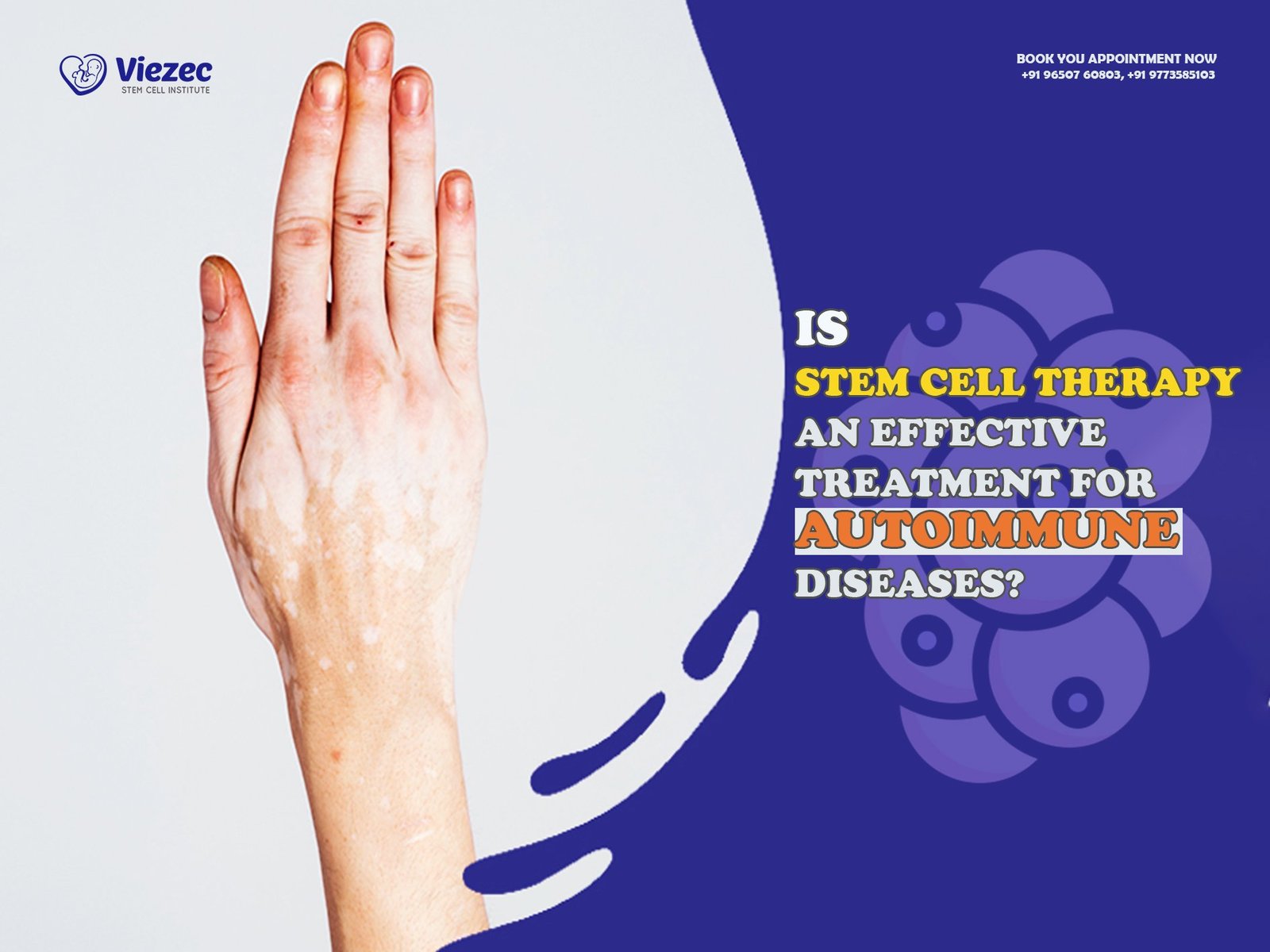
Mesenchymal stem cell (MSC) therapy has shown measurable benefit in randomized controlled trials for several autoimmune conditions, including rheumatoid arthritis, systemic lupus erythematosus, inflammatory bowel disease, and ankylosing spondylitis — but effectiveness varies significantly by condition, and it is not a guaranteed or universal cure. It works by modulating immune activity rather than replacing standard treatment, and should be considered an investigational, supportive option evaluated case by case rather than a first-line therapy.
How stem cell therapy is thought to help autoimmune disease
Autoimmune disorders occur when the immune system mistakenly attacks the body’s own tissue. Mesenchymal stem cells are of particular research interest here because of their immunomodulatory properties — rather than replacing damaged tissue directly, they appear to help rebalance an overactive immune response and reduce inflammation. This mechanism is different from standard immunosuppressant drugs, which broadly suppress immune activity rather than aiming to regulate it.
What does the clinical evidence actually show?
This is the part most content on this topic gets wrong by staying vague. Here’s what a 2022 systematic review and meta-analysis of randomized controlled trials found, broken down by condition:
- Rheumatoid arthritis — MSC transplantation showed a total clinical effective rate of 54% across the reviewed trials, with improvement in disease activity scores and favorable shifts in regulatory immune cell populations.
- Systemic lupus erythematosus (SLE) — measurable improvement in SLE disease activity scores, reduced urine protein levels, and increased complement C3 levels compared to control groups.
- Inflammatory bowel disease — improved clinical efficacy outcomes compared to standard care alone.
- Ankylosing spondylitis — increased overall treatment effectiveness, along with reductions in inflammatory markers and improvements in pain and disease activity after 6 months.
The same review noted that variability in cell culture methods, trial design, and outcome measures across studies means more standardized, larger-scale trials are still needed before these findings can be treated as settled. Separately, compassionate-use case series in patients who had exhausted standard treatment options — including autoimmune hearing loss, multiple sclerosis, and rheumatoid arthritis — have reported preliminary safety and some therapeutic signal, though the authors were clear these results are not equivalent to controlled trial evidence.
In short: there is real, published randomized controlled trial evidence supporting benefit for specific autoimmune conditions — this is stronger evidence than exists for some other applications of stem cell therapy — but it is still an evolving field, effectiveness is condition-specific, and results vary between individuals.
Discover if Stem Cell Therapy Can Help You!
Book a Free Consultation with Our Experts at Viezec !
Which autoimmune conditions have the most supporting evidence?
Based on current published research, MSC therapy has the most controlled-trial support for:
- Rheumatoid arthritis
- Systemic lupus erythematosus
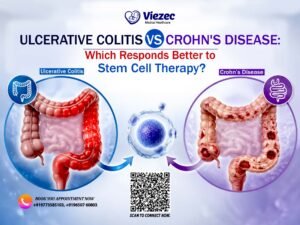
- Inflammatory bowel disease (including Crohn’s disease and ulcerative colitis)
- Ankylosing spondylitis
- Multiple sclerosis
Evidence for other autoimmune conditions is generally earlier-stage — mostly case reports and smaller case series rather than randomized controlled trials — and should be discussed individually with a specialist.
What to expect from a case evaluation
Because effectiveness varies by condition, disease stage, and individual immune profile, a responsible evaluation typically includes:
- A full review of your diagnosis, current medications, and disease activity markers
- Discussion of what specific outcomes are realistic for your condition, based on current published evidence rather than general promises
- Clear positioning of stem cell therapy as a supportive, investigational option alongside — not a replacement for — your existing treatment plan
- Transparent discussion of cost, since this remains an out-of-pocket investigational treatment not covered by most insurance
Safety considerations
- Reported side effects in published studies are generally mild (temporary fever, injection-site discomfort)
- Long-term safety data beyond several years post-treatment is still limited for many conditions
- This therapy does not replace immunosuppressant medication management, which should continue to be guided by your treating rheumatologist, gastroenterologist, or relevant specialist unless they advise otherwise
Frequently Asked Questions
No. Current evidence supports symptom improvement and reduced disease activity in several conditions, but it is not established as a cure. It’s best understood as a supportive, investigational option.
Randomized controlled trial data currently shows measurable effects across rheumatoid arthritis, lupus, inflammatory bowel disease, and ankylosing spondylitis, though effect size and consistency vary by condition.
In most countries, including the U.S., MSC therapy for autoimmune disease remains investigational and is not FDA-approved as a standard treatment for these conditions. Treatment availability and regulatory status vary by country.
Duration of benefit varies by individual and condition, and long-term data is still being gathered. This should be discussed directly during case evaluation rather than assumed from general averages.
India offers advanced regenerative medicine, experienced medical professionals, and cost-effective treatment options. Viezec help patients access structured, ethical, and evidence-based stem cell therapy programs.
Conclusion
Stem cell therapy represents a major shift in the treatment of autoimmune diseases. By targeting immune dysfunction and promoting regeneration, it offers a promising alternative for patients who have exhausted conventional options.
While it is not a miracle cure, scientific evidence and clinical experience suggest that stem cell therapy can be an effective, safe, and transformative treatment for many autoimmune conditions when applied appropriately.
For patients seeking advanced regenerative care in India, guided support from platforms like Viezec can make the process clearer, safer, and more accessible.
If you or a loved one is living with an autoimmune disease and looking for innovative treatment options, stem cell therapy may be a path worth exploring with the right medical guidance.
List of References
Evaluates mesenchymal stem cell (MSC) transplantation effects on multiple autoimmune diseases and reports a total clinical efficacy, e.g., ~54% in rheumatoid arthritis.
Efficacy and Safety of Mesenchymal Stem Cell Transplantation in Autoimmune Diseases
Summarizes trends and the current state of stem cell clinical trials (mostly Phase I–II) across autoimmune conditions like Crohn’s and lupus.
Global Clinical Trials on Stem Cell Therapy for Autoimmune Diseases
Review of immunomodulatory properties, mechanisms, and clinical feasibility of MSC therapy in diseases including RA, MS, SLE, and others.
Shining the Light on Clinical Application of MSC Therapy
Reports outcomes — ~85% 5-year survival, ~43% progression-free survival, ~30% complete response in various autoimmune diseases after hematopoietic stem cell transplantation (HSCT).
Successes and Failures of Stem Cell Transplantation in Autoimmune Diseases
Highlights HSCT ‘immune reset’ approach with evidence of long-term benefits in systemic sclerosis and multiple sclerosis.
Application of Stem Cell Transplantation in Autoimmune Diseases
Related reading
- Common types of autoimmune diseases
- Autoimmune diseases and their symptoms
- Crohn’s disease treatment
- Stem cell treatment for Crohn’s disease in India
- Stem cell treatment for ulcerative colitis in India
- Stem cell therapy for lupus: immune system reset
- Patient stories and case galleries
Considering a case review? Book a free consultation and our team will assess which findings from current research are most relevant to your specific autoimmune condition.