If you live with peripheral neuropathy, you know the routine: numbness that creeps into your fingertips or toes, tingling that never quite goes away, and burning pain that flares up just as you’re trying to fall asleep. You’ve likely been prescribed gabapentin, pregabalin, or over-the-counter pain relievers — and you may have noticed something frustrating: these medications can dull the pain, but they don’t fix what’s actually wrong with your nerves.
This is why a growing number of patients and caregivers are asking about stem cell therapy for peripheral neuropathy — an approach focused on supporting the body’s own nerve repair processes rather than simply masking discomfort. Below, we look at what peripheral neuropathy is, why conventional treatment falls short, and what current science says about stem cells and nerve regeneration.
Key Takeaways
- Painkillers manage symptoms, not the cause. Gabapentin, pregabalin, and other pain medications calm overactive nerve signals but don’t repair damaged nerve fibers, restore myelin, or improve blood flow — which is why many patients see only temporary relief.
- Stem cell therapy targets the underlying biology. Mesenchymal stem cells (MSCs) work mainly through paracrine signaling — releasing neurotrophic factors, reducing inflammation, and supporting new blood vessel growth — rather than directly replacing nerve cells.
- The research is promising but still evolving. Multiple peer-reviewed studies and meta-analyses show improvements in nerve conduction, blood flow, and inflammation markers, but most of the strongest evidence remains preclinical, with human trials still growing in number and scale.
- It’s not a guaranteed cure. Stem cell therapy is not FDA-approved as a cure for peripheral neuropathy, and outcomes vary based on the cause and severity of nerve damage, overall health, and other individual factors.
- It works best as part of a personalized care plan. Stem cell therapy is generally used alongside, not instead of, appropriate medical management (like blood sugar control in diabetic neuropathy), making a specialist evaluation the essential first step.
What Is Peripheral Neuropathy?
Peripheral neuropathy occurs when the nerves outside the brain and spinal cord — the ones that carry signals to your hands, feet, and limbs — become damaged or stop functioning properly. Common symptoms include:
- Numbness or reduced sensation, often starting in the feet
- Tingling or “pins and needles”
- Burning or stabbing pain, especially at night
- Muscle weakness or difficulty with balance
- Increased sensitivity to touch
Because painkillers and anticonvulsant medications work by calming overactive nerve signals, they can reduce how much pain you feel. But they don’t repair the underlying nerve fibers, restore lost myelin (the protective coating around nerves), or improve blood flow to the affected tissue. For many patients, that means a lifetime of medication management rather than genuine improvement.
What Causes Nerve Damage in Peripheral Neuropathy
Peripheral neuropathy isn’t a single disease — it’s a symptom pattern with several possible root causes:
Diabetes. Chronically elevated blood sugar damages the small blood vessels that supply the nerves, starving them of oxygen and nutrients over time. This is the most common cause of neuropathy worldwide.
Chemotherapy. Certain chemotherapy drugs are directly toxic to peripheral nerve fibers, leading to chemotherapy-induced peripheral neuropathy (CIPN), which can persist long after treatment ends.
Autoimmune conditions. In some cases, the immune system mistakenly attacks nerve tissue, triggering inflammation and progressive damage.
Physical trauma or nerve compression. Injuries, surgeries, or repetitive strain can crush or sever nerve fibers, disrupting normal signal transmission.
Idiopathic causes. In a meaningful share of cases, no clear cause is ever identified — often frustrating for patients seeking answers.
Regardless of the trigger, the outcome is often similar: damaged axons (the nerve’s “wiring”), thinning or loss of the protective myelin sheath, and reduced blood supply to the nerve itself.
Limitations of Conventional Treatment
Standard neuropathy treatment typically includes:
- Pain medications (NSAIDs, opioids in some cases)
- Anticonvulsants such as gabapentin or pregabalin
- Antidepressants used off-label for nerve pain
- Physical therapy to maintain mobility and strength
- Topical creams or nerve-numbing patches
These approaches genuinely help people cope day to day, and they remain an important part of care. But none of them regenerate damaged nerve fibers, rebuild myelin, or restore blood supply to nerve tissue. They manage the signal, not the source — a key reason so many patients eventually look beyond symptom control toward a chronic nerve pain treatment that addresses root causes.
What Is Stem Cell Therapy?
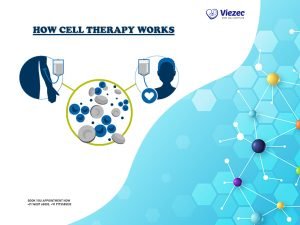
Stem cell therapy for neuropathy generally relies on mesenchymal stem cells (MSCs) — adult stem cells sourced from bone marrow, adipose (fat) tissue, or umbilical cord tissue. MSCs aren’t typically used to “become” new nerve cells one-for-one. Instead, their value lies mainly in paracrine signaling — releasing biologically active molecules that influence the surrounding tissue environment, much like a repair crew directing healing rather than doing every job itself. Known mechanisms include:
- Releasing neurotrophic factors such as nerve growth factor (NGF), brain-derived neurotrophic factor (BDNF), and glial-cell-line-derived neurotrophic factor (GDNF), which support nerve cell survival and growth. Laboratory studies have found elevated levels of these factors in the fluid surrounding cultured MSCs, supporting their role in nerve repair signaling (MDPI, International Journal of Molecular Sciences, 2021).
- Anti-inflammatory action, which helps calm the chronic low-grade inflammation that damages nerve tissue over time.
- Angiogenesis support — encouraging the formation of small new blood vessels that improve oxygen and nutrient delivery to starved nerve fibers.
- Immunomodulation, helping regulate an overactive or misdirected immune response in autoimmune-related nerve damage.
This combination of effects is why mesenchymal stem cells are the primary focus of most current research into regenerative approaches for nerve disorders, rather than embryonic or other stem cell types.
How Stem Cells Help Repair Peripheral Nerves
When MSCs are introduced near damaged nerve tissue, researchers have observed several potentially supportive processes:
Reduced local inflammation. By modulating immune cell activity, MSCs may shift the tissue environment from ongoing damage toward repair.
Improved blood supply. Angiogenic factors released by MSCs can support new capillary growth, addressing the vascular insufficiency underlying much of diabetic neuropathy.
Support for remyelination. Some preclinical studies suggest MSC-secreted factors may support Schwann cell activity — the cells responsible for rebuilding the myelin sheath around peripheral nerves.
Nerve regeneration signaling. Neurotrophic factors released by MSCs appear to support axonal growth and neuronal survival, both central to functional nerve regeneration.
Most of this evidence comes from laboratory and animal studies, with a smaller but growing body of human research. The mechanisms are promising but not yet proven to reliably reverse neuropathy in every patient.
If you’re weighing exosomes or stem cells for nerve repair, it helps to understand how each approach supports regeneration differently.
What Does the Research Say?
Peer-reviewed research on stem cell therapy for peripheral neuropathy has grown substantially over the past decade, particularly for diabetic peripheral neuropathy (DPN):
- A 2024 systematic review and meta-analysis published in Stem Cell Research & Therapy examined seven human studies using bone marrow-derived and umbilical cord-derived MSCs for DPN, administered mainly through intramuscular delivery. The pooled results pointed to statistically significant gains in both motor and sensory nerve conduction velocity among treated patients (Stem Cell Research & Therapy, 2024).
- A separate 2024 meta-analysis of preclinical (animal) studies, published on PMC, reviewed 23 qualifying studies and concluded that MSC transplantation was linked to improved motor and sensory nerve function, better limb blood flow, and lower levels of inflammatory markers (PMC, 2024).
- Earlier laboratory work on a specially prepared, anti-inflammatory MSC variant (referred to as MSC2) tested the cells in a diabetic mouse model of painful neuropathy. Treated animals showed a measurable drop in sensitivity to mechanical stimuli compared with untreated controls, suggesting a pain-modulating effect tied to reduced inflammation (PubMed, Waterman et al.).
- A 2025 systematic review focused specifically on animal safety and efficacy data, covering 29 eligible studies, found that stem cell therapy was consistently associated with improved nerve conduction velocity, better muscle response, increased blood flow to the sciatic nerve, and reduced pain sensitivity following treatment (PubMed, 2025).
- Reviews on peripheral nerve regeneration more broadly, including work published through Frontiers and MDPI journals, consistently point to the paracrine secretion of neurotrophic factors as the leading explanation for how MSCs support nerve repair.
Taken together, this research base is encouraging, but it is still evolving. Much of the strongest evidence remains preclinical, and larger, well-controlled human trials are still needed before stem cell therapy can be considered a standard, guaranteed treatment for neuropathy. Responsible clinics and patients alike should treat this as an emerging, evidence-informed option — not a settled cure.
What to Expect From Treatment
Every patient’s neuropathy is different, so timelines and outcomes vary. That said, here is a general picture of what stem cell therapy for neuropathy often involves:
- Initial evaluation. A detailed review of your medical history, neuropathy type, severity, and any underlying conditions (such as diabetes) to determine candidacy.
- Minimally invasive administration. Depending on the protocol, MSCs may be given through an intravenous infusion or localized injection, generally without the need for major surgery.
- Gradual response. Because MSCs work by supporting biological repair processes, changes are typically gradual rather than immediate — many patients and clinicians track progress over weeks to months.
- Complementary care. Stem cell therapy is often used alongside, not instead of, appropriate medical management of the underlying condition (for example, blood sugar control in diabetic neuropathy treatment).
Good candidates are often patients who have not found adequate relief from conventional treatment, who understand the current evidence base, and who are working with their physician to manage any underlying disease process.
Important disclaimer: Stem cell therapy is not currently FDA-approved as a cure for peripheral neuropathy, and it should not be presented as one. Individual results vary considerably based on the cause and severity of nerve damage, overall health, and other factors. Anyone considering this treatment should discuss it thoroughly with a qualified specialist and view it as part of a broader, personalized care plan rather than a guaranteed fix.
Why Choose Viezec for Stem Cell Therapy
At Viezec, our approach centers on careful patient evaluation, transparent communication about what current evidence does and doesn’t show, and treatment plans built around each patient’s specific neuropathy history rather than a one-size-fits-all protocol. Our team stays closely engaged with published research on regenerative medicine so that patients receive guidance grounded in science, not exaggerated promises. You can learn more about our background and clinical philosophy on our About Us page.
Conclusion
Living with peripheral neuropathy is exhausting, and it’s completely understandable to want something more than another prescription refill. Stem cell therapy for peripheral neuropathy represents a genuinely different approach — one aimed at supporting the underlying biology of nerve repair rather than simply quieting pain signals. The science is still maturing, and results are never guaranteed, but the direction of the research is encouraging for patients dealing with diabetic, chemotherapy-induced, autoimmune, or idiopathic nerve damage.
If you’re exploring options beyond long-term painkiller use, the most important next step is a personalized evaluation with a specialist who can assess your specific case. Explore our dedicated pages on stem cell therapy for diabetic neuropathy and stem cell therapy for neuropathy, or check our stem cell therapy cost page to understand what a treatment plan might involve financially. When you’re ready to talk through your specific symptoms and history, contact our team for a one-on-one consultation, or browse our blog for more research-backed articles on regenerative medicine.
Frequently Asked Questions
No. Stem cell therapy is not currently FDA-approved as a cure for peripheral neuropathy. It’s best understood as a regenerative approach that may support nerve repair and symptom improvement, not a guaranteed fix. Results vary from patient to patient depending on the cause and severity of nerve damage.
Depending on the clinic’s protocol, MSCs are typically given through an intravenous infusion or a localized injection near the affected area. Most protocols are minimally invasive and don’t require major surgery, though this varies by case.
Because MSCs work by supporting gradual biological repair processes — reducing inflammation, improving blood flow, and releasing neurotrophic factors — changes are usually slow rather than immediate. Many patients and clinicians track progress over several weeks to months rather than days.
Good candidates are often patients who haven’t found adequate relief from conventional treatments like gabapentin or physical therapy, who understand that outcomes vary and aren’t guaranteed, and who are working with their physician to manage any underlying condition, such as diabetes. A specialist evaluation is the best way to determine candidacy.
Yes, in most cases. Stem cell therapy is generally used to complement, not replace, appropriate medical management of the underlying condition. Always discuss any new treatment with your prescribing physician before making changes to your current care plan.