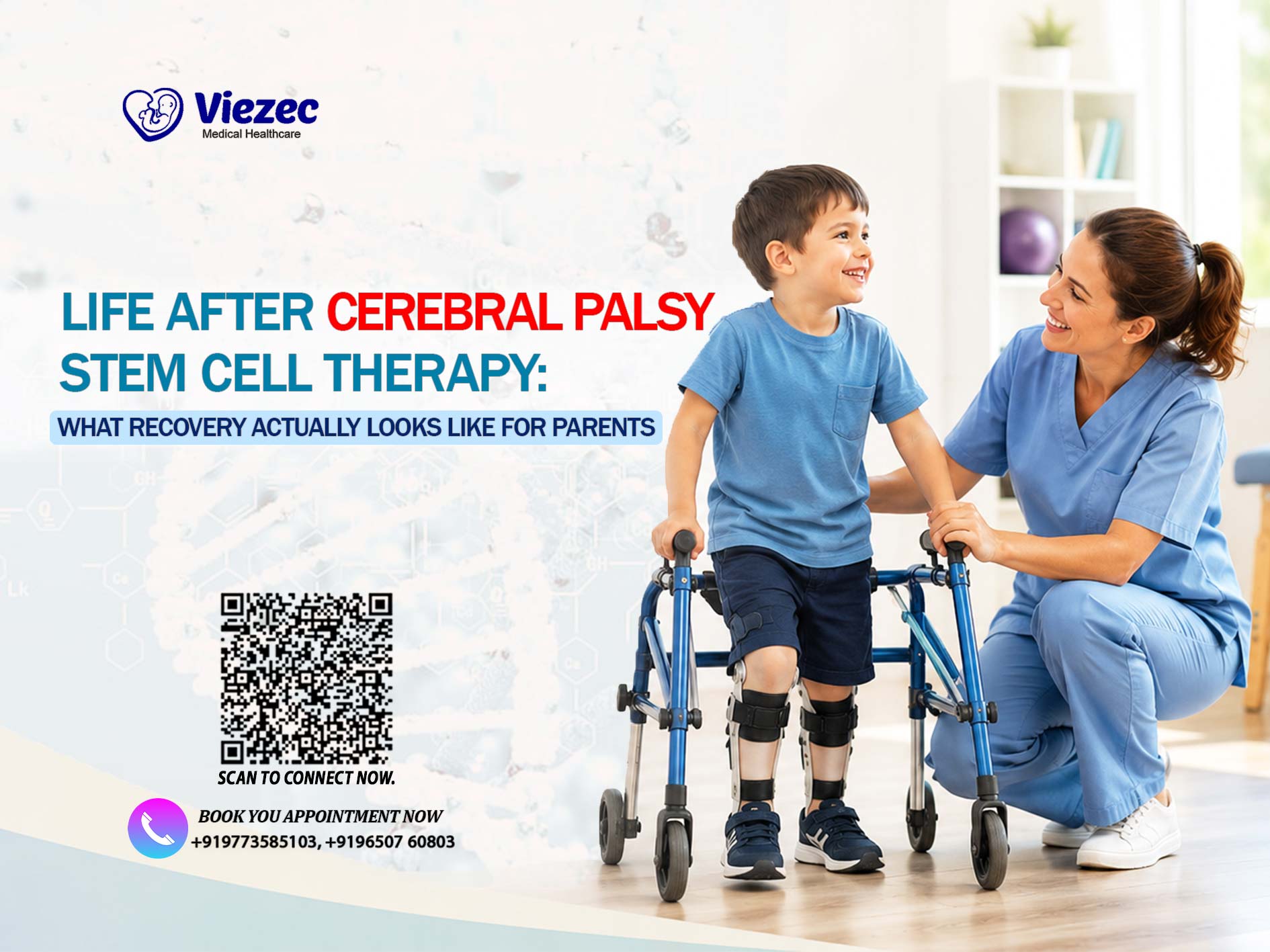
Deciding to pursue cerebral palsy stem cell treatment for your child is rarely a quick decision. It usually comes after months, sometimes years, of therapies, appointments, and researching every option available. If you’ve already made the decision, or you’re close to it, this article isn’t here to sell you on anything. It’s here to walk through what the weeks and months after treatment tend to actually look like — the good days, the plateaus, and the emotional weight that comes with all of it.
Setting Realistic Expectations Before Treatment
Stem cell therapy for cerebral palsy is regenerative and supportive in intent — it is not a cure. No responsible clinic or physician should tell you otherwise. Cerebral palsy results from damage to the developing brain, and current research explores whether stem cells can help reduce inflammation and support the brain’s own repair processes, not replace damaged tissue outright.
Outcomes vary widely based on your child’s type and severity of CP, their age at treatment, and — importantly — how consistently they continue rehabilitation afterward. Some families see meaningful functional gains. Others see modest changes or none at all. If you want a deeper look at how this therapy is thought to work, our page on stem cell therapy for enhancing lives of cerebral palsy patients covers the mechanism in more detail. Going in with grounded expectations protects you from the disappointment that comes with overpromising, and it’s the healthiest starting point for the months ahead.
The First Few Weeks: Physical and Emotional Adjustment
In the first few weeks, most of what you’ll notice isn’t dramatic improvement — it’s adjustment. Some children experience mild fatigue or soreness at the injection site for a few days. Sleep patterns may shift temporarily, especially if your child associates the hospital environment with stress.
Emotionally, this period can be a rollercoaster for both your child and you. It’s common to catch yourself watching for signs of change almost obsessively — checking whether a grip seems stronger, whether a head turns a little faster. Try to resist reading too much into day-to-day fluctuations this early. Your child’s body needs time to settle after the procedure before any therapeutic effect, if it occurs, becomes visible.
Wondering What Recovery Could Look Like for Your Child?
Every child with cerebral palsy progresses differently after stem cell therapy. Speak with Viezec’s medical team to understand realistic expectations, recovery timelines, rehabilitation support, and whether your child may be a suitable candidate.
Month 1–3: Early Signs Parents Often Notice
By the second or third month, some parents report noticing small, subtle shifts: slightly improved muscle tone, marginally better head or trunk control, or small motor gains like reaching for an object more deliberately. These are possibilities, not guarantees — and they should always be understood in that light.
A widely cited case series by Abi Chahine and colleagues followed 17 children with cerebral palsy who received stem cell injections and reported that a majority showed some improvement on standard motor function scales. It’s an encouraging data point, but it’s a small, uncontrolled study, and larger reviews of the research on cerebral palsy stem cell treatment have consistently found that evidence remains limited and more rigorous trials are needed before firm conclusions can be drawn. Keep that context in mind if you read hopeful anecdotes online — including this one.
Signs of progress therapists typically track during this window include:
- Changes in muscle tone or spasticity (often measured with the Modified Ashworth Scale)
- Head and trunk control during sitting or supported standing
- Hand function and reach, such as grasping or releasing objects
- Communication attempts, including vocalizations or eye contact
- Sleep quality and general alertness
Parents researching recovery timelines often want to understand the stem cell vs exosome regenerative options available before starting treatment.
The Role of Rehabilitation and Therapy After Stem Cells
This is the part that’s easy to underweight: rehabilitation isn’t an optional add-on to stem cell therapy, it’s arguably the more important half of the equation. Physiotherapy, occupational therapy, and speech therapy give the nervous system the repeated, structured input it needs to translate any biological change into a functional skill.
Pediatric rehabilitation specialists, including bodies like the American Academy for Cerebral Palsy and Developmental Medicine, consistently emphasize that functional outcomes in CP are tied closely to sustained, individualized therapy programs. Think of it this way: if stem cells create an opportunity for change, therapy is what turns that opportunity into a new movement pattern your child actually uses. Skipping or scaling back therapy after treatment is one of the more common reasons families report disappointing results.
Month 3–6 and Beyond: Tracking Progress Realistically
Progress is usually tracked using standardized tools like the Gross Motor Function Measure (GMFM) or classification on the Gross Motor Function Classification System (GMFCS), alongside your therapy team’s clinical observations. These give you something more reliable to anchor to than day-to-day impressions.
It’s normal — expected, even — for progress to plateau for stretches of time. Neurological and motor changes in children with CP rarely follow a straight upward line. A plateau at month four doesn’t necessarily mean nothing further will happen; it can simply mean the current phase of therapy needs adjusting, or that gains are consolidating before the next visible step. Patience here isn’t just a nice idea, it’s genuinely part of the process.
It can also help to keep your own informal log alongside the formal assessments — short notes on sleep, mood, appetite, and small daily functional moments. Clinical scales are useful, but they’re taken at a single point in time and can miss the texture of gradual change that you, as the person with your child every day, are best positioned to notice. Bring that log to follow-up appointments; it gives your therapy team more to work with than a snapshot alone.
Emotional Toll on Parents: What No One Tells You
Nobody prepares you for how exhausting hope can be. Managing the gap between what you wish for and what’s actually happening, week to week, takes a real emotional toll. It’s common to compare your child’s trajectory to another child’s who had the same treatment — and just as common for that comparison to hurt more than it helps, since no two children’s CP, history, or response are the same.
There’s also a quieter weight that many parents describe only in hindsight: the pressure of having made a significant decision, sometimes involving travel and a real financial commitment, and wanting desperately for it to have been the right one. That pressure can make it harder to see progress clearly — you may find yourself either overinterpreting small changes because you need them to mean something, or dismissing real gains because they don’t look like what you pictured. Both reactions are normal. Neither means you’re doing this wrong.
It also helps to notice how this period affects your relationship with your child day to day. Watching closely for signs of progress, however well-intentioned, can subtly shift how present you are with them as they are right now, not as a set of milestones to track. Many parents find it grounding to keep at least part of each day free of assessment — time that’s just about being together, not measuring anything.
Many parents find it helpful to connect with support groups, whether specific to CP or specific to families who’ve pursued stem cell therapy, simply to have people who understand the particular kind of waiting involved. If the emotional weight starts to feel unmanageable, a counselor experienced with chronic illness or disability in families can be a genuine source of relief, not a last resort. Partners, too, sometimes process this differently from one another, and that mismatch is worth naming out loud rather than letting it become a silent source of tension.
When to Talk to Your Medical Team
Stay in close contact with your treating clinic, and don’t hesitate to reach out between scheduled follow-ups if something concerns you — new or worsening symptoms, signs of infection at the injection site, or a regression rather than a plateau. A transparent clinic should welcome these conversations rather than discourage them. Follow-up assessments are typically scheduled at set intervals (often 3, 6, and 12 months) specifically so changes can be tracked against a consistent baseline.
Recovery expectations differ significantly by condition — cerebral palsy, muscular dystrophy, and other neuromuscular disorders each follow their own trajectory. If muscular dystrophy is the condition you’re researching, our page on stem cell treatment for muscular dystrophy in Delhi, India breaks down what “improvement” typically looks like at 3, 6, and 12 months.
Moving Forward
Recovery after stem cell therapy for cerebral palsy is a gradual, individual journey — not a before-and-after photo. Some families see meaningful change, some see modest change, and progress rarely arrives on a fixed schedule. What seems to matter most is realistic expectations, consistent rehabilitation, and a care team you trust to be honest with you at every stage.
If you’re a family considering treatment and traveling from outside India, our information for international patients covers what to expect logistically. And if you’d like to talk through whether this approach fits your child’s specific situation, our team is glad to walk through it with you in a personalized consultation.
For more on related topics, visit the Viezec blog.
Need Guidance for Your Child’s Next Step?
Whether you’re considering stem cell therapy or planning post-treatment rehabilitation, our specialists are here to answer your questions and help you make informed decisions with confidence.
✔ Personalized medical assessment
✔ Recovery expectations explained
✔ Rehabilitation guidance
✔ International patient assistance
Frequently Asked Questions
Most families who report changes notice them gradually, typically starting somewhere between one and three months after treatment, with further shifts possible up to six months or beyond. There’s no fixed timeline, and some children show no noticeable change at all — response varies by CP type, severity, and how consistently rehabilitation continues afterward.
Reported side effects are generally mild — soreness at the injection site, temporary fatigue, or short-term sleep disruption. Serious adverse events are uncommon in published case series, though the number of large, controlled studies remains limited, so long-term safety data is still developing. Any credible clinic should walk you through the specific risks for your child’s case before treatment.
No. Cerebral palsy results from damage to the developing brain, and no current treatment — stem cell therapy included — reverses that damage or cures the underlying condition. It’s studied as a potential support for function alongside conventional therapy, not a replacement for it.
This varies by protocol and by the treating clinic’s assessment of your child’s condition; some families pursue a single session, others a series over time. Your treatment team should explain the reasoning behind the specific number recommended for your child rather than applying a one-size-fits-all number.
Broadly: the first few weeks involve physical adjustment and rest; months one to three are when subtle early signs, if any, tend to appear; months three to six and beyond involve tracking progress against standardized motor assessments, often with plateaus along the way. Rehabilitation continues throughout, not just before or after.
Yes — ongoing physiotherapy, occupational therapy, and/or speech therapy are generally considered essential, not optional. Any biological change stem cells might support still needs structured, repeated practice to become a functional skill your child actually uses.