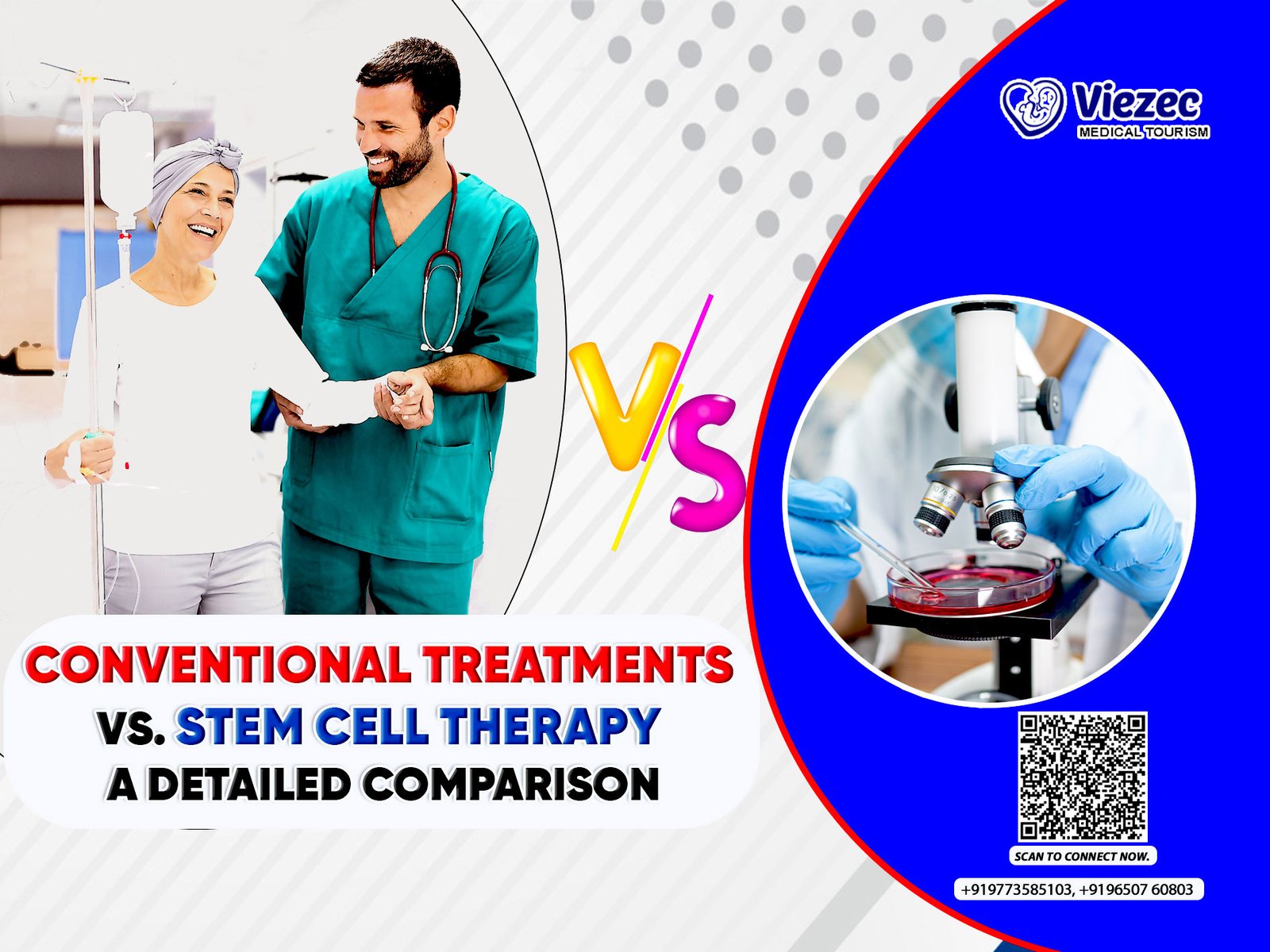
When a chronic or degenerative condition doesn’t respond the way you’d hoped, a question comes up sooner or later: should you stay the course with conventional medicine, or explore something newer? Stem cell therapy vs conventional treatment is one of the most common comparisons patients research before making that decision — and for good reason. Conventional medicine is built around managing symptoms and slowing disease progression, while stem cell therapy takes a regenerative approach, aiming to repair damaged tissue at the cellular level. Neither is universally “better” — the right choice depends on your condition, its stage, and your goals. This article breaks down how the two compare across mechanism, safety, cost, and recovery, and looks at where each one tends to fit best.
What Is Conventional Treatment?
Conventional treatment — sometimes called allopathic or mainstream medicine — is the backbone of modern healthcare. It relies on decades of clinical trials, standardized protocols, and globally validated procedures. Broadly, it falls into four categories:
- Pharmacological therapy — prescription or over-the-counter drugs used to control symptoms (painkillers, anti-inflammatories, immunosuppressants). Effective for short-term relief, but long-term use can bring side effects and doesn’t repair damaged cells.
- Surgical intervention — used when medication isn’t enough, such as joint replacement for osteoarthritis or bypass surgery for cardiovascular disease. Effective, but invasive, with real recovery time and no guarantee against recurrence.
- Physical and rehabilitation therapy — improves mobility and function after injury or illness, though it generally supports recovery rather than reversing underlying tissue or nerve damage.
- Lifestyle and nutritional management — diet, exercise, and stress management, useful as a supportive measure but rarely sufficient on its own for advanced disease.
The strength of conventional treatment is its evidence base: it’s rigorously tested, widely available, and often delivers fast symptom relief.
What Is Stem Cell Therapy?
Stem cell therapy is a form of regenerative medicine that uses the body’s own repair mechanisms — or carefully sourced donor cells — to regenerate damaged tissue rather than simply manage its symptoms. Stem cells can self-renew and differentiate into specialized cell types (nerve, muscle, bone, and more), which is what makes them useful across such a wide range of chronic and degenerative conditions.
Two main types are used in practice, drawing on different sources of stem cells:
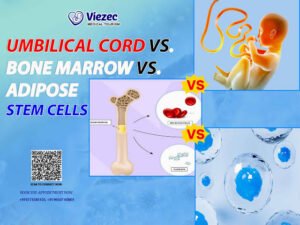
- Autologous stem cells — collected from the patient’s own body (typically bone marrow or adipose tissue), carrying minimal risk of immune rejection.
- Allogeneic stem cells — sourced from a donor, often umbilical cord tissue, processed in GMP-certified labs under medical supervision.
Cells are collected, processed, and then administered by IV infusion or localized injection. Once in the body, they migrate to damaged tissue and release growth factors and signaling molecules that support natural repair — a mechanism quite different from how a pill or a scalpel works.
Not Sure Which Treatment Is Right for You?
Every condition is different. Speak with Viezec’s medical experts to understand whether stem cell therapy may be a suitable option for your specific health needs.
Stem Cell Therapy vs Conventional Treatment: Head-to-Head Comparison
Mechanism of Action
Conventional treatment generally works by controlling symptoms — reducing inflammation, blocking pain signals, or physically repairing/replacing structures. Stem cell therapy instead tries to trigger the body’s own regenerative processes, aiming at the underlying cellular damage rather than just its downstream effects.
Invasiveness and Recovery Time
Surgery and some drug regimens can be invasive, with real downtime. Stem cell therapy is typically minimally invasive — an infusion or targeted injection — meaning most patients resume normal activity quickly, with only mild, temporary effects.
Durability of Results
This is where the “vs” really matters for chronic disease. Conventional treatments often require ongoing medication or repeat procedures to maintain results. Regeneration-based approaches may offer more durable outcomes, since the therapy is working at the tissue level rather than just suppressing symptoms — though results still vary by condition, cell source, and patient response, and shouldn’t be assumed as permanent in every case.
Personalization
Conventional care tends to be protocol-driven — most patients with the same diagnosis get a similar plan. Stem cell therapy protocols are typically built around the individual: age, disease stage, cell source, and health history all factor into the plan.
Safety Profile and Evidence Base
Conventional medicine has the deeper, longer track record — decades of large-scale trials. Stem cell therapy is a newer field, and the evidence base, while growing, varies significantly by condition and cell type. Regulatory bodies have been explicit about this distinction. The International Society for Stem Cell Research (ISSCR) publishes patient guidance specifically to help people evaluate claims and identify legitimate, evidence-based clinics versus unproven ones. The U.S. FDA has also issued public guidance cautioning that not all stem cell products marketed to patients are approved or backed by adequate clinical evidence — a useful reminder that where and how a therapy is administered matters as much as the therapy itself. In India, providers are expected to operate within ICMR (Indian Council of Medical Research) guidelines, which set ethical and procedural standards for stem cell research and clinical use.
Cost Over Time
Conventional treatment can look cheaper upfront but accumulate cost through repeat medication, hospital visits, and rehabilitation. Stem cell therapy often has a higher initial cost but, because it targets the underlying condition, may reduce the need for repeated interventions over time — a factor worth weighing against a patient’s specific long-term treatment trajectory, not just the sticker price.
A Quick Comparison
| Aspect | Conventional Treatment | Stem Cell Therapy |
|---|---|---|
| Core approach | Manages symptoms | Aims to repair/regenerate tissue |
| Goal | Relief and maintenance | Long-term functional recovery |
| Invasiveness | Often surgical or drug-based | Minimally invasive |
| Recovery time | Can be prolonged | Usually short |
| Personalization | Largely standardized | Patient-specific protocols |
| Cost pattern | Recurring, long-term | Higher upfront, potentially fewer repeats |
| Evidence base | Extensive, long-established | Growing, condition-dependent |
Stem Cell Therapy vs Conventional Treatment, By Condition
Osteoarthritis
Standard care for osteoarthritis usually means anti-inflammatory medication, corticosteroid injections, or eventually joint replacement. Stem cell therapy is explored as a non-surgical option aimed at supporting cartilage and joint tissue rather than just numbing the pain — often considered by patients who want to delay or avoid surgery.
Rheumatoid Arthritis and Autoimmune Disease
Conventional management of rheumatoid arthritis typically relies on long-term immunosuppressants. Because stem cells have immunomodulatory properties, therapy in this space is being studied as a way to help regulate immune response rather than just suppress it broadly.
Parkinson's Disease
Conventional treatment for Parkinson’s disease centers on dopamine-replacement medication, which manages symptoms but doesn’t address underlying neuronal loss. Stem cell approaches are being explored specifically to support neural tissue, though this remains an active and evolving area of research.
Diabetes
Standard care for diabetes is insulin and lifestyle management, both of which control blood sugar but don’t restore pancreatic function. Stem cell therapy is being investigated as a way to support insulin-producing cell function, positioned as a complement to, not automatic replacement for, standard glycemic control.
COPD and Lung Disease
Conventional treatment for COPD focuses on bronchodilators, steroids, and oxygen therapy to ease breathing. Stem cell therapy is explored for its potential to reduce inflammation and support lung tissue, generally alongside — not instead of — standard respiratory care.
Spinal Cord Injury
Physiotherapy and rehabilitation remain central to conventional spinal cord injury care, improving function without reversing nerve damage. Stem cell therapy for spinal cord injury is being studied for its potential to support nerve tissue repair, often used in combination with ongoing rehabilitation rather than as a stand-alone substitute.
When Conventional Treatment Still Makes Sense
It’s worth being upfront here: stem cell therapy isn’t a universal replacement for conventional care. Acute infections, medical emergencies, fractures, and many early-stage conditions are still best managed with standard drugs, surgery, or rehabilitation — these approaches have decades of large-trial evidence behind them and often work quickly and predictably. Conventional treatment also remains the first-line, most accessible option in most healthcare systems, and for many patients it’s entirely sufficient. Anyone considering stem cell therapy should do so as an informed decision made alongside their treating physician, not as a substitute for appropriate emergency or first-line care.
When to Consider Stem Cell Therapy
Stem cell therapy tends to be worth exploring when:
- Conventional treatments have plateaued or only offer partial, temporary relief for a chronic condition
- You’re specifically looking for a minimally invasive alternative to surgery
- You want a personalized, evaluation-based protocol rather than a standardized regimen
- Your condition is one where regeneration-focused research shows genuine (if still evolving) promise
A qualified regenerative medicine team should evaluate diagnosis, disease stage, and overall health before recommending it — it’s not a decision to make from marketing material alone.
Explore Your Stem Cell Therapy Options
Our specialists review your medical history and help you understand the potential benefits, limitations, and expected outcomes before you make any treatment decision.
Safety, Regulation, and Ethical Sourcing
Because this is a newer field, where and how stem cell therapy is delivered matters enormously. Reputable providers source cells ethically, process them in GMP-certified laboratories, and operate within recognized frameworks such as ICMR guidelines in India. Patients should ask directly about cell sourcing, laboratory certification, and what evidence supports the specific protocol being proposed for their condition — the same due diligence recommended by bodies like the ISSCR for evaluating any stem cell clinic.
Frequently Asked Questions
It depends on the condition and its stage. Medication is often faster for symptom control, while stem cell therapy is being explored for its potential to address underlying tissue damage. They’re frequently used as complementary approaches rather than strict alternatives.
Not universally — it depends on the severity of the condition. Stem cell therapy is generally considered in earlier or moderate stages as a less invasive option; advanced structural damage may still require surgical repair.
Stem cell therapy usually has a higher upfront cost, while conventional treatment can accumulate ongoing expenses through medication and repeat procedures. Long-term value depends on individual treatment history and condition.
Conventional treatments carry well-documented risks from long-term drug use or surgery. Stem cell therapy, when performed under regulated, ethical protocols, generally involves milder and shorter-lived side effects like temporary fatigue or injection-site discomfort — though it’s a newer field with less long-term safety data than conventional medicine.
Conventional treatments are broadly covered by most insurance plans. Stem cell therapy, particularly investigational applications, is often not covered, since many protocols are still considered experimental in various regulatory jurisdictions. Check with your provider and insurer directly.
Success rates vary widely by condition, cell source, and patient factors, and aren’t easily reduced to a single number. Ask any provider for condition-specific outcome data rather than a generic success-rate claim.
Rarely as a complete replacement — it’s more often used to complement conventional care or as an alternative when standard treatments have plateaued. The right approach depends on individual diagnosis and should be decided with a qualified physician.
Patients with chronic or degenerative conditions who haven’t achieved sufficient relief from standard care, and who are found suitable after full medical evaluation, are typically the best candidates.
Conclusion
Conventional treatment and stem cell therapy aren’t really competitors — they’re two different tools built around two different goals: symptom control versus tissue-level regeneration. Conventional medicine remains essential, fast, and well-proven for most conditions. Stem cell therapy offers a newer, more personalized route worth exploring when standard care has plateaued, provided it’s pursued through an ethical, evidence-based, and properly regulated provider. If you’re trying to work out which path fits your specific condition, get an expert opinion or schedule a consultation with a regenerative medicine team before making a decision.
This article is for informational purposes only and does not constitute medical advice. Stem cell therapies for many conditions are considered investigational. Consult a qualified healthcare professional before making treatment decisions.