Infertility is no longer viewed as a permanent roadblock in life. Over the years, medical science has evolved from conventional fertility treatments like IVF and IUI to advanced regenerative therapies. Among them, stem cell treatment for infertility has attracted global attention because it does not only support reproductive function but also targets the root cause at a cellular level.
This blog discusses the top benefits of stem cell therapy, how it supports fertility in men and women, and why many patients are choosing it as a potential fertility-restoring option.
Understanding Stem Cell Therapy in Infertility
Stem cells are unique cells with the power to repair, regenerate, and replace damaged tissues. In reproductive medicine, they are used to support ovarian function, improve endometrial thickness, repair reproductive damage, and promote healthy sperm development.
Unlike conventional infertility treatments that mostly aim to assist pregnancy temporarily, stem cell therapy focuses on regenerating reproductive organs naturally to increase the chances of conception.
How stem cells help:
-
regenerate damaged ovarian or testicular tissues
-
improve egg and sperm quality
-
enhance hormone regulation for conception
-
restore menstrual and ovulatory functions
-
increase endometrial thickness for successful implantation
While research is still ongoing, various clinical case studies and patient outcome reports indicate promising potential, especially for couples who haven’t achieved success through traditional methods.
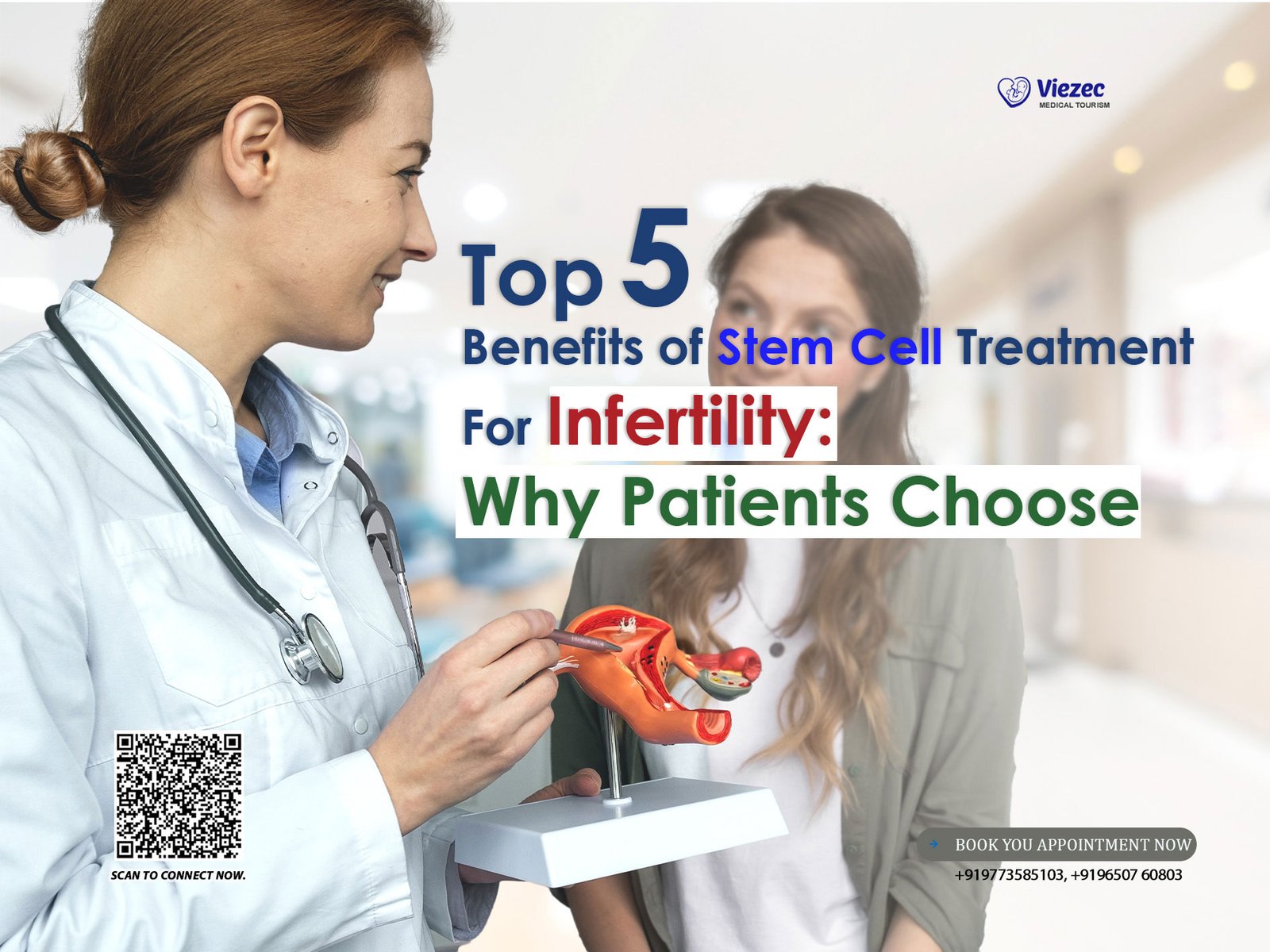
Top 5 Benefits of Stem Cell Treatment for Infertility
Below are the five biggest advantages of using stem cell therapy for reproductive recovery and long-term fertility enhancement.
1. Natural Regeneration of Reproductive Tissues
One of the strongest benefits of stem cell treatment is its natural regenerative ability. Instead of stimulating the system artificially, stem cells repair and rebuild reproductive structures.
Why regeneration matters
Reproductive damage can occur due to:
-
Age-related decline
-
PCOS or endometriosis
-
Poor ovarian reserve
-
Hormonal imbalance
-
Previous infections or surgeries
-
Low sperm count or motility
Traditional treatments often work at a symptomatic level, but stem cell therapy aims to restore function from the root.
Key advantages:
-
improves ovarian follicle activity
-
enhances sperm maturation and genetic stability
-
restores endometrium for implantation
-
increases chances of natural conception over time
Patients often choose stem cell treatment because it is biologically aligned with the body, making it a more holistic fertility-supporting method compared to solely medication-based approaches.
2. Potential Improvement in Egg and Sperm Quality
Egg and sperm quality is one of the most important factors for conception. Poor egg quality reduces fertilization chances, while weak sperm morphology affects embryo development.
Stem cells have shown potential to improve gamete quality by enhancing cellular health, oxygenation, and nutrient supply in gonadal tissues.
Benefits for Women
-
potential restoration of ovarian function
-
better oocyte quality
-
improved hormone response
-
increased follicular growth
Benefits for Men
-
improves sperm count, motility, morphology
-
supports testicular tissue regeneration
-
may enhance testosterone regulation
-
helps reduce oxidative cell damage
Why this benefit stands out?
People who do not respond well to IVF stimulation or have multiple failed cycles sometimes explore stem cell therapy to strengthen their reproductive potential naturally before undergoing further fertility procedures.
3. Supports Endometrial Growth for Successful Implantation
Even if quality eggs and sperm are present, implantation failure can prevent pregnancy. Thin or damaged uterine lining is one of the common reasons for repeated IVF failures.
Stem cell therapy may stimulate new blood vessel formation, promote tissue repair, and help thicken the uterine endometrium — which is required for embryo implantation.
Some patients report:
-
better menstrual regularity
-
improved lining thickness
-
higher conception probability
-
enhanced IVF or ICSI outcomes
When this helps most
-
repeated implantation failure (RIF)
-
thin endometrium
-
Asherman’s Syndrome
-
uterine scarring
This is one reason many women who have tried hormone therapy but didn’t see improvement often consider regenerative therapy as an alternative supportive approach.
4. Reduced Inflammation & Oxidative Stress — A Major Cause of Infertility
Inflammation and oxidative stress contribute to poor egg/sperm health, hormonal disruption, and weakened reproductive function.
Stem cell therapy has shown potential anti-inflammatory benefits, which can create a more fertile internal environment for conception.
How stem cells help reduce inflammation
-
modulating immune response
-
repairing damaged tissue
-
improving blood flow in reproductive organs
-
neutralizing free radicals
This benefit is particularly helpful for individuals with PCOS, endometriosis, testicular inflammation, varicocele-associated infertility, and other chronic reproductive disorders.
5. Long-Term Fertility Support Instead of Short-Term Results
Traditional fertility treatments often require repeated hormonal stimulation or invasive cycles. Stem cell therapy, however, aims for progressive improvement over time by enhancing natural reproductive function.
Key reasons why patients prefer stem cell therapy long-term:
-
possibility of restoring natural ovulation
-
progressive improvement in sperm quality
-
helps body gain more balanced hormonal rhythm
-
potential to support conception naturally
-
might reduce dependency on repeated IVF attempts
For many patients, the most attractive benefit is the chance to experience biological recovery rather than temporary assisted conception.
Who Can Consider Stem Cell Therapy for Infertility?
Many patients and emerging research suggest additional benefits of stem cell therapy beyond the primary fertility advantages. In many cases, the procedure can be minimally invasive depending on the method used, and it is suitable for both male and female infertility cases. Some reports also indicate that regenerative treatment may improve the internal reproductive environment, which may support better outcomes when combined with IVF or ICSI.
Although results vary, stem cell therapy is increasingly recognized as a promising option, especially for individuals with low ovarian reserve or those considering alternative approaches after failed fertility cycles. While it is not a guaranteed solution for pregnancy, early studies and patient experiences highlight its potential to enhance natural reproductive capacity over time.
Why More Patients Are Choosing Stem Cell Therapy?
Many patients and emerging research suggest additional benefits of stem cell therapy beyond the primary fertility advantages. In many cases, the procedure can be minimally invasive depending on the method used, and it is suitable for both male and female infertility cases. Some reports also indicate that regenerative treatment may improve the internal reproductive environment, which may support better outcomes when combined with IVF or ICSI.
Although results vary, stem cell therapy is increasingly recognized as a promising option, especially for individuals with low ovarian reserve or those considering alternative approaches after failed fertility cycles. While it is not a guaranteed solution for pregnancy, early studies and patient experiences highlight its potential to enhance natural reproductive capacity over time.
Natural Healing Instead of Symptom Control
A major reason patients consider stem cell therapy for infertility is its regenerative approach. Instead of temporarily stimulating the reproductive system, stem cells support healing at the cellular level. Many individuals prefer this method because it aligns with the body’s own biological repair process rather than covering up symptoms with short-term hormonal or medical interventions.
A New Ray of Hope After Failed IVF
Not every couple conceives through IVF or ICSI, even after multiple rounds of treatment. When this happens, the emotional and financial burden increases. Stem cell therapy offers an alternative path for those who have struggled with recurrent IVF failure. It may help improve ovarian or testicular function first, and later make future IVF attempts more successful — giving couples renewed confidence and direction.
Biologically Supportive & Body-Compatible Approach
Many patients choose stem cell therapy because it works with the body, not against it. Instead of forcing ovulation or sperm production, stem cells encourage natural tissue repair, hormonal balance, and improved reproductive conditions internally. This makes it attractive for couples looking for a less intrusive, biologically aligned fertility solution.
Belief in Next-Generation Medical Advancements
For some patients, the appeal is simple — they want treatment that represents the future of fertility care. Regenerative medicine and stem cell therapy are rapidly evolving fields with expanding research. People view it as a modern, forward-thinking option that may offer long-term fertility support where traditional methods fall short.
Stem Cell Therapy vs IVF: Is It a Replacement?
Stem cell therapy is not intended to completely replace IVF or other assisted reproductive treatments. Instead, it works as a supportive or complementary approach to enhance fertility outcomes.
Many fertility specialists recommend using stem cell therapy alongside conventional treatments rather than as a standalone solution, especially for patients with complex infertility issues.
How Stem Cell Therapy Complements IVF or ICSI?
Stem cell therapy can improve fertility potential before or during assisted reproduction procedures:
-
Improving Egg Quality: Enhances ovarian function and oocyte health, increasing chances of fertilization.
-
Enhancing Sperm Parameters: Supports testicular tissue and improves sperm motility and count.
-
Repairing Uterine Environment: Promotes endometrial growth and better implantation conditions.
By addressing the underlying reproductive issues, stem cell therapy can prepare the body for higher success in IVF or ICSI cycles.
Combined or Staged Approach for Better Results
Patients may benefit more from a combined strategy rather than relying solely on one treatment:
-
Step 1: Stem Cell Therapy
-
Regenerate ovarian/testicular tissue
-
Improve hormonal balance
-
Support endometrial repair
-
-
Step 2: Assisted Reproductive Procedure (IVF/ICSI)
-
Use improved eggs and sperm for fertilization
-
Increase likelihood of successful embryo implantation
-
This staged approach maximizes the chances of conception while leveraging the regenerative benefits of stem cell therapy.
Final Thoughts
Stem cell therapy offers exciting possibilities in the field of infertility management. As regenerative medicine advances, more couples are exploring it as a path toward natural reproductive restoration. While results are not guaranteed and clinical research is still expanding, many patients prefer this approach because of its long-term tissue regeneration, potential improvement in egg/sperm quality, endometrial repair, and reduced inflammatory damage.
Stem cell therapy does not promise instant pregnancy, but it opens a scientific doorway to rebuild fertility from within — something traditional treatments rarely address at such depth.
List of References:-
Transplantation of UC-MSCs in ovary improves ovarian function and intermediate outcomes in IVF/ICSI cycles of POI patients (2025). https://stemcellres.biomedcentral.com/articles/10.1186/s13287-025-04680-0
Current status and future prospects of mesenchymal stem cell-derived exosomes therapy for premature ovarian insufficiency (2025). https://ovarianresearch.biomedcentral.com/articles/10.1186/s13048-025-01813-0
Mesenchymal Stem Cells: A Therapeutic Approach in Fertility Restoration in Premature Ovarian Insufficiency (2025). https://link.springer.com/article/10.1007/s12015-025-10944-2
Retrospective analysis of autologous bone marrow mesenchymal stem cells as adjuvant therapy in recurrent intrauterine adhesions (2025). https://link.springer.com/article/10.1007/s00404-025-07952-5
Human embryonic stem cell-derived immunity-and-matrix-regulatory cells promote endometrial repair and fertility restoration in IUA rats (2025). https://stemcellres.biomedcentral.com/articles/10.1186/s13287-025-04298-2