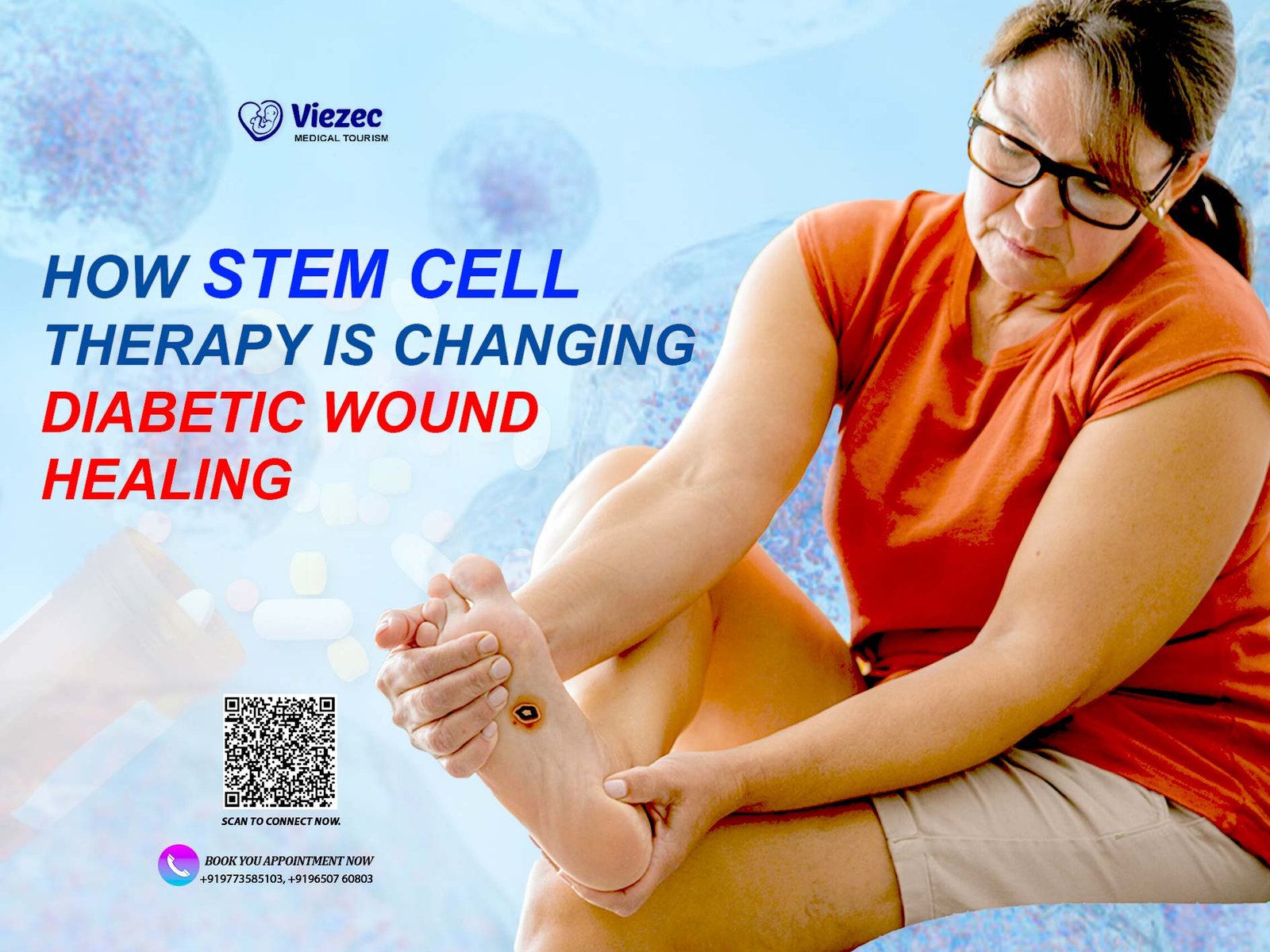
Diabetic wounds, especially foot ulcers, are among the most serious complications of diabetes, often leading to infection and even amputation. Traditional treatments focus on wound care and infection control but often fail to address the root causes such as poor blood circulation, chronic inflammation, and impaired tissue regeneration.
Stem cell therapy is emerging as a transformative approach in diabetic wound healing. It works by promoting tissue regeneration, improving blood flow, reducing inflammation, and accelerating wound closure through the release of growth factors and regenerative signals. Research shows that stem cells enhance angiogenesis, stimulate collagen production, and restore the natural healing process, offering hope for patients with chronic, non-healing wounds.
Introduction
Diabetes is not just about blood sugar levels. Over time, it affects nearly every system in the body, including the skin’s ability to heal. One of the most challenging complications is diabetic wound healing, particularly diabetic foot ulcers.
These wounds often become chronic, resistant to treatment, and can lead to serious consequences such as infections and amputations. Conventional treatments—like dressings, antibiotics, and debridement—focus mainly on symptom management.
However, regenerative medicine is changing this narrative.
Stem cell therapy is now being explored as a next-generation solution that addresses the underlying biological problems responsible for poor wound healing.
Why Diabetic Wounds Are Difficult to Heal
To understand how stem cells help, we first need to understand why diabetic wounds heal poorly.
Poor Blood Circulation
Diabetes damages blood vessels, reducing oxygen and nutrient supply to tissues. This delays healing and increases infection risk.
Chronic Inflammation
In healthy wounds, inflammation is temporary. In diabetic wounds, inflammation becomes persistent, preventing healing progression.
Reduced Growth Factors
Diabetic patients often have lower levels of essential growth factors needed for tissue repair.
Impaired Cellular Function
Cells like fibroblasts and keratinocytes fail to function properly, slowing down skin regeneration.
Neuropathy
Loss of sensation leads to unnoticed injuries that worsen over time.
Research highlights that diabetic wounds are characterized by impaired angiogenesis, persistent inflammation, and defective tissue remodeling, all of which disrupt normal healing processes.
What is Stem Cell Therapy?
Stem cells are unique cells in the body with two key abilities:
- Self-renewal (they can replicate themselves)
- Differentiation (they can transform into specialized cells)
In regenerative medicine, stem cells are used to repair or replace damaged tissues.
For diabetic wound healing, commonly used stem cells include:
- Mesenchymal Stem Cells (MSCs)
- Adipose-Derived Stem Cells (from fat tissue)
- Bone Marrow-Derived Stem Cells
- Induced Pluripotent Stem Cells (iPSCs)
These cells do not just replace damaged tissue—they activate healing mechanisms throughout the wound environment.
Discover if Stem Cell Therapy Can Help You!
Book a Free Consultation with Our Experts at Viezec !
How Stem Cell Therapy Works in Diabetic Wound Healing
Stem cell therapy works through multiple biological pathways, making it significantly more effective than conventional treatments.
1. Promotes Angiogenesis (New Blood Vessel Formation)
Stem cells release growth factors like VEGF (vascular endothelial growth factor), which stimulate the formation of new blood vessels.
This improves oxygen and nutrient supply to the wound area, accelerating healing.
Studies show that stem cells enhance angiogenesis and microcirculation, which are critical for diabetic wound repair.
2. Reduces Chronic Inflammation
Stem cells have strong immunomodulatory properties. They help shift the wound environment from a pro-inflammatory state to a healing state.
This is crucial because chronic inflammation is one of the biggest barriers to healing in diabetic wounds.
3. Enhances Tissue Regeneration
Stem cells stimulate:
- Collagen production
- Fibroblast activity
- Skin cell regeneration
They actively contribute to rebuilding damaged tissue and restoring skin integrity.
4. Releases Growth Factors and Cytokines
Stem cells act like “biological factories,” releasing:
- Epidermal growth factor (EGF)
- Fibroblast growth factor (FGF)
- Insulin-like growth factor (IGF-1)
These molecules coordinate the healing process and accelerate wound closure.
5. Improves Cellular Communication
Stem cells communicate with surrounding cells through signaling molecules and extracellular vesicles.
This helps restore the natural healing cascade, which is often disrupted in diabetes.
6. Supports All Stages of Wound Healing
Normal wound healing occurs in three phases:
- Inflammation
- Proliferation
- Remodeling
In diabetic wounds, these phases are disrupted. Stem cells help regulate and restore these stages effectively.
Role of Stem Cell-Derived Exosomes: A New Breakthrough
One of the most exciting developments is the use of stem cell-derived exosomes.
These are tiny vesicles released by stem cells that carry proteins, RNA, and growth factors.
Why Exosomes Matter:
- They deliver regenerative signals without using live cells
- Lower risk compared to direct stem cell transplantation
- Promote angiogenesis and tissue repair
- Reduce inflammation
Recent studies suggest exosomes can replicate many benefits of stem cells while improving safety and scalability.
Clinical Benefits of Stem Cell Therapy in Diabetic Wounds
Patients undergoing stem cell therapy may experience:
Faster Wound Closure
Stem cells accelerate epithelialization and tissue repair.
Reduced Risk of Amputation
By improving healing, stem cells help prevent severe complications.
Better Blood Supply
Enhanced angiogenesis improves circulation in affected areas.
Pain Reduction
Healing tissues and reduced inflammation lead to symptom relief.
Improved Quality of Life
Patients regain mobility and independence.
Research indicates stem cell therapy can accelerate wound closure and reduce complications like amputation.
Start Your Regenerative Journey Today!
Contact Viezec for Personalized Stem Cell Therapy Plan
Stem Cell Therapy vs Conventional Treatment
| Aspect | Conventional Treatment | Stem Cell Therapy |
|---|---|---|
| Focus | Symptom management | Root cause healing |
| Healing Speed | Slow | Faster |
| Tissue Regeneration | Limited | Strong |
| Recurrence Risk | High | Lower |
| Innovation Level | Traditional | Advanced regenerative |
The Future of Diabetic Wound Healing
The future looks highly promising with advancements such as:
- Stem cell scaffolds for better delivery
- Gene-modified stem cells for enhanced effectiveness
- Combination therapies (stem cells + biomaterials)
- Personalized regenerative medicine
Innovations in stem cell delivery systems and tissue engineering are expected to significantly improve outcomes in chronic wound care.
Stem Cell Therapy in India: A Growing Hub for Regenerative Medicine
India is rapidly emerging as a destination for advanced regenerative therapies, including stem cell treatment for diabetic wounds.
Key advantages include:
- Access to modern medical infrastructure
- Experienced specialists in regenerative medicine
- Cost-effective treatment compared to Western countries
- Growing focus on medical tourism
Organizations like Viezec facilitate access to advanced treatment options by connecting patients with specialized centers and personalized care pathways.
Is Stem Cell Therapy Safe?
Stem cell therapy is generally considered safe when performed under proper medical supervision and ethical standards.
However, patients should:
- Choose accredited and experienced providers
- Understand that outcomes vary
- Be aware that some therapies are still investigational
Who Can Benefit from Stem Cell Therapy?
Stem cell therapy may be suitable for:
- Patients with chronic non-healing wounds
- Individuals with diabetic foot ulcers
- Patients at risk of amputation
- Cases where conventional treatments have failed
A proper medical evaluation is necessary to determine eligibility.
Is Your Condition Eligible for Stem Cell Therapy?
Speak directly with our specialist.
Final Thoughts
Diabetic wound healing has long been a challenge in modern medicine. Traditional treatments often fall short because they do not address the root biological issues.
Stem cell therapy represents a paradigm shift.
By targeting inflammation, improving blood flow, and regenerating damaged tissue, it offers a more comprehensive and effective approach to healing.
While more research is still needed, current evidence strongly supports its potential to transform outcomes for patients suffering from chronic diabetic wounds.
For patients exploring advanced treatment options, stem cell therapy offers a promising path toward faster recovery, reduced complications, and improved quality of life.
Frequently Asked Questions
Healing time varies depending on wound severity, but many patients experience noticeable improvement within weeks to months.
It is not a guaranteed cure but significantly improves healing outcomes and reduces complications.
When done properly, side effects are minimal, but risks depend on the source and method of stem cell delivery.
Yes, in many cases it helps improve healing and reduces the likelihood of amputation.
Yes, India offers advanced regenerative therapies through specialized centers and medical facilitators like Viezec.
Disclaimer
Stem cell therapy for diabetic wound healing is an evolving field, and many treatments are still considered investigational with varying outcomes. Patients should consult qualified healthcare professionals and seek treatment from accredited medical centers before making any decisions.