If you are considering stem cell therapy for osteoarthritis, one of the most common questions is: How long does it take to recover and start feeling improvement?
Recovery after osteoporosis stem cell treatment varies from person to person. Factors such as age, severity of joint damage, lifestyle habits, and the body’s natural healing response all play a role. While stem cell therapy is designed to support tissue repair and reduce inflammation, it works gradually as the body responds to regenerative signals.
Understanding the recovery timeline after osteoarthritis stem cell treatment can help patients set realistic expectations and prepare for the healing process.
Understanding Osteoarthritis
Osteoarthritis (OA) is one of the most common joint conditions worldwide. It occurs when the cartilage that cushions joints gradually breaks down over time.
Common Symptoms of Osteoarthritis
-
Persistent joint pain
-
Stiffness, especially in the morning
-
Reduced joint mobility
-
Swelling or inflammation
-
Difficulty walking or performing daily activities
Osteoarthritis frequently affects joints such as:
-
Knees
-
Hips
-
Shoulders
-
Hands
-
Spine
Traditional treatments usually focus on pain management, including medication, physiotherapy, or joint replacement surgery in advanced cases. However, regenerative approaches such as stem cell therapy are being explored for their potential to support the body’s natural repair processes.
What Is Stem Cell Therapy?
Stem cell therapy is a regenerative medical approach that uses specialized cells capable of developing into different types of tissue.
In orthopedic treatments, mesenchymal stem cells (MSCs) are commonly used. These cells are typically derived from:
-
Bone marrow
-
Adipose (fat) tissue
-
Umbilical cord tissue (in certain clinical settings)
The goal of stem cell therapy for osteoarthritis is to support the body’s natural healing processes.
Potential Actions of Stem Cells in Joint Therapy
Stem cells are studied for their ability to:
-
Support cartilage repair mechanisms
-
Reduce inflammation within the joint
-
Release growth factors that assist tissue healing
-
Improve joint environment and mobility
It is important to understand that stem cell therapy is still an evolving field, and outcomes vary depending on individual health conditions.
Discover if Stem Cell Therapy Can Help You!
Book a Free Consultation with Our Experts at Viezec !
How Stem Cell Treatment Works
The procedure typically involves several carefully monitored steps.
1. Patient Evaluation
Doctors assess:
-
Joint condition through imaging tests
-
Medical history
-
Severity of cartilage damage
2. Stem Cell Preparation
Stem cells are prepared from an appropriate source using sterile laboratory techniques.
3. Injection Procedure
The cells are injected directly into the affected joint using imaging guidance to ensure accuracy.
4. Recovery and Monitoring
After treatment, patients follow a recovery plan that may include:
-
Light activity restrictions
-
Physiotherapy
-
Regular follow-up evaluations
The therapy works by stimulating regenerative processes over time rather than producing immediate structural changes.
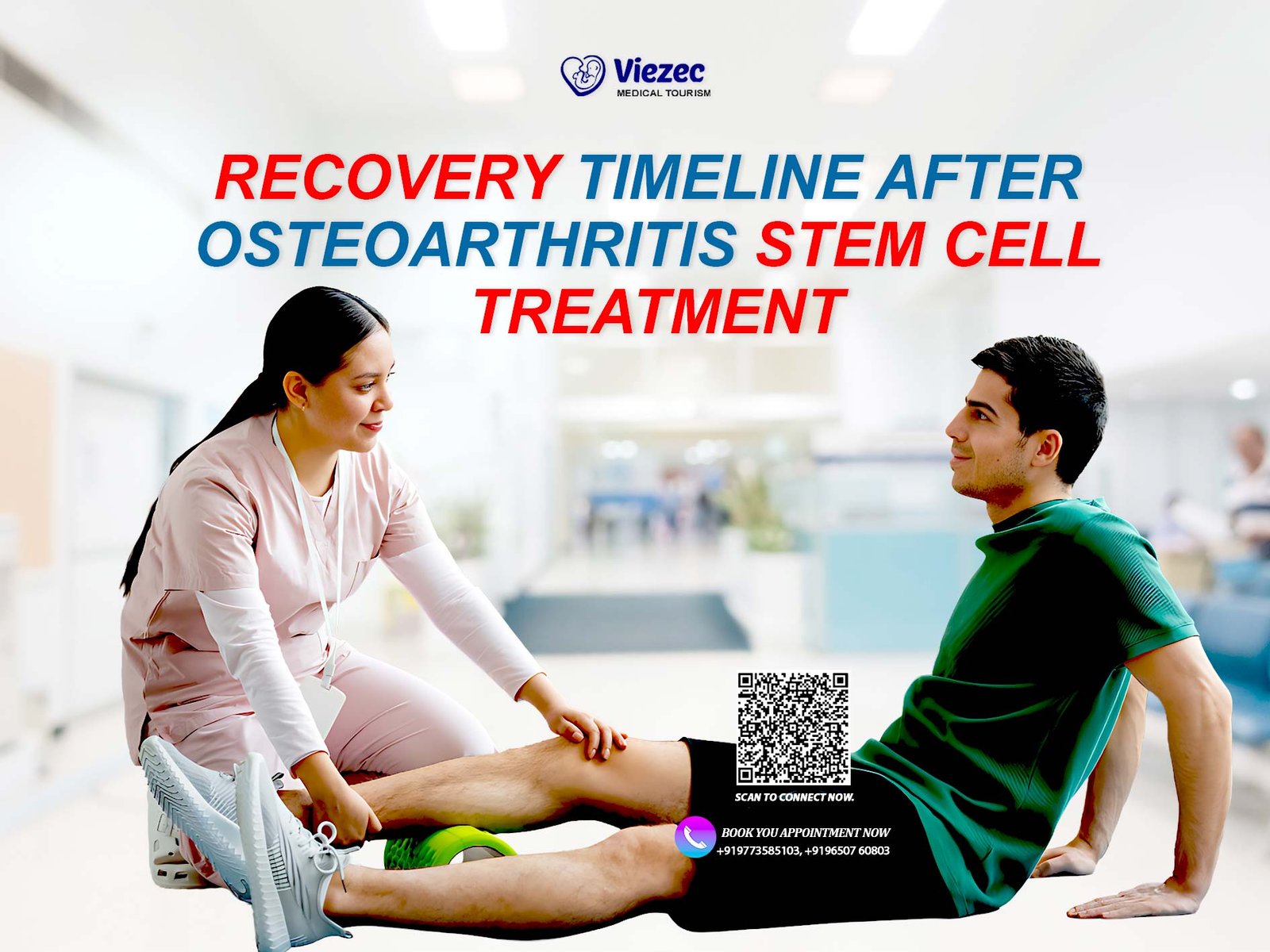
Recovery Timeline After Osteoarthritis Stem Cell Treatment
Every patient heals differently. However, doctors often observe a general recovery timeline that reflects how the body responds to regenerative therapy.
First 24–72 Hours: Immediate Post-Treatment Phase
During the first few days, patients might experience mild symptoms such as:
-
Temporary soreness around the injection site
-
Mild swelling
-
Slight stiffness in the treated joint
These effects are usually short-lived and are part of the body’s response to the procedure.
Doctors often recommend:
-
Resting the joint
-
Avoiding strenuous activity
-
Applying cold packs if necessary
Week 1–2: Early Healing Phase
In the early weeks, the body begins responding to the injected cells.
Some patients report:
-
Slight reduction in joint discomfort
-
Improved flexibility
-
Decreased inflammation
However, for many patients, noticeable improvements may still be gradual at this stage.
Physicians often recommend:
-
Light physical activity
-
Gentle physiotherapy exercises
-
Avoiding heavy lifting or intense workouts
Week 3–6: Tissue Response Phase
By this stage, regenerative signals within the joint environment continue developing.
Possible improvements may include:
-
Reduced joint stiffness
-
Improved mobility
-
Less pain during daily activities
Patients are usually encouraged to maintain controlled physical activity, as movement supports joint health.
2–3 Months: Functional Improvement
Many patients begin noticing more consistent benefits around this stage.
Common observations may include:
-
Improved joint flexibility
-
Reduced discomfort during walking or movement
-
Better participation in physical therapy
At this point, the body’s healing mechanisms are actively responding to the regenerative environment created by stem cells.
3–6 Months: Continued Regeneration
Stem cell therapy often works gradually over several months.
During this period, some patients experience:
-
Better joint stability
-
Reduced inflammation
-
Improved quality of life
For certain individuals, improvements may continue even beyond six months.
Start Your Regenerative Journey Today!
Contact Viezec for Personalized Stem Cell Therapy Plan
Potential Benefits of Stem Cell Therapy for Osteoarthritis
While results differ for each patient, stem cell therapy is being researched for its potential benefits.
Possible benefits include:
-
Reduced joint inflammation
-
Improved mobility and flexibility
-
Support for cartilage repair mechanisms
-
Delay in progression of joint degeneration
-
Reduced reliance on long-term pain medication
It is important to note that stem cell therapy does not guarantee complete reversal of osteoarthritis, but it may help support joint function in some patients.
Why Patients Consider Stem Cell Treatment in India
India has become an increasingly popular destination for regenerative medicine treatments.
International patients often consider treatment in India because of:
Advanced Medical Infrastructure
Many hospitals and clinics offer modern regenerative medicine technologies.
Experienced Specialists
Doctors trained in orthopedic and regenerative medicine manage stem cell procedures.
Cost Accessibility
Treatment costs may be lower compared to many Western countries.
Medical Tourism Support
Patients often receive assistance with travel, accommodation, and treatment coordination.
Why Choose Viezec
Viezec provides regenerative medicine services focused on patient-centered care.
Patients exploring treatment options often consider the institute because of:
-
Experienced medical professionals
-
Comprehensive patient evaluation before treatment
-
Personalized therapy plans
-
Modern medical facilities
-
Dedicated support for international patients
The organization aims to provide transparent information so patients can make informed healthcare decisions.
Treatment Journey for International Patients
For patients traveling to India, the treatment process typically involves several stages.
1. Online Consultation
Patients submit medical records and imaging reports for evaluation.
2. Medical Assessment
Doctors determine whether stem cell therapy is appropriate.
3. Travel Planning
International patients receive guidance regarding travel and stay.
4. Treatment Procedure
The stem cell therapy procedure is performed under medical supervision.
5. Recovery and Follow-Up
Patients receive post-treatment care instructions and long-term follow-up support.
Is Your Condition Eligible for Stem Cell Therapy?
Speak directly with our specialist.
Frequently Asked Questions
Some patients begin noticing improvements within a few weeks, but meaningful changes often develop between 2–3 months after treatment.
Most patients experience only mild discomfort at the injection site for a short period. Severe pain is uncommon when the procedure is performed under proper medical supervision.
Stem cell therapy is being studied for its regenerative potential. However, it does not guarantee a cure, and results vary depending on the patient’s condition.
Light activities usually resume within a few days. More demanding physical activities may require several weeks depending on the joint treated.
Patients with mild to moderate osteoarthritis, adequate joint structure, and good overall health are often considered potential candidates after medical evaluation.
Conclusion
Understanding the recovery timeline after osteoarthritis stem cell treatment helps patients approach regenerative therapy with realistic expectations. Unlike conventional treatments that focus mainly on symptom management, stem cell therapy aims to support the body’s natural healing processes. Because of this regenerative approach, improvements typically develop gradually over several weeks or months rather than immediately after the procedure.
Most patients move through different stages of recovery, beginning with mild post-procedure discomfort, followed by gradual improvements in joint flexibility, reduced inflammation, and better mobility. The exact recovery timeline can vary depending on several factors, including the severity of osteoarthritis, overall health, lifestyle habits, and adherence to rehabilitation recommendations.
For individuals exploring regenerative medicine, consulting experienced providers such as Viezec can help clarify whether stem cell therapy is an appropriate option. A thorough medical evaluation, personalized treatment plan, and proper follow-up care are essential parts of achieving the best possible outcome.