Are you or a loved one struggling with gradual vision loss due to retinitis pigmentosa and wondering if newer treatments like stem cell therapy offer real hope beyond conventional care?
Retinitis pigmentosa (RP) is a progressive eye condition that can significantly impact daily life. While traditional treatments mainly focus on slowing disease progression, emerging approaches such as stem cell therapy are gaining attention for their potential role in regenerative medicine.
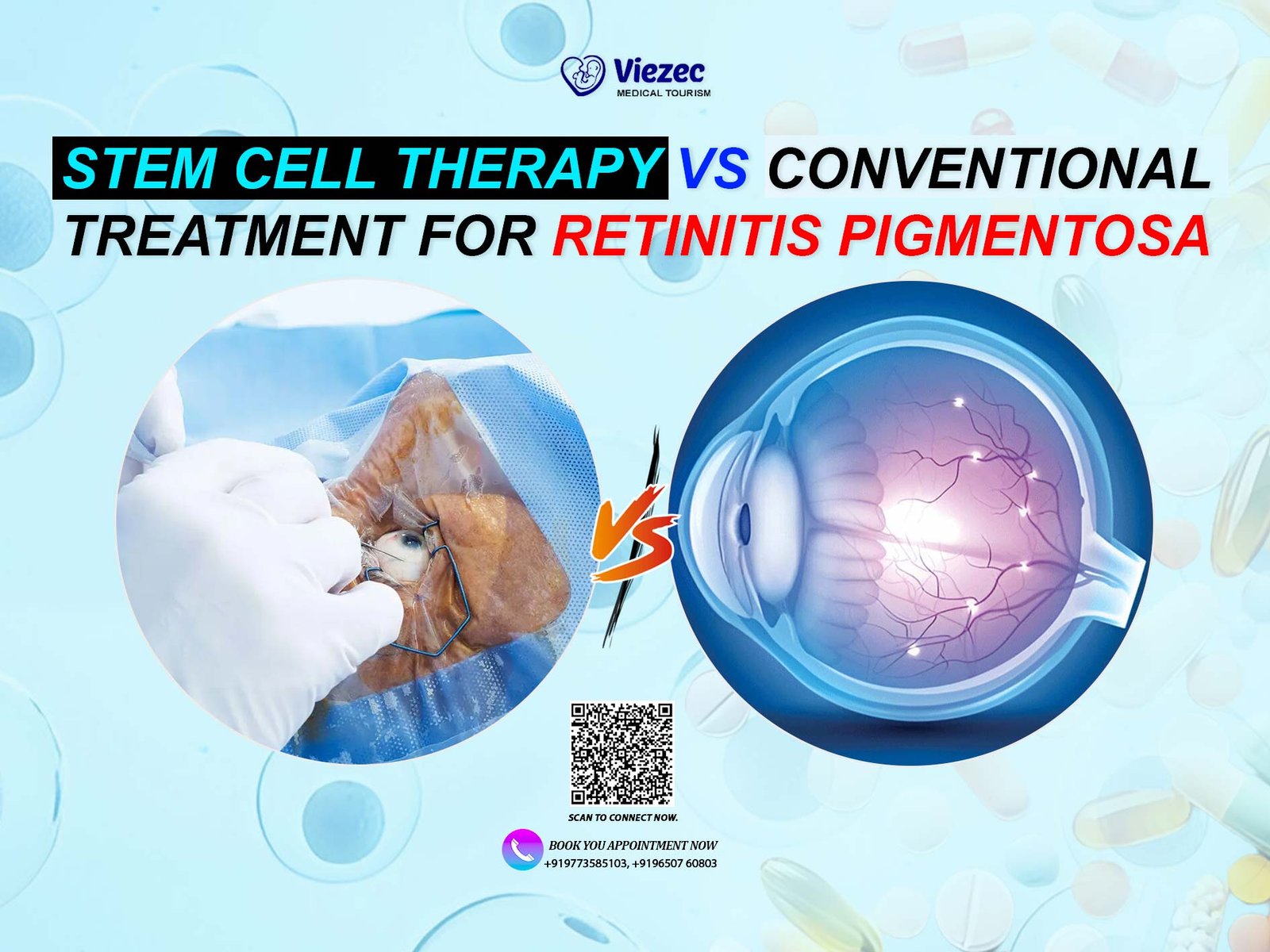
This guide compares stem cell therapy vs conventional treatment for retinitis pigmentosa, helping you understand both options clearly and make informed decisions.
Overview of Retinitis Pigmentosa
Retinitis pigmentosa is a group of inherited retinal disorders that affect the photoreceptor cells in the retina. Over time, these cells gradually degenerate, leading to vision impairment.
Common Symptoms
-
Night blindness (early symptom)
-
Loss of peripheral vision (tunnel vision)
-
Difficulty adapting to low light
-
Progressive vision loss in advanced stages
Causes
RP is primarily genetic and can be inherited in different patterns, including autosomal dominant, autosomal recessive, or X-linked inheritance.
Current Challenge
There is no universally established cure for RP. Most treatments aim to slow progression or manage symptoms, which is why alternative approaches like stem cell therapy are being explored.
What is Stem Cell Therapy?
Stem cell therapy is an advanced medical approach that uses specialized cells capable of developing into different cell types, including retinal cells.
In the context of retinitis pigmentosa, stem cell therapy aims to:
-
Support damaged retinal cells
-
Promote tissue repair
-
Potentially slow degeneration
These cells are typically derived from sources such as:
-
Bone marrow
-
Umbilical cord tissue
-
Adipose (fat) tissue
It is important to understand that stem cell therapy for RP is still being studied, and results can vary depending on individual conditions.
Discover if Stem Cell Therapy Can Help You!
Book a Free Consultation with Our Experts at Viezec !
How Stem Cell Treatment Works
The process of stem cell therapy for retinitis pigmentosa generally involves several steps:
1. Patient Evaluation
A detailed medical assessment is conducted, including eye examinations and diagnostic imaging.
2. Cell Sourcing and Preparation
Stem cells are collected (either from the patient or donor sources) and processed under controlled laboratory conditions.
3. Administration
The prepared stem cells are introduced into the body, depending on the treatment protocol. In some cases, this may involve targeted delivery to support retinal function.
4. Post-Treatment Monitoring
Patients are monitored over time to assess response and track any changes in vision.
Mechanism of Action
Stem cells may help by:
-
Releasing growth factors
-
Supporting existing retinal cells
-
Reducing inflammation
-
Encouraging cellular repair processes
However, outcomes are not guaranteed and depend on multiple factors, including disease stage.
Conventional Treatment for Retinitis Pigmentosa
Traditional treatments focus on managing symptoms and slowing disease progression rather than reversing damage.
Common Conventional Approaches
1. Vitamin A Supplementation
Some studies suggest that specific doses of Vitamin A may help slow progression in certain patients. This should only be taken under medical supervision.
2. Use of Assistive Devices
-
Low vision aids
-
Magnifiers
-
Specialized glasses
3. Gene Therapy (Emerging Option)
In select genetic cases, gene therapy may be considered, though availability is limited and highly specific.
4. Retinal Implants
Advanced devices like retinal prostheses can help restore limited visual perception in severe cases.
5. Lifestyle Adjustments
-
UV protection (sunglasses)
-
Healthy diet
-
Regular eye check-ups
Stem Cell Treatment vs Conventional Treatment for RP
Here is a clear comparison to help you understand both approaches:
Treatment Goal
-
Conventional Treatment: Slow disease progression and manage symptoms
-
Stem Cell Therapy: Support regeneration and potentially improve cellular function
Approach
-
Conventional: Symptom management
-
Stem Cell: Regenerative and supportive
Availability
-
Conventional: Widely available
-
Stem Cell: Available in specialized centers
Evidence Base
-
Conventional: Long-established clinical use
-
Stem Cell: Ongoing research and clinical studies
Outcome Expectations
-
Conventional: Stabilization of vision in some cases
-
Stem Cell: Variable outcomes depending on patient condition
Start Your Regenerative Journey Today!
Contact Viezec for Personalized Stem Cell Therapy Plan
Potential Benefits of Stem Cell Therapy
While research is ongoing, stem cell therapy may offer several potential advantages:
-
May help slow retinal degeneration
-
Supports cellular repair mechanisms
-
Minimally invasive in many cases
-
Can be considered when conventional options are limited
-
Offers a regenerative approach rather than only symptom control
It is important to note that these benefits are not guaranteed, and clinical outcomes vary.
Why Patients Consider Stem Cell Treatment in India
India has become a destination for patients seeking advanced medical treatments, including stem cell therapy.
Key Reasons
-
Cost-effective treatment compared to many countries
-
Access to experienced medical professionals
-
Availability of advanced medical infrastructure
-
Reduced waiting times
-
Personalized treatment approaches
Many international patients explore treatment options through providers like Viezec for comprehensive care support.
Why Choose Viezec
Viezec focuses on providing patient-centered care for individuals considering stem cell therapy.
Key Highlights
- Experienced medical team
- Individualized treatment planning
- Transparent communication
- Support for international patients
- Emphasis on ethical and research-based practices
The approach prioritizes patient safety, realistic expectations, and ongoing monitoring.
Is Your Condition Eligible for Stem Cell Therapy?
Speak directly with our specialist.
Treatment Journey for International Patients
For patients traveling to India, the process is typically structured and supportive.
Step-by-Step Journey
-
Initial Consultation (Online)
Medical reports are reviewed remotely -
Treatment Plan Creation
A customized plan is shared -
Travel Assistance
Support for visa, accommodation, and logistics -
Treatment Procedure
Conducted at a medical facility -
Post-Treatment Follow-Up
Remote monitoring and guidance
This structured approach helps ensure a smoother experience for international patients.
Frequently Asked Questions
Conventional treatments help manage symptoms and may slow progression but do not reverse the condition.
Safety depends on the clinic, protocol, and patient condition. It is important to choose a qualified medical provider and undergo proper evaluation.
Eligibility depends on disease stage, overall health, and medical history. A detailed consultation is required.
Response time varies. Some patients report gradual changes over months, while others may not experience noticeable improvement.
Conclusion
Choosing between stem cell therapy vs conventional treatment for retinitis pigmentosa depends on your individual condition, expectations, and medical guidance. Conventional treatments remain important for managing symptoms and slowing disease progression, while stem cell therapy represents an evolving, research-driven approach that focuses on regenerative support.
For many patients, the decision is not about replacing one treatment with another but understanding how emerging options may complement existing care. Stem cell therapy continues to be studied, and while early findings show potential, outcomes can vary based on disease stage and overall health.
If you are considering advanced treatment options, it is essential to consult experienced medical professionals, review all available evidence, and choose a provider that follows ethical and safety standards, such as Viezec.
Taking a well-informed, cautious approach will help you make the best decision for your long-term eye health and quality of life.
Disclaimer
This article is for informational purposes only and does not constitute medical advice. Stem cell therapy for retinitis pigmentosa is an evolving field, and outcomes vary. Always consult a qualified healthcare professional before making any medical decisions.