Optic nerve atrophy is a serious eye condition that can lead to partial or complete vision loss. For many patients, conventional treatments offer limited improvement once nerve damage has occurred. This is why regenerative medicine, particularly stem cell treatment, is gaining attention as a potential new option for people living with optic nerve atrophy.
Recent advances in stem cell research have opened new possibilities for nerve regeneration, neuroprotection, and vision preservation. While stem cell therapy is still considered an emerging and evolving treatment approach, growing clinical experience suggests it may help support optic nerve health, slow disease progression, and in some cases improve functional outcomes.
At Viezec, a regenerative medicine center based in India, stem cell–based approaches are being explored as part of advanced treatment strategies for neuro-ophthalmic conditions, including optic nerve damage and optic neuropathy. This page explains optic nerve atrophy, current limitations of standard care, and how stem cell therapy may offer hope for eligible patients.
Understanding Optic Nerve Atrophy
The optic nerve is responsible for transmitting visual information from the retina to the brain. It is made up of over one million nerve fibers called retinal ganglion cell axons. When these fibers are damaged or degenerate, the optic nerve becomes thin and pale, a condition known as optic nerve atrophy.
Optic nerve atrophy itself is not a disease but a sign of underlying damage. Once nerve fibers are lost, the body has a very limited ability to naturally regenerate them, which is why vision loss is often permanent with conventional treatments.
Common Causes of Optic Nerve Atrophy
Optic nerve atrophy can develop due to many different medical conditions and injuries, including:
-
Glaucoma-related optic nerve damage
-
Ischemic optic neuropathy (reduced blood flow to the optic nerve)
-
Traumatic optic nerve injury
-
Hereditary optic neuropathies such as Leber’s hereditary optic neuropathy
-
Optic neuritis and inflammatory conditions
-
Brain tumors or compressive lesions
-
Chronic elevated intracranial pressure
-
Nutritional deficiencies and toxic optic neuropathy
-
Diabetic optic nerve damage
Each cause affects the optic nerve in a different way, but the end result is similar: progressive loss of nerve fibers and reduced visual function.
Symptoms and Impact on Daily Life
The symptoms of optic nerve atrophy depend on the extent and location of nerve damage. Common signs include:
-
Blurred or reduced vision
-
Loss of peripheral (side) vision
-
Decreased color vision
-
Reduced contrast sensitivity
-
Visual field defects
-
Difficulty with reading or recognizing faces
-
Sensitivity to light in some cases
For many patients, optic nerve atrophy significantly affects independence, work ability, and overall quality of life. Because nerve damage is often irreversible with standard care, patients and families frequently search for alternative or advanced treatment options.
Discover if Stem Cell Therapy Can Help You!
Book a Free Consultation with Our Experts at Viezec !
Limitations of Conventional Treatments
Traditional treatment for optic nerve atrophy focuses on managing the underlying cause rather than repairing damaged nerve tissue. Examples include:
-
Lowering eye pressure in glaucoma
-
Treating inflammation with steroids or immunosuppressive therapy
-
Managing vascular risk factors in ischemic optic neuropathy
-
Surgical decompression for compressive lesions
-
Vitamin supplementation for nutritional optic neuropathy
While these treatments are important to prevent further damage, they rarely restore lost optic nerve fibers. This is where regenerative medicine and stem cell therapy are being investigated as potential solutions to address the root problem of nerve degeneration.
What Is Stem Cell Therapy?
Stem cells are unique cells that have the ability to:
-
Self-renew
-
Differentiate into specialized cell types
-
Release growth factors and signaling molecules
-
Support tissue repair and regeneration
In regenerative medicine, stem cells are used to help repair or support damaged tissues by creating a more favorable healing environment. In the context of optic nerve atrophy, stem cell therapy aims to support nerve survival, reduce inflammation, promote nerve regeneration, and enhance neuroprotection.
How Stem Cell Treatment May Help Optic Nerve Atrophy
Stem cell therapy does not act as a simple replacement for damaged optic nerve fibers. Instead, it works through multiple biological mechanisms that may help improve nerve health and visual function.
1. Neuroprotection of Existing Nerve Fibers
One of the most important potential benefits of stem cell therapy is neuroprotection. Stem cells release growth factors and cytokines that may help protect remaining retinal ganglion cells from further damage.
This neuroprotective effect may:
-
Slow disease progression
-
Preserve remaining vision
-
Reduce ongoing degeneration
-
Improve long-term optic nerve stability
For patients with partial optic nerve atrophy, preserving remaining nerve fibers is a critical goal.
2. Support for Nerve Regeneration
While full regeneration of the optic nerve is challenging, research suggests that stem cells may help stimulate axonal regrowth under certain conditions.
Stem cells may:
-
Promote axonal repair pathways
-
Enhance nerve fiber sprouting
-
Support reconnection of damaged neural circuits
-
Improve nerve conduction signals
This regenerative support is one of the most promising aspects of stem cell therapy for optic nerve damage.
3. Reduction of Inflammation
Chronic inflammation plays a role in many optic nerve diseases, including optic neuritis and autoimmune-related optic neuropathies.
Stem cells have immunomodulatory properties that may:
-
Reduce harmful inflammation
-
Regulate immune responses
-
Decrease secondary nerve injury
-
Create a healthier environment for nerve recovery
This anti-inflammatory effect can be particularly valuable in inflammatory and autoimmune optic nerve conditions.
4. Improved Blood Supply and Microcirculation
Some types of optic nerve atrophy are related to reduced blood flow. Stem cells may support angiogenesis, the formation of new blood vessels.
Potential benefits include:
-
Improved oxygen delivery to nerve tissue
-
Enhanced nutrient supply
-
Better microcirculation around the optic nerve
-
Support for ischemic optic neuropathy cases
Better blood flow may help preserve nerve function and reduce further damage.
5. Paracrine Signaling and Growth Factor Release
A major benefit of stem cell therapy comes from paracrine signaling. Stem cells release substances such as:
-
Nerve growth factor (NGF)
-
Brain-derived neurotrophic factor (BDNF)
-
Vascular endothelial growth factor (VEGF)
-
Anti-apoptotic factors
These molecules help support nerve survival, promote repair pathways, and reduce cell death in damaged optic nerve tissue.
Start Your Regenerative Journey Today!
Contact Viezec for Personalized Stem Cell Therapy Plan
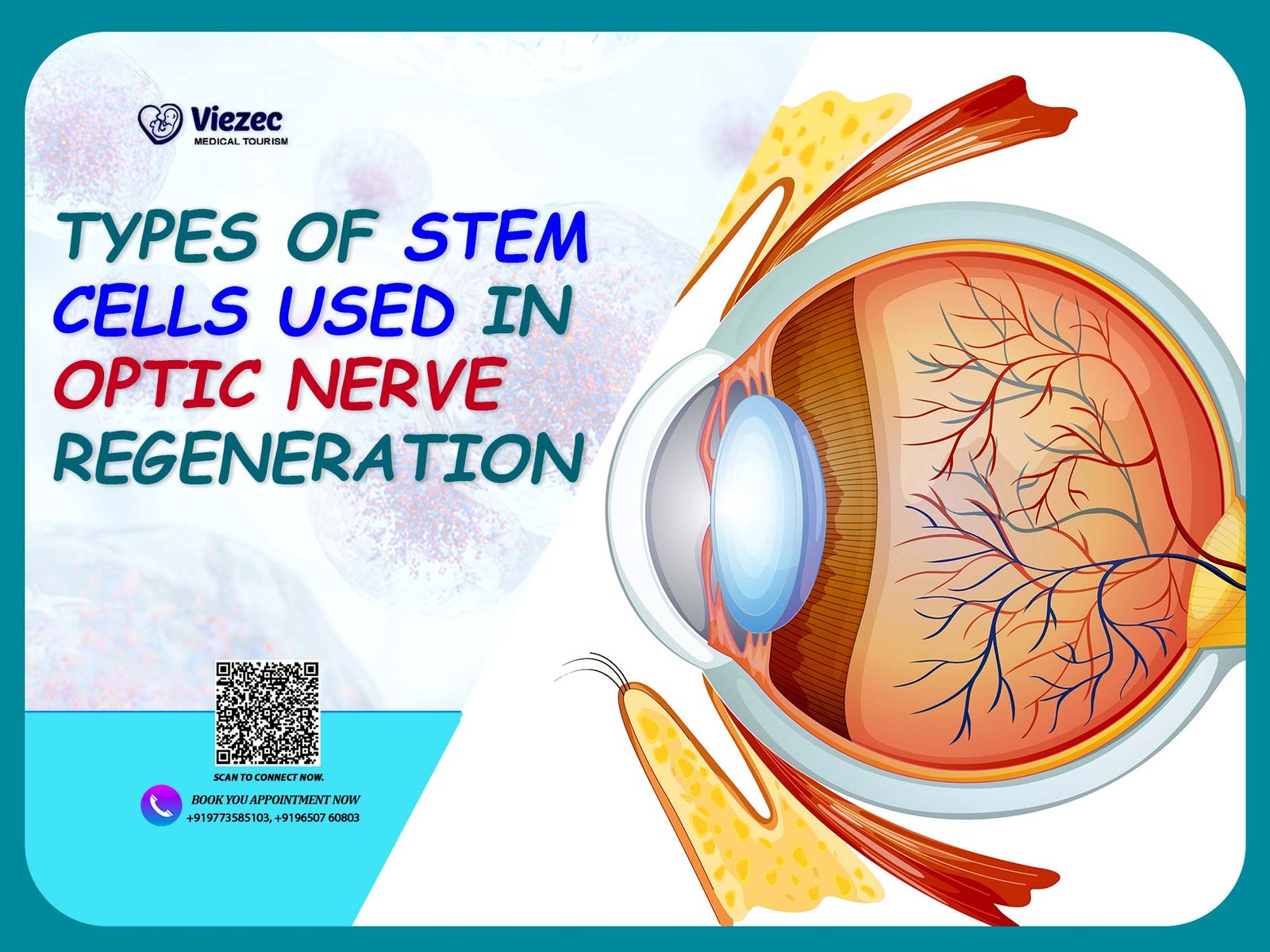
Types of Stem Cells Used in Optic Nerve Conditions
Different types of stem cells may be used depending on the treatment protocol and patient profile.
Mesenchymal Stem Cells (MSCs)
Mesenchymal stem cells are commonly used in regenerative medicine. They are known for:
-
Strong anti-inflammatory effects
-
Neuroprotective properties
-
Growth factor secretion
-
Immune modulation
MSCs are often derived from bone marrow, adipose tissue, or umbilical cord sources.
Neural Stem Cells
Neural stem cells are more specialized and are capable of differentiating into neural cell types. They may be useful for:
-
Direct neural support
-
Potential integration with neural tissue
-
Supporting optic nerve repair mechanisms
However, neural stem cell therapy is still more experimental.
Autologous Stem Cells
Autologous stem cells are derived from the patient’s own body. Potential advantages include:
-
Lower risk of immune rejection
-
Reduced ethical concerns
-
Better compatibility
-
Improved safety profile
Autologous approaches are commonly used in regenerative medicine centers, including those in India.
Stem Cell Therapy Process for Optic Nerve Atrophy
While protocols vary, a typical stem cell treatment process may include:
Medical Evaluation
A thorough evaluation is essential and may involve:
-
Detailed eye examination
-
Visual field testing
-
Optical coherence tomography (OCT)
-
MRI or neuroimaging if needed
-
Review of medical history
-
Identification of the cause of optic nerve atrophy
Not all patients are suitable candidates. Proper screening is critical.
Stem Cell Harvesting and Processing
If autologous stem cells are used, they are typically harvested from:
-
Bone marrow
-
Adipose (fat) tissue
-
Peripheral blood after mobilization
The cells are then processed in a controlled laboratory environment to concentrate and prepare them for therapeutic use.
Administration of Stem Cells
Depending on the protocol, stem cells may be delivered through:
-
Intravenous infusion
-
Intrathecal injection
-
Localized ocular or periocular approaches (in selected cases)
The delivery method depends on the clinical judgment of the treating team and the patient’s condition.
Follow-Up and Monitoring
Patients require careful follow-up to:
-
Monitor vision changes
-
Track visual field results
-
Assess optic nerve structure
-
Evaluate safety and response
-
Adjust supportive therapies
Stem cell therapy is typically part of a broader treatment and monitoring plan.
What Results Can Patients Expect?
It is important to set realistic expectations. Stem cell therapy is not a guaranteed cure for optic nerve atrophy. Results vary based on:
-
Cause of optic nerve damage
-
Severity and duration of atrophy
-
Patient age and general health
-
Remaining viable nerve tissue
-
Timing of treatment
Some patients may experience:
-
Stabilization of vision
-
Slower progression of vision loss
-
Modest improvements in visual clarity
-
Improved contrast sensitivity
-
Better functional vision in daily activities
Early intervention may offer better potential outcomes than treatment at very advanced stages.
Is Your Condition Eligible for Stem Cell Therapy?
Speak directly with our specialist.
Why India Is a Hub for Regenerative Medicine
India has become a recognized destination for regenerative medicine and stem cell–based therapies due to:
-
Advanced medical infrastructure
-
Experienced regenerative medicine specialists
-
Access to modern laboratory facilities
-
Growing clinical research environment
Patients from India and abroad often seek advanced regenerative treatments within the country.
Viezec’s Approach to Optic Nerve Atrophy
Viezec, based in India, focuses on advanced regenerative medicine approaches for neurological and ophthalmic conditions. The center emphasizes:
-
Comprehensive patient evaluation
-
Individualized treatment planning
-
Use of advanced stem cell protocols
-
Multidisciplinary medical oversight
-
Long-term patient monitoring
By combining regenerative medicine expertise with patient-centered care, Viezec aims to support patients with complex conditions such as optic nerve atrophy.
Frequently Asked Questions
In most cases, optic nerve atrophy is considered irreversible with conventional treatments. Stem cell therapy aims to support nerve health and may help improve or stabilize function in selected patients.
Response time varies. Some patients may notice changes within weeks to months, while others may require longer follow-up.
When performed at reputable centers under medical supervision, stem cell therapy is generally considered safe. However, all medical procedures carry potential risks.
Full restoration of vision is not guaranteed. The goal is often to preserve remaining vision and support functional improvement.
Final Thoughts
Optic nerve atrophy remains a challenging condition with limited conventional treatment options. Stem cell therapy represents a promising area of regenerative medicine that may help protect remaining nerve fibers, reduce inflammation, and support nerve repair mechanisms.
For patients seeking advanced care, regenerative medicine centers such as Viezec in India are exploring stem cell–based approaches as part of a comprehensive treatment strategy. While results vary and ongoing research is essential, stem cell therapy offers new hope for individuals living with optic nerve damage and vision loss.
If you or a loved one has been diagnosed with optic nerve atrophy, consulting with a qualified regenerative medicine specialist can help determine whether stem cell treatment may be a suitable option as part of your care plan.